The past two decades have solidified Tim Burton as a household name. His trademark aesthetic, featuring spindly features, huge eyes, heavy use of practical effects and claymation, and themes of death, the macabre and the spooky, are instantly recognizable to viewers. For many, Burton’s work is recognized as the semi-official aesthetic of that most spooky of months, October, his characters being common choices for Halloween costumes and decorations alike. With such films as The Nightmare Before Christmas, The Corpse Bride, Beetlejuice and Frankenweenie under his belt, it could be assumed that Tim Burton has always worked in kitschy clay horror— and this technically isn’t wrong.
Videos by ComicBook.com
Perhaps unexpectedly, Tim Burton’s directorial break came when, after being fired from his work at Disney following the low earnings of 1984’s live-action Frankenweenie short film, Burton was chosen by Paul Reubens— aka Pee-Wee himself— as director for Pee-Wee’s Big Adventure, a candy-colored, unabashedly joyful and absurd, live-action comedy with a cheerfully naive, bow-tied protagonist played by Reubens himself. In spite of the genre clash, however, the themes and techniques that would become well-known as Burton’s signature style still manage to show through in the rare scary moments of Pee-Wee’s Big Adventure— most infamously in a two-minute sequence that haunts audiences to this day.
Pee-Wee’s Big Adventure Briefly Turns To Horror In A Series Of Encounters At A Truckstop
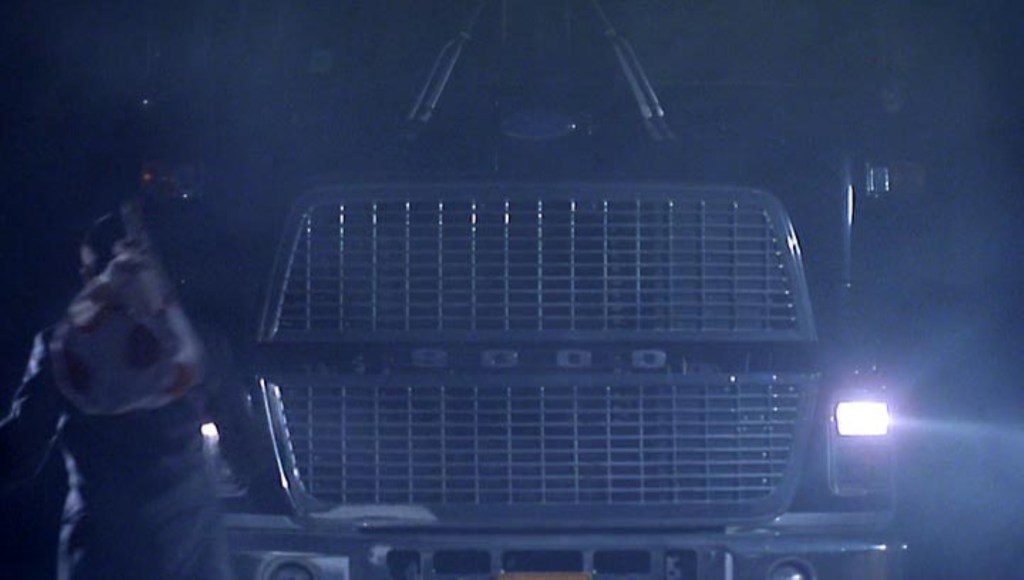
Pee-Wee’s Big Adventure follows the titular hero on a cross-country quest to retrieve his beloved, unjustly stolen red bike. Lacking any other mode of transportation, Pee-Wee is forced to take rides with whoever he can find (and whoever will tolerate him), a predicament which leads to the film’s solitary, unexpected moment of terror. After his attempt to ride along with a wanted fugitive goes less than perfectly, Pee-Wee is again stranded on the side of the road trying to flag down a car.
What he gets instead is a tractor-trailer truck, wreathed in darkness and fog, with a dour-faced woman at the wheel recounting (in no small detail) the worst accident trucking she has ever witnessed. While all this is already a massive departure from the usual tone of the movie, the true fright comes when, as she is about to describe the body pulled from the wreck, she instead whips her head around towards Pee-Wee to show a bizarre and alarming claymation where her face should be.
Masterfully spasmodic animation depicts the grotesque, leathery face of a (quite cartoonish, to be clear) corpse with bulging eyes, a flapping tongue, and even hair that wiggles about as though unsure whether it should still be attached to her head. While Pee-Wee, ever the cheerful presence, takes all this in stride and makes a polite-but-swift exit from her vehicle at the next stop, those watching the film for the first time would not get over Large Marge’s appearance so easily.
The entire interaction only lasts two minutes, with the corpse-face jumpscare lasting all of a few seconds before Marge’s face reverts to normal, but the sequence imprinted itself onto the minds of generations. There is a complete lack of warning before the lighthearted-if-occasionally-sketchy adventure comedy turns full horror, paired with a jumpscare moment that diverges from not only the movie’s genre, but its medium, gives a true and lasting fright. Marge’s face, specifically, is the reason that fright lands – while far from a realistic corpse, the bugging eyes and shriveled features rendered in clay are designed and animated to perfection to scare the living daylights out of unsuspecting viewers without resorting to realistic imagery.
Pee Wee Would Later Be Deeply Connected To Puppetry And Claymation
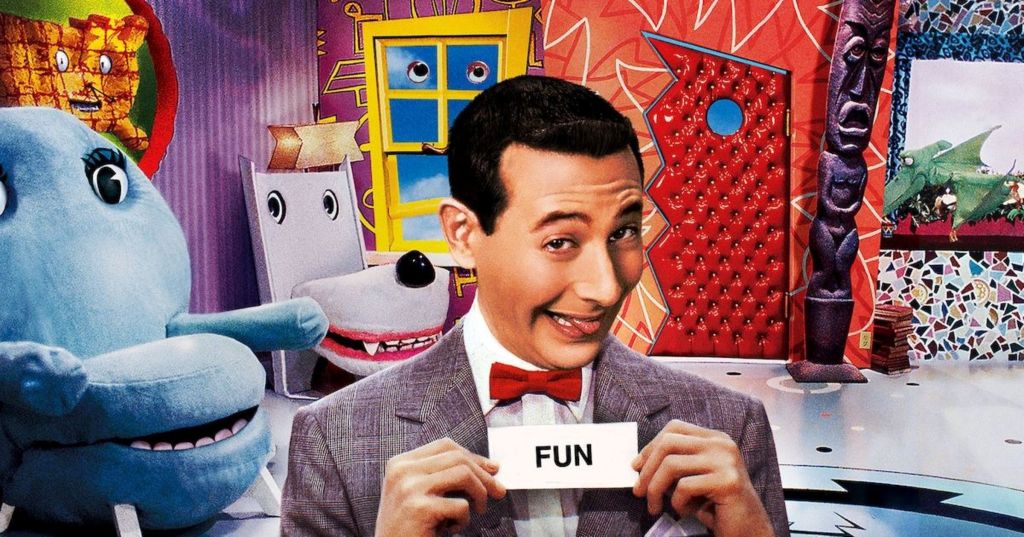
While Pee-Wee’s Big Adventure is a mostly live-action film, ghostly truckers aside, it would go onto to serve as basis for a series famous for a quirky, slightly ramshackle and occasionally borderline offputting style of mixed-media production. Pee-Wee’s playhouse, starring Reubens, directed by Wayne Orr and John Paragon and running from 1986-1990 on CBS, followed Pee-Wee as he lived and played in his labyrinthine house full of anthropomorphic toys, figurines, and even furniture, each with distinct personalities and goals.
Pee-Wee’s Playhouse also included interludes within the main plot of the episode, one of these being the Penny shorts. Featuring a girl with two pennies for eyes, the Penny shorts are otherwise entirely claymation, with the characters stretching, deforming, peeling clay off themselves and rebuilding themselves all with a calm smile. The effect is surreal rather than frightening, with the Penny shorts remaining extremely charming in the same offbeat way as the rest of the show. While she and Pee-Wee’s other strange friends are far from (intentionally) spooky, their jittery movements and often scrapped-together appearance bear clear similarity to Burton’s trademark style, showing his lasting influence on the property.
Large Marge Would Be The First Of Burton’s Many Clay Monstrosities

As for Burton’s work after Pee-Wee’s Big Adventure, Marge would, of course, be far from his last experience with the creepy side of clay. The shriveled skin, bulging eyes, wispy attached-fiber hair, skeletal neck and twitching, pulsing movements of Marge’s corpse-face were an early example of Tim Burton’s spectacular ability to direct scenes and people made from clay, as he would go on to do in moves such as The Nightmare Before Christmas and The Corpse Bride.
Faces much like Marge’s can be seen in such characters as Beetlejuice‘s snake form in Beetlejuice and Maggot in The Corpse Bride, invoking fright, fun, disgust and delight all at once in audiences for 20 years and counting. While Large Marge herself may only have two minutes to her scary, scary name, she is remembered by all both as a terrifying presence in a movie that seemed certain to contain absolutely no shrieking corpses, and as the first creature in a world-famous, franchise-launching legacy of the shambling clay undead.
More Movies
-
Courtesy of Universal Pictures -
DC Studios / Warner Bros. -
Image Courtesy of Marvel Comics