On January 16th, 1948, the horror film world was given its greatest gift, even if it didn’t know it just yet. It wouldn’t know that for another 30 years, when a young John Carpenter helmed what remains one of the most seminal entries in the genre of all time: Halloween. Still active today, especially in the music industry, Carpenter is an artist who has shown himself a master of multiple genres. Yes, he’s primarily known as a master of horror, but he’s also excelled in action via Escape from New York, in sci-fi via Starman, and comedy with his entirely unique Big Trouble in Little China.
Videos by ComicBook.com
But, even factoring in The Thing, Carpenter’s magnum opus is still Halloween. It’s one of the few movies out there that is missing nothing and has everything in place precisely where it should be. It is an experience in terror, and it changed horror forever.
What Makes Halloween Such an Influential Masterpiece?
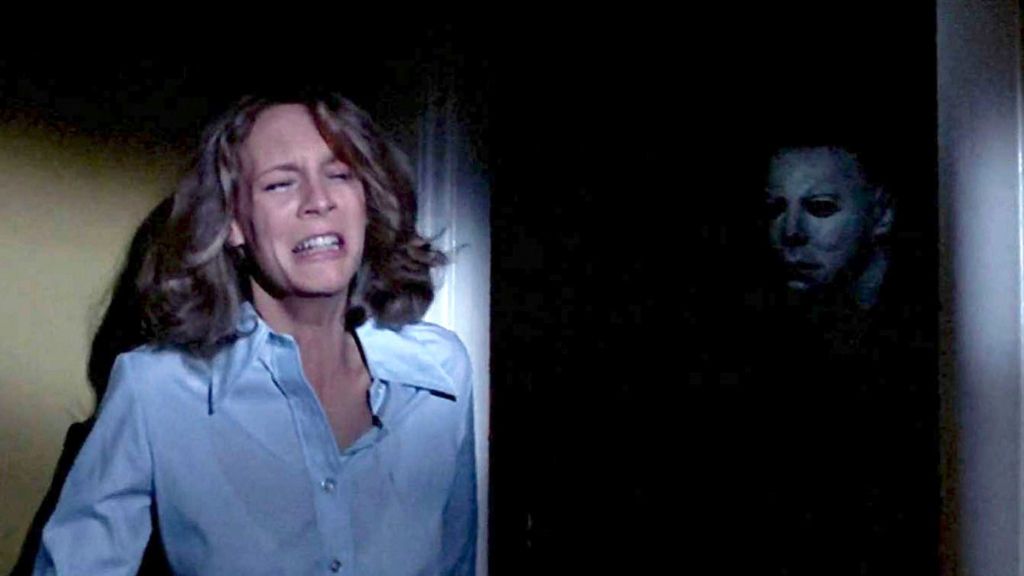
There have been hundreds of man-in-a-mask horror movies, but Halloween is still by far considered the best. Only The Texas Chain Saw Massacre really stands alongside it and it’s hard to call that a man in a mask movie as much as it’s a country fried nightmare.
While Sally Hardesty from Chain Saw and Jesse Bradford from Black Christmas were the first final girls, it was Halloween‘s Laurie Strode (Jamie Lee Curtis, of course) who really established the “final girl” as a trope. It was also where we got the notion of a killer who hovers somewhere between mortality and immortality, but it does that in a way that isn’t ridiculous.
Like Dr. Loomis, we’re surprised that Michael Myers can take six shots and walk away, but it doesn’t suspend our disbelief but so much. We’ve yet to come to think of him as immortal so much as just horrifyingly resilient. The suspension of disbelief to the breaking point wouldn’t come until later, when he somehow survived being burned alive in Halloween II. In that is the key to Halloween‘s still-present fear factor: absolutely none of it feels far removed from reality.
Not to mention, this was where the trend of tying horror narratives into holidays really originated. You could make the case for Black Christmas there, too, but there’s a reason there was a boom in holiday-themed horror started immediately after the release of Carpenter’s classic. This was where the groundwork for the slasher was really set, and it did it in a barebones way. It wasn’t until Friday the 13th that inventive, elaborate kills and blood became a part of it.
The Highlights of Carpenter’s Post-Halloween Career

Of Carpenter’s 18-film oeuvre, the first half is undoubtedly better than the second. Assault on Precinct 13 is just as visceral as Halloween, just in a different way. His follow-up to Halloween, The Fog, is a fun ghost story with another fantastic score and an ambiance that envelops you.
It’s interesting to see how this particular master of horror never felt fully trapped by the genre, too, because the two theatrical films bookending Halloween and The Fog were both of the action genre: the aforementioned Precinct 13 and the ever-quotable Escape from New York. Both incorporated other genres, thriller for Precinct 13 and sci-fi for New York, but at their core they’re still predominately action films.
Following up New York was Carpenter’s other masterpiece, The Thing. While it didn’t reshape the genre in the way Halloween did, it also wasn’t properly appreciated in its time like his Michael Myers nightmare was. Over the years, it’s been reanalyzed as the brilliant play on Cold War paranoia that it is.
Those weren’t the only highlights of his early career either, as his next three movies, Christine, Starman, and Big Trouble in Little China, were all winners, even if their box office didn’t necessarily reflect as much (just like The Thing). As for his latter-half filmography, Prince of Darkness has aged very well, even if it has a little too much ambition for its own good while They Live is the final truly great movie he made. If he ever made something prescient, They Live would be it.
The movies that followed weren’t as solid, unfortunately, with Memoirs of an Invisible Man, In the Mouth of Madness, Escape from L.A., Vampires, Ghosts of Mars, and The Ward all failing to stick their respective landings. But even in those movies (save for The Ward), Carpenter’s distinct touch was present and accounted for.
Even more than Tobe Hooper or Wes Craven, Carpenter is the true master of horror cinema. His works will never be lost to time, and a lot of credit for that belongs to Halloween. You see his name above the title during the credits, and you don’t forget it. Nor should you.
What is your favorite John Carpenter movie? Let us know in the comments.
Most Viewed
-

Official art by Bastien Lecouffe-Deharme -

A photo of the Retrovolt Arcade taken in 2017, showing several classic arcade cabinets and stools. -

Image Courtesy of Paramount