It’s very important for a studio tentpole to make a lot of money at the box office, but the final worldwide total is not the only metric that determines whether or not it was a financial success. When discussing the commercial performance of a film, it’s just as important to make note of the production budget. The larger the budget, the more a movie needs to earn to break even. Especially when you factor in marketing costs, blockbusters can be wildly expensive, which is how we get to a place where Avatar: Fire and Ash‘s $1.485 billion haul can be considered an underwhelming result that’s forcing Disney to reevaluate the franchise. In a vacuum, $1.4 billion is a large sum of money, but when you spend $500 million on a single movie, the number looks less impressive.
Videos by ComicBook.com
The film industry is a business, so studios like to see a sizable return on investment, especially when it comes to the big-budget genre films positioned as premier summer or holiday season draws. This means it’s vital to keep production costs in check, maximizing that all-important return on investment. One filmmaker who was quite savvy about this was George Lucas, whose Star Wars films routinely delivered massive returns. Unfortunately, it’s a trick Lucasfilm hasn’t mastered in the post-Lucas era under Disney.
George Lucas’ Star Wars Movies Were Extremely Profitable

It’s no secret that Star Wars is one of the biggest film franchises of all time. According to Finance Buzz, the property’s total gross is more than $9.9 billion at the domestic box office alone (adjusted for inflation). With the infamous exception of Solo: A Star Wars Story, Star Wars movies have always been among the highest-grossing films in their respective years of release. The box office numbers by themselves are phenomenal, but looking at the profit margin paints the films’ performances in a whole new light. This gives you an idea of just how successful the Lucas-era Star Wars movies really were. Check out these figures (adjusted for inflation) from Finance Buzz:
| Film | Budget | Box Office | Profit | Profit as % of Budget |
| A New Hope | $80 million | $2.000 billion | $1.920 billion | 2400% |
| The Empire Strikes Back | $92.2 million | $1.021 billion | $929.6 million | 1008% |
| Return of the Jedi | $112 million | $965.8 million | $853.8 million | 762% |
| The Phantom Menace | $226.5 million | $924.5 million | $697.9 million | 308% |
| Attack of the Clones | $209.3 million | $565.4 million | $356.1 million | 170% |
| Revenge of the Sith | $189.8 million | $673.6 million | $483.8 million | 255% |
The prequels obviously weren’t as profitable as the originals (which can be attributed to rising production costs and a discrepancy in domestic theatrical re-releases), but they all still delivered a healthy return on investment. It didn’t matter that those films were more expensive to make because the Star Wars franchise was an unparalleled box office draw. Spending well over $200 million on a single film is tenable when the end result is a 308% profit margin. These figures illustrate how skilled Lucas was at stretching his budgets as far as they would go; there’s no denying all of his Star Wars movies are strong visually, pushing technological envelopes and revolutionizing the entire industry.

When Disney took over, Star Wars remained a force at the box office, but the franchise wasn’t as profitable as it was under Lucas. Adjusted for inflation, here are the profit figures for the five Disney-era Star Wars films released to date, adjusted for inflation:
| Film | Budget | Box Office | Profit | Profit as % of Budget |
| The Force Awakens | $338.1 million | $1.292 billion | $954.4 million | 282% |
| Rogue One | $270 million | $719.9 million | $449.9 million | 167% |
| The Last Jedi | $421.6 million | $824.8 million | $403.2 million | 96% |
| Solo | $357.5 million | $277.8 million | -$79.6 million | -22% |
| The Rise of Skywalker | $349.2 million | $654.3 million | $305 million | 87% |
Rogue One is in the same ballpark as Attack of the Clones, but The Force Awakens is a major outlier when compared to the rest of the Disney films. All six of Lucas’ movies had a profit margin at least in the triple digits; three of Disney’s failed to reach that benchmark, and Solo became the first (and only) Star Wars film to actually lose money in theaters. It’s great that The Force Awakens so so profitable, but that is not a realistic bar to set for forthcoming movies. It was a once-in-a-generation blockbuster event that put together a box office run we likely will never see again. Even Avengers: Endgame didn’t come close to breaking The Force Awakens‘ all-time domestic box office record.
Besides the profit margins, the production budgets jump out when comparing the Lucas and Disney films. The Mouse House spent much more money on its five films. Some of that wasn’t by design (Solo‘s budget was astronomically inflated due to reshoots after Phil Lord and Chris Miller were fired), but the studio was clearly comfortable signing exorbitant checks, trusting the movies would be big hits. Four of the five turned a profit, so they did something right, but The Mandalorian and Grogu is a sign the studio has learned a lesson.
Can The Mandalorian and Grogu Generate a Lucas-Era Profit?

Seven long years after The Rise of Skywalker, Star Wars is finally returning to theaters this summer with The Mandalorian and Grogu. The film is positioned as Disney’s big blockbuster over Memorial Day weekend (the Lilo and Stitch window), but there are lingering questions about its box office prospects. Early projections indicate it’s on track to gross around $71 million domestically over its first three days, which would be a lower debut than Solo. Perhaps the biggest hurdle the film has to clear is that The Mandalorian is so recognizable as a streaming franchise that it could struggle to draw people out to the theater.
At first glance, that $71 million estimate looks like a disaster, but it’s all a matter of perspective. The Mandalorian and Grogu boasts Star Wars’ cheapest production budget in the Disney era; the reported figure is “only” $166 million. That number doesn’t include post-production expenses and marketing and distribution costs, but it’s a far cry from what Disney was spending on its initial slate of Star Wars movies. Prior to The Mandalorian and Grogu, Rogue One was the “cheapest” of the bunch at $270 million. As a new era of Star Wars commences, Jon Favreau has found a way to make a new film more efficiently.
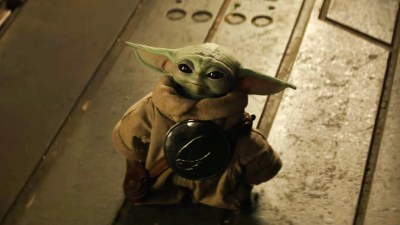
Ideally, that smaller budget will pay off in the long run. The Mandalorian and Grogu‘s break even point won’t be so substantial, so unless it underperforms and flops out of theaters, it should turn a healthy profit. Whether it can equal the marks of the Lucas era remains to be seen. Remember, Finance Buzz‘s figures are based on domestic numbers only. In order to equal Attack of the Clones‘ 170% profit margin, The Mandalorian and Grogu would need to earn around $282.2 million in the United States. That’s doable if word of mouth is solid (The Fantastic Four: First Steps grossed $274.2 million domestically), but Disney and Lucasfilm won’t be relying on U.S. box office alone to make a profit. International markets should give the film a boost. Even matching Solo‘s unadjusted worldwide haul of $392.9 million would be a profit of nearly 237%.
What do you think? Leave a comment below and join the conversation now in the ComicBook Forum!
More Movies
-

Image Courtesy of Marvel -

Image courtesy of Warner Bros. Pictures -

Courtesy of Well Go USA Entertainment -

Image Courtesy of Marvel