Steven Spielberg’s latest sci-fi epic, Disclosure Day, is a surprisingly timely blockbuster with a deep message about humanity itself. Spielberg has always been fascinated by aliens, exploring the idea of extraterrestrial life in so many different ways; he’s the mastermind behind Close Encounters of the Third Kind, E.T., and War of the Worlds, all of which present very different visions of aliens. Disclosure Day is more like Close Encounters than any other, because the film is fundamentally about human transformation.
Videos by ComicBook.com
In Disclosure Day, the Department of Defense and WRDEX have secretly concealed evidence of alien life for decades. The aliens respond not with aggression, but with a plea for disclosure; choosing two human beings to reveal the truth to the world, Emily Blunt’s Margaret Fairchild and Josh O’Connor’s Daniel Kellner. The KCXE news studio becomes the centerpiece of “Disclosure Day,” with an actual alien – presumably In Vivo 17 – arriving to deliver a message to the entire human race. But what is that message?

Steven Spielberg’s Disclosure Day is All About Humanity, Not Aliens
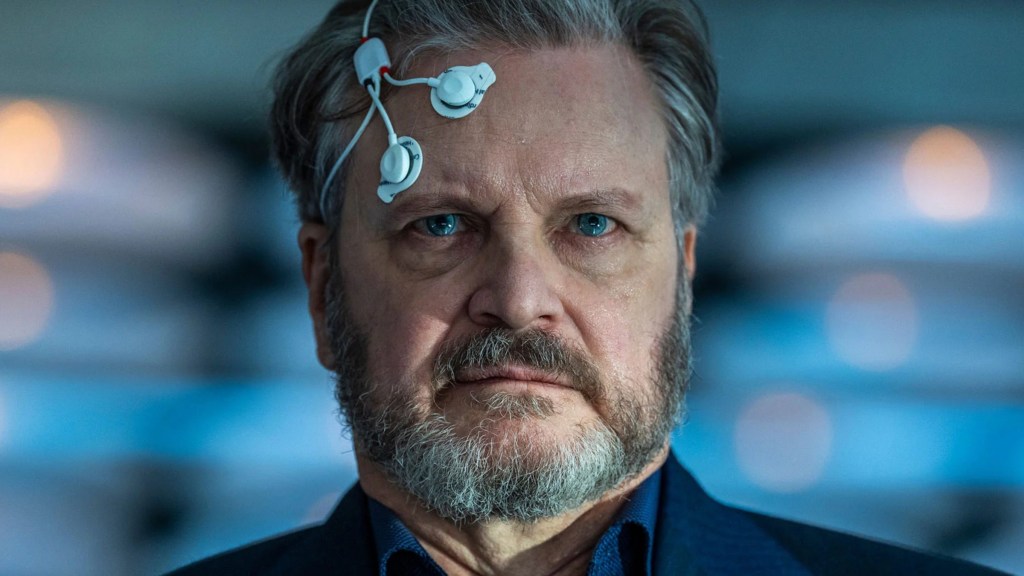
To understand In Vivo 17’s message, you first have to grasp what Disclosure Day is really all about. Yes, this is a story with aliens and UFOs, but it’s fundamentally about human nature. The world of Disclosure Day is on the brink of nuclear war between the USA and North Korea, and – according to the aliens’ philosophy – this is the natural result of building societies that are bereft of empathy. Disclosure Day‘s aliens believe empathy to be “the foremost evolutionary advantage,” and rejecting this is leading humans to “extinction.”
WRDEX boss Noah Firth represents this. WRDEX and the Department of Defense have known about the existence of aliens for decades, but they believe humanity can’t cope with the truth. They’ve concealed it, reverse-engineering alien technology to give the US a technological advantage while conducting horrific experiments on aliens. Now, they view the potential apocalypse as proof they are right. But WRDEX is no passive observer; their approach shaped society and even geopolitics. This is the world WRDEX built, a direct result of their lack of empathy. Note the name choice for WRDEX’s boss: Noah, evoking Biblical imagery of judgment and destruction.
The aliens could be forgiven for believing humanity irredeemable; they’ve been mistreated for decades, after all. But, because empathy is their own foremost evolutionary advantage, they do not give up. Rather, they seek to inspire empathy in humanity as well. This is made explicit in a subplot involving Eve Hewson’s Jane, a former nun who didn’t lose faith in God, but rather lost faith in humanity. When Jane’s faith is finally awoken, she heads to the KCXE new studio to help ensure Disclosure Day happens.
Why Margaret & Daniel Are Chosen (& What For)

The aliens have chosen Daniel and Margaret, appearing to them in animal form when they were just children on February 23, 1996. It’s unclear why they chose these two particular children, and the date – unusually for Disclosure Day – doesn’t appear to have any real significance in wider UFO lore. What is clear, though, is that these two humans are special; the Adam and Eve of a new humanity, designed to complement one another. Daniel is granted prodigious mathematical gifts, while Margaret gains the power of empathy.
Daniel’s powers were somehow triggered when he was in college, and he eventually wound up in prison. Margaret’s abilities were only unlocked after a red cardinal (presumably an alien presenting as an animal) visited her. They fully manifest after Hugo Weaving takes Margaret and Daniel to a recreation of her childhood home, designed to trigger the suppressed memories and prepare them for Disclosure Day.
Disclosure Day is a surprisingly political film. In the real world, empathy has become deeply controversial; Canadian evolutionary psychologist Gad Saad coined the term “suicidal empathy,” arguing compassion for others ultimately leads to a society’s destruction. This idea has become mainstream in American politics, popularized with the help of Elon Musk, and it’s common to see empathy critiqued as a “feminine” character trait. Criticisms of empathy have become common in religious circles, with evangelicals referring to the “sin of empathy,” tying in to the film’s religious themes. Disclosure Day is Spielberg’s counter, and – appropriately – he happily gives the empathy power to Margaret, not Daniel.
“Listen” is the Only Word We Need to Hear
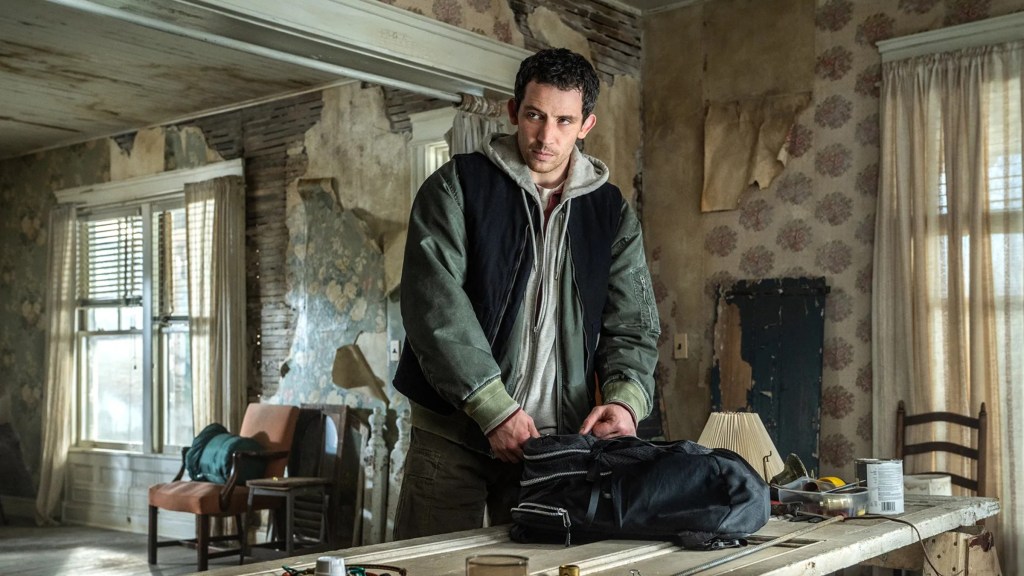
Margaret reveals the truth about aliens to the entire world, including a massive data dump inspired by countless different conspiracy theories: Roswell, the legend that President Nixon showed Jackie Gleason proof of aliens,and so much more. But all this is simply setup for a direct intervention, with In Vivo 17 giving Daniel and Margaret a message that must be delivered to the world. Disclosure Day deliberately cuts away before presenting the full message – but the single word we do hear is really the whole point.
“Listen,” Margaret says, before the film cuts off. Disclosure Day is a call to listen to others; to recognize empathy not as a weakness, but rather as the “evolutionary advantage” that stops people and societies competing. It is a call for cooperation and unity instead of self-destructive aggression, Spielberg’s own word to the world, a direct appeal made through this whimsical, creative sci-fi film. Earlier, Margaret (involuntarily) made a similar point: “Don’t be afraid of what you don’t know.” But now the appeal is direct, spoken not to the world of Disclosure Day but rather to our world.
Spielberg has often tried to “speak into the moment,” even when dealing with fantastical plots. Close Encounters of the Third Kind confronts cynicism with awe and wonder, E.T. offers emotional connection at a time when society was fracturing, and Munich reflected debates surrounding the US response to 9/11. Disclosure Day continues Spielberg’s tradition of political commentary, this time entering into the debate about empathy, and the film’s final word emphasizes that message: “Listen.”
Disclosure Day opens in theaters June 12. Are you going to see Disclosure Day? Leave a comment below and join the conversation now in the ComicBook Forum!
More Movies
-

IMAGE COURTESY OF WARNER BROS. -

IMAGE COURTESY OF FOCUS FEATURES -

Image Courtesy of Marvel -
Courtesy of Warner Bros. Pictures -

Courtesy of Eon Productions