
Supergirl is continuing to look like a major failure for the new DC Studios and its DC Universe franchise. As of writing this, Supergirl has made just $79 million worldwide on a budget that’s estimated to be as high as $170-$180 million. Reviews are divisive, even word of mouth from fans is more muted than usual, and a lot of questions are now being asked about the future of the DCU.
Videos by ComicBook.com
And asking those questions is more than fair at this point. Supergirl didn’t just underperform in terms of not getting enough viewers into the theater; it underperformed in terms of maintaining the standard of the DCU that fans had come to expect after James Gunn’s Superman (2025). And if that wasn’t enough, Supergirl let diehard comic fans down by squandering some of the best DC comic book stories of the last decade.
Woman of Tomorrow Was Glorious Subversion of Lore & Character

The comic miniseries Supergirl: Woman of Tomorrow (2021-2022), by writer Tom King and artist Bilquis Evely, follows the same basic beats as the Supergirl (2026) movie: Kara Zor-El is depressed and celebrating her birthday getting drunk on a red sun planet; she gets wrapped up in the tragic story of Ruthye Marye Knoll, whose has suffered a loss at the hands of Krem of th Yellow Hills; Kara’s dog Krypto is critically poisoned by Krem, and Kara has to chase the mercenary down for the antidote.
Some of the scenes of Supergirl (like taking an intergalactic transport vessel that’s jam-packed with aliens) are lifted straight out of the Woman of Tomorrow comic – albeit with a lot less color than Bilquis Evely included in the source material. However, that’s where the similarities between the film and the comic end. And it’s the differences that kill the potential for the film to be great.
Tom King famously favors one kind of narrative approach above all others: the unreliable narrator. However, whereas often the unreliable narrator is purposely misleading the audience (Agatha Christie’s And Then There Were None, The Usual Suspects), King flipped the trope around to make Ruthye an unreliable narrator by way of naivety.

For many portions of the comic, we hear Ruthye narrating the story directly (in past tense), while the panels of artwork reveal the discrepancy between what the child interprets and what’s actually happening. Other issues of the miniseries draw the reader into the present action of the story, where Ruthye bears witness to Supergirl handling issues that reveal the cruelty and evil of the universe to a sheltered child who is unprepared to process it all.
The real arc that is taking place during the hunt for Krem is a psychological/emotional one: Supergirl is trying to “save” Ruthye’s innocence and purity during the journey, while also trying to get justice for the young girl, who has suffered the same kind of life trauma Kara did. Ruthye’s emotional arc is low-key the central focus of the story, as it forces Kara to confront the demons in her own soul, which she’s long avoided (including her tragic backstory in Argo City). It’s that shared arc between the two women that makes the ending of the comic so great, and the changes to the movie’s climax, so egregious.

In Supergirl (2026), Krem of the Yellow Hills (Matthias Scheonaerts) is a freaky space pirate, but in the comic, he’s a much more handsome humanoid character who only joins the marauder group the Brigands later in the story and is never their leader. The comic framed the Brigands as unique mercenaries who specialize in genocide, wiping out entire planets or populations when others want to pay them to avoid doing the dirty work themselves; in fact, one entire issue of the comic sees Supergirl and Ruthye planet-hopping only to find more and more mass murders that Krem and the Brigands leave in their wake.
The journey also had moments where Ruthye had to find strength in herself to save Kara (like on the green sun planet). It’s a much more emotionally dynamic journey for Ruthye, who is constantly comparing herself to her idealized image of Supergirl, and slowly has to peel that idealism away and understand more about the complicated nature of adult life and growing into a woman. And that emotional journey culminates in a very powerful ending that the movie ruins completely.
Woman of Tomorrow Was All About A Different Kind of Victory (& The Movie Defeats It)
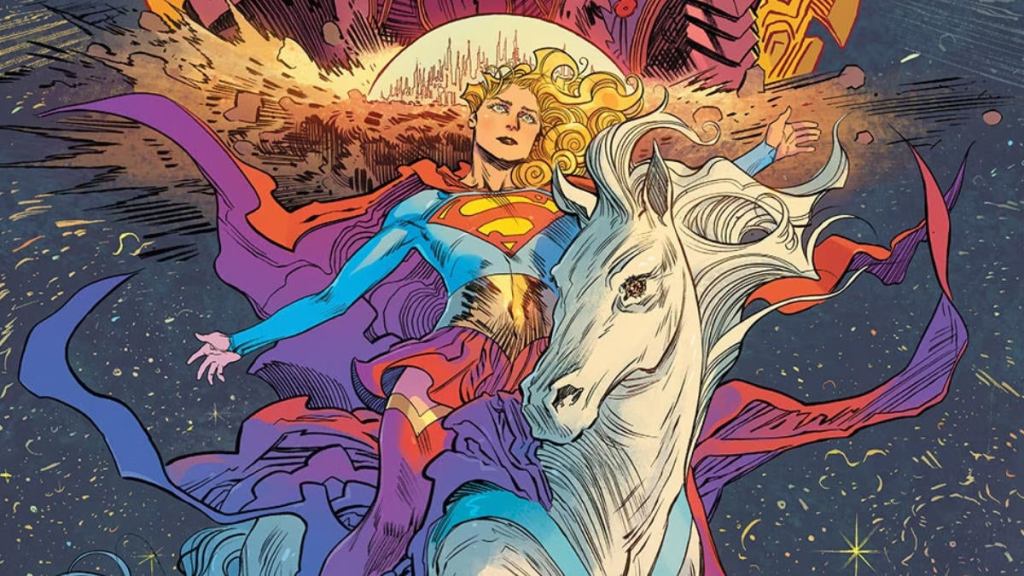
The finale of Woman of Tomorrow sees Kara in space fighting the Brigands fleet, while on a pristine beach of some planet, Ruthye guards Krem, whom Kara has captured, with Supergirl’s super-horse, Comet, watching to make sure neither Krem nor Ruthye kill one another. However, Supergirl being in peril forces Comet to rescue her; a disillusioned Ruthye deceives the horse so that she can finally kill Krem with her father’s sword. Kara stops her and takes the sword to deliver justice, but spares Ruthye the soul-dimming sin of killing.
Ruthye ultimately stops Kara, revealing that their journey, and Kara’s noble adherence to not using her powers to kill, saving others, and controlling her traumas and emotions, has given Ruthye hope to keep living the way her father would’ve wanted, and in Kara’s image. In turn, Ruthye spares Kara further trauma by not having her murder Krem on her behalf, and they instead lock Krem away in the Phantom Zone as punishment. Woman of Tomorrow ends with Kara visiting an elderly Ruthye years later, where we learn the story we heard is a book Ruthye wrote to honor the legend of Supergirl. The pair finally let Krem out of the Phantom Zone, as the killer has long since reformed his ways. Kara and Old Ruthye leave Krem with just a bop on the head from Ruthye’s cane as their only retribution, as they both have lived happier and more fulfilled lives since letting go of their respective anger and grief.

At the end of the Supergirl movie, Kara does go through with killing Krem to spare Ruthye from doing it; the movie tries to frame the killing as noble because Kara claims to be avenging the women Krem and the Brigands trafficked, tortured (and worse). But it doesn’t feel like a rousing moment of justice: it feels dark, and almost like an echo of Zack Snyder’s infamous decision to have his version of Superman also execute a foe to win the day (Zod). It’s even worse that screenwriter Ana Nogueira has publicly revealed that she didn’t even know or understand the ending to the comic, thinking Ruthye killed Krem. She therefore thought having Kara do it was the more noble way to go. That’s obviously angered DC fans, who rightly want to know what kind of adaptation process DC Studios has in place.
Woman of Tomorrow was a brilliant multi-generational tale that ponders what it is to be a “good” or “powerful” woman in a bleak modern world. It was about two women bound by trauma who learn to love and care for one another as a means of “saving” one another. The Supergirl movie abandons that core element of the comic, both stylistically (no narration from Ruthye) and thematically, through its reworked ending. Not only did fans not get the film they deserved, but they also had to see one of the better DC comics get fumbled. Badly. Kara deserves better.
Supergirl: Woman of Tomorrow can be read at DC. The movie is currently in theaters. We know which one we would choose. Discuss the DCU with us on the ComicBook Forum.
More Movies
-
IMAGE COURTESY OF SUNBOW -

Image Courtesy of Overture Films and Relativity Media







Forum Conversation: DCU FAN-CASTING: Bane & Deathstroke
Go to ForumAll the Bane fan-castings were terrible
I think you have some pretty good options in your article.
Leave it someone who ISN’T hispanic to make decisions on a comicbook character that IS Hispanic. Every actor this Kofi person chose is NON-HISPANIC and felt the need to explain away his suggestions with a healthy dose of whataboutism. How about you do some actual research before making suggestions