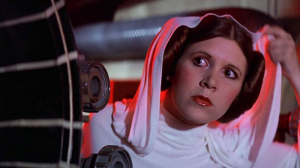
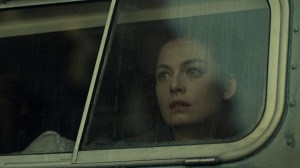
One could point at the 13-minute opening of Scream and say it represents a lack of originality. It is, at its core, a play on the surprising early departure of Janet Leigh’s Marion Crane midway through Alfred Hitchcock’s Psycho. And it wasn’t the first movie to throw that brand of curveball at the audience since the release of the 1960 classic, either. For instance, we’re more or less led to believe that Annie is the protagonist of Friday the 13th until a hunting knife-armed Mrs. Voorhees speeds past the entrance of Camp Crystal Lake and chases her down in the woods.
Videos by ComicBook.com
But the reason the opening of Scream works just as well as that scene in Psycho is the same: an expert upwards ratcheting of tension. But that’s not the only reason to unpack. In fact, there is a plethora of factors why this scene in particular just narrowly steps over the death of Chrissie Watkins in Jaws and Father Merrin’s speculation about the devil’s purpose (“I think the point is to make us despair….”) in The Exorcist as my favorite film scene ever shot.
What Makes This Scene Take the Cinematic Cake?
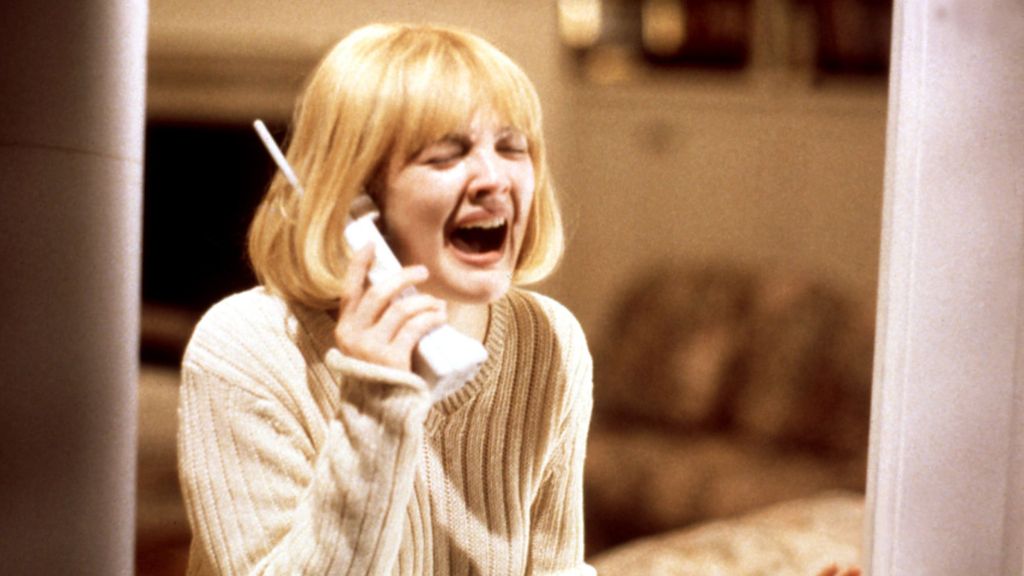
Like Leigh, Drew Barrymore was the biggest star in the movie, but not in quite the same way. There’s an added element that makes the death of Barrymore’s Casey Becker all the more of a gut punch. Leigh was an MGM mainstay, but she didn’t find herself on the big screen until 20. Barrymore, however, became a sensation the world over as a child actress thanks to E.T. the Extra-Terrestrial. Her role as Gertie in that Steven Spielberg classic was seen by just about everyone with a pulse who was alive in 1982 (and ever since). She won all their hearts. Adults with kids saw their kids in her, kids saw themselves or other kids in her; she did a lot to accurately convey warmth and curiosity and it’s hard to imagine anyone doing that better than she did.
And, in 1996, that was still the role people most frequently linked her too. It wasn’t her other child actor films like Firestarter or Cat’s Eye, it was E.T. So, to see the little girl from E.T. get gutted and hanged from a tree is still brutal and, no pun intended, gut-wrenching to this day. In ’96? When people didn’t know that this was going to happen? With her face and name on the poster? It must have genuinely devastated some in the audience.
Then there’s the fact that, through no fault of her own, Barrymore had some rough years with drugs and alcohol, having been exposed to substances by irresponsible adults jarringly early in her life. That real-life tragedy manages to infuse itself into the cinematic tragedy this scene represents.
Furthermore, while Psycho gives us some time to know Crane, force us to see her as a flawed figure, Scream doesn’t allow us to get to know Becker all that well. We see she’s bubbly and happy, probably excited about going off to college the next year. But then, before the narrative has even really started, we see that bubbliness deteriorate with each subsequent word spoken by her soon to be assailant(s) on the phone. The happiness is replaced with fear, then devastation, then terror, and lastly hopelessness.
This range of emotions is ably supported by Marco Beltrami’s dynamic score, which peaks in effectiveness when Becker, with her larynx scrunched and stomach bleeding, slowly moves towards the front porch where her parents are entering the house. No matter how many times it’s watched the viewer is begging the movie to allow her the ability to call out or to move a few steps further or for her parents to just look to the left. But she can’t and they don’t. We feel her hopelessness and desperation in full as Beltrami’s music hits a pitying, operatic note.
The midway twist of Psycho upped the stakes for the rest of the film. Scream does that from the very beginning. Because of that, no one ever feels safe, just as no one besides Sid ever really feels trustworthy. Becker’s house, like the remainder of Woodsboro, is sublimely idyllic yet charmingly plain. Most middle class or upper middle-class folks can look at the Becker house and remember living in such a place or having a friend who lived in such a place. It doesn’t look or feel dangerous until danger is brought to it. And that’s what’s scary, feeling like something can get you when you’re in your element. Director Wes Craven was always wonderful with that, be it in one’s dreams or in a slice of Everyday, USA.
Along with the high stakes, the opening also accomplishes establishing that this isn’t like any slasher you’ve ever seen. You saw Annie get knocked off early in Friday the 13th, but she didn’t have to play a sadistic game of trivia with the narrow hope of securing a literal lifeline. Everything the death of Casey Becker wants to establish, it does. The end result was a much better movie and a career resurgence for Barrymore, who experienced a return to the A-list after failing to achieve that via a few years of adult-aged roles in dreck like Poison Ivy or a bit role in Batman Forever.
Most Viewed
-

Official art by Bastien Lecouffe-Deharme -

A photo of the Retrovolt Arcade taken in 2017, showing several classic arcade cabinets and stools. -

Image Courtesy of Paramount