The Marvel Cinematic Universe has cemented its status as a global entertainment phenomenon, meticulously weaving together an expansive narrative across dozens of films and television series since its inception. This ambitious storytelling has cultivated a sprawling cast of hundreds of key characters, drawing from the decades-long history of Marvel Comics to populate its increasingly complex world. Of course, the nature of adapting source material, especially for a new medium and a contemporary audience, forces writers to take a degree of creative flexibility. The challenge lies in remaining faithful to a character’s core identity and thematic essence while implementing necessary alterations to serve the overarching story being developed.
Videos by ComicBook.com
Given the deep and often convoluted lore of Marvel Comics, comparisons between the cinematic and comic book iterations are an unavoidable aspect of the fandom experience. Surprisingly, while all MCU characters put a spin on their comic book counterparts, some are incredibly different. These divergences range from subtle personality shifts to complete overhauls of origin stories, powers, and even fundamental identities.
10) Ms. Marvel
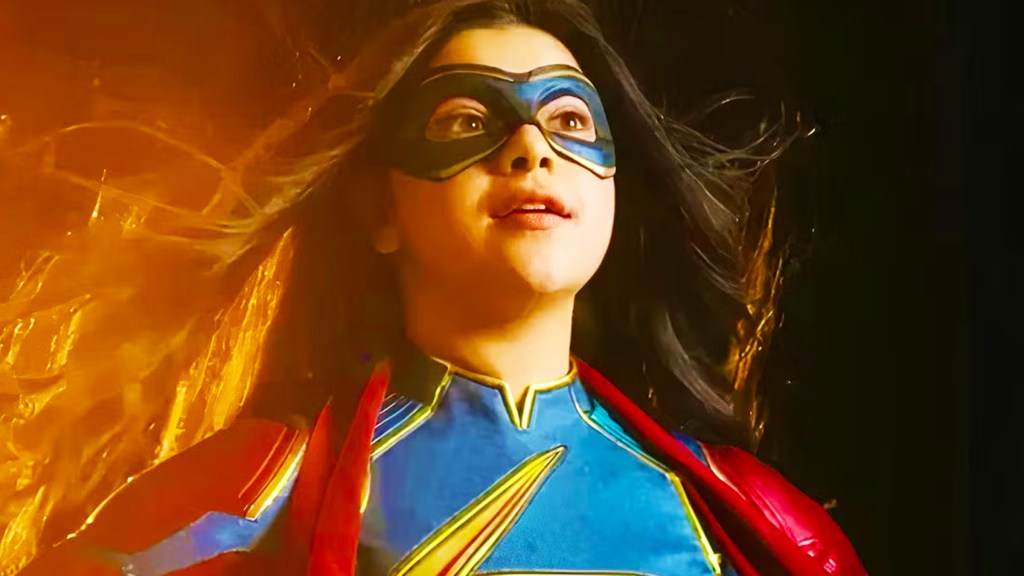
The MCU portrayal of Kamala Khan (Iman Vellani) captures the heartfelt spirit and vibrant personality of her comic book self with remarkable accuracy, yet it fundamentally alters her biology. Both iterations depict Kamala Khan as a Pakistani-American teenager from Jersey City navigating her Muslim faith and a supportive family while suddenly gaining extraordinary powers. However, the mechanism behind her abilities underwent a significant revision for the screen. In the comics, Kamala Khan is an Inhuman whose dormant powers are activated by the Terrigen Mist, granting her polymorphic abilities like embiggening and shapeshifting. The MCU reimagined her powers as emanating from a magical bangle that unlocks potentially mutant abilities, primarily creating hard light constructs. This shift allowed the studio to avoid the complex Inhuman lore, but it created a version of Ms. Marvel whose power set is unrecognizable to long-term comic book readers.
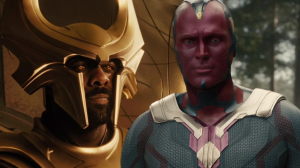
9) Wong
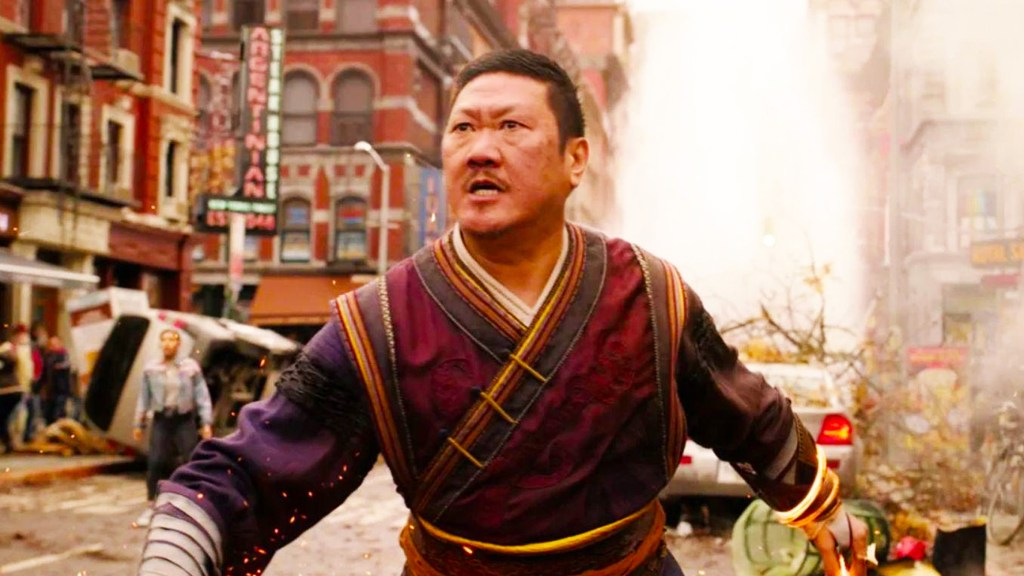
Wong (Benedict Wong) has undergone a substantial evolution from his traditional comic book depiction in the MCU, though his core dedication to the mystic arts remains consistent across both mediums. Historically, Wong was primarily known as the loyal, often subservient valet and mystical assistant to Doctor Strange (Benedict Cumberbatch). While highly skilled in martial arts, his role in the source material was largely supportive and lacked the prominent leadership position seen in the cinematic universe. The MCU, however, elevated Wong to a much more central figure, first as the Master of the Mystic Arts and eventually ascending to the esteemed position of Sorcerer Supreme during the events of Spider-Man: No Way Home. This promotion gives him far greater influence over global magical affairs and positions him as a key figure in major universe-spanning conflicts.
8) Mantis

The MCU introduced Mantis (Pom Klementieff) as a naive empath with antennae, raised in isolation by Ego (Kurt Russell) and possessing the ability to manipulate emotions through touch. This portrayal largely emphasizes her innocence and her developing social skills within the Guardians of the Galaxy movies. In contrast, the comic book version of Mantis boasts a far more complex and cosmic lineage, often depicted as a highly skilled martial artist with a background rooted in the Kree and Vietnamese cultures. She holds the title of “Celestial Madonna,” possessing a deep connection to the universe and a destined role in cosmic evolution. Her comic powers are also more varied, including telepathy and precognition, alongside her martial prowess. The MCU version is a significant simplification of her established history, focusing on her as a source of comedic relief and emotional support.
7) Drax

The cinematic version of Drax (Dave Bautista) is presented as a literal-minded, boisterous warrior consumed by a quest for revenge against Thanos (Josh Brolin) for the murder of his family. While this revenge motive is central to his character in both mediums, his comic book origin story is vastly different. In the comics, Drax was originally a human musician named Arthur Douglas, whose family was killed by Thanos. Arthur Douglas’s spirit was then placed into a powerful new body by the cosmic entity Kronos, specifically to become the ultimate destroyer of the Mad Titan. In comics, Drax often possesses cosmic energy blasts and flight, along with super strength, and maintains a more serious personality. The MCU streamlined Drax’s backstory, stripped away his original human identity from Earth, and significantly altered his powers. In addition, by leaning heavily into his literal interpretation of language for comedic effect, the films created a beloved character that nonetheless lacks the nature of the original Arthur Douglas version.
6) Janet van Dyne

In the MCU, Janet van Dyne (Michelle Pfeiffer) is the original Wasp, a hero who was lost in the Quantum Realm for decades after a Cold War mission went wrong. She is depicted as a mentor and a figure of wisdom who eventually returns to Earth with unique residual quantum abilities. The comic book version of Janet van Dyne, however, is a founding member of the Avengers and the individual who actually gave the team its name. In the comics, Janet is also a brilliant fashion designer and a sophisticated personality who served multiple times as the leader of Earth’s Mightiest Heroes. The MCU largely relegated her heroic tenure to the past, moving her away from the frontline action to focus on the next generation, including her daughter Hope van Dyne (Evangeline Lilly). This decision diminished her extensive history as a proactive leader in the superhero community.
5) Hank Pym
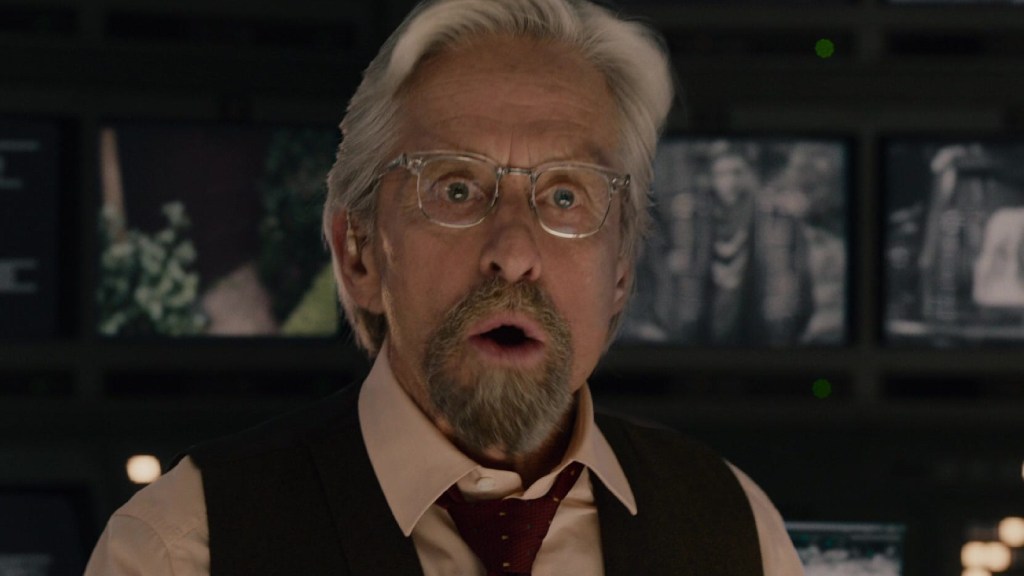
The MCU’s Hank Pym (Michael Douglas) is introduced as a brilliant, yet curmudgeonly, retired scientist and the original Ant-Man, deeply distrustful of S.H.I.E.L.D. and the Stark family. His primary role is as a mentor to Scott Lang (Paul Rudd), guiding him through the complexities of Pym Particles. This portrayal deviates significantly from Hank’s expansive comic book history. In the source material, Hank Pym is a founding member of the Avengers and famously the creator of Ultron. His comic counterpart is also far more active and troubled, adopting multiple superhero identities, including Giant-Man, Goliath, and Yellowjacket, as he struggles with deep-seated identity crises. By moving Hank Pym to an older generation in the films, the MCU removed his direct involvement in the birth of the Avengers and transferred the creation of Ultron (James Spader) to Tony Stark (Robert Downey Jr.). Furthermore, the cinematic version is far more stable than the volatile genius of the comics, who was often defined by his personal failures as much as his scientific triumphs.
4) Star-Lord

In the MCU, Peter Quill (Chris Pratt), also known as Star-Lord, is depicted as a human abducted from Earth as a child in 1988, raised by the Ravager Yondu (Michael Rooker), and developing into a charismatic rogue. Guardians of the Galaxy Vol. 2 also reveals Peter is half-Celestial, as he’s the child of Ego, a living planet. The comic book origins of Peter Quill are considerably more complex and less rooted in 1980s pop culture. In the comics, Peter Quill’s father is J’son, the Emperor of the Spartax Empire, making Peter Quill a prince of an intergalactic civilization. Also, instead of travelling the cosmos in his childhood, Peter originally began his journey as a NASA astronaut who was chosen by a cosmic entity to become Star-Lord. Finally, the comic version of Peter Quill often exhibited a more serious and tactical demeanor, eventually becoming a respected military leader rather than purely a mercenary. The MCU decision to replace the Spartax royalty with a Celestial plot line fundamentally changed Peter Quill’s motivations and his place within the cosmic hierarchy, favoring a personal family drama over a space opera royal legacy.
3) Yondu

The cinematic interpretation of Yondu bears almost no resemblance to the character introduced in Marvel Super-Heroes #18 in 1969. In the MCU, Yondu is a blue-skinned Ravager pirate who uses a whistle-controlled Yaka Arrow to slaughter his enemies, while serving as a surrogate father to Peter Quill. The original comic book Yondu, in his turn, was a noble hunter and a founding member of the original Guardians of the Galaxy, a team fighting to liberate the solar system from the Badoon empire. In Marvel Comics, Yondu possessed no technological arrow, relying instead on his skill with a primitive bow and a deep connection to nature. The MCU essentially created an entirely new character and applied the name Yondu to him, discarding the futuristic setting and the noble persona in favor of a 21st-century space pirate who is significantly more violent.
2) Taskmaster
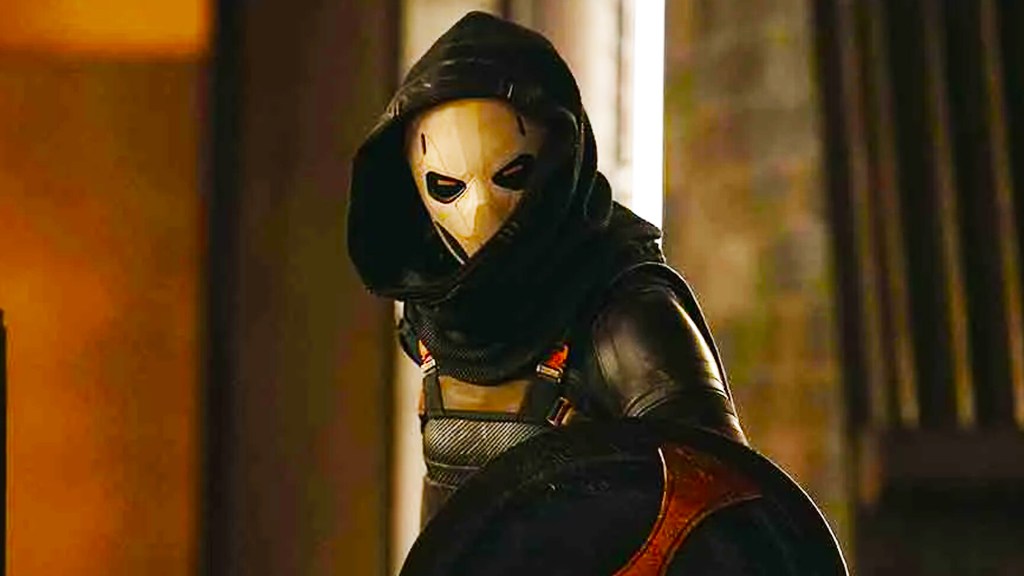
The MCU version of Taskmaster (Olga Kurylenko) represents a radical reimagining of the anti-hero. As Black Widow reveals, Taskmaster is the codename of Antonia Dreykov, the daughter of General Dreykov, who was brainwashed and cybernetically enhanced to mimic the fighting styles of others. In stark contrast, the comic book Taskmaster is consistently portrayed as a male mercenary named Tony Masters. Tony is a skilled combatant with photographic reflexes that allow him to perfectly replicate any physical action he observes. He often operates as a sarcastic trainer for supervillains and a formidable opponent for heroes like Captain America, driven by profit and professional pride. Taskmaster has also acted as an anti-hero in Marvel Comics and has even been hired by SHIELD to train agents. By turning Taskmaster into a silent puppet with a technological origin, the MCU discarded the most entertaining aspects of the character’s ego and mercenary ambition.
1) Mar-Vell

The MCU’s portrayal of Mar-Vell (Annette Bening) in Captain Marvel is the most significant departure from any Marvel character’s comic book history. In the film, Mar-Vell is a female Kree scientist posing as a human named Dr. Wendy Lawson. This version is a pacifist who worked on Earth to develop a light-speed engine using the Tesseract to help Skrull refugees. While her role is essential to the origin of Carol Danvers (Brie Larson), she is a secondary mentor who dies long before the main events of the film take place. The comic book Mar-Vell is a legendary male Kree warrior who was the first character to carry the mantle of Captain Marvel. He was a central figure in the Marvel Universe throughout the 1970s, known for his cosmic awareness and his fierce defense of Earth. His death in the storyline The Death of Captain Marvel is considered a definitive moment in comic history, given his importance for the Marvel Universe as a whole. Reducing this cosmic icon to a scientist who never actually wore the superhero uniform on screen is the MCU’s most extreme reimagining.
Which MCU character do you think diverged the most dramatically from their comic book origins? Leave a comment below and join the conversation now in the ComicBook Forum!
Most Viewed
-
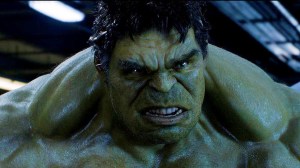
Image courtesy of Marvel Studios -
Image Courtesy of Netflix -
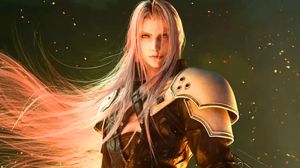
Image courtesy of Square Enix -

Image courtesy of Ufotable