Steven Spielberg revolutionized blockbuster cinema with the release of Jurassic Park, establishing a gold standard for creature features that remains entirely unmatched. The 1993 adaptation of Michael Crichton’s novel used a groundbreaking combination of practical animatronics and pioneering computer-generated imagery to present prehistoric predators with terrifying realism. This unprecedented visual fidelity transformed the industry and cemented the property as a monumental cultural touchstone. However, subsequent installments struggled to recapture that initial magic, leading to a sharp decline in creativity that culminated in a prolonged period of stagnation.
Videos by ComicBook.com
The Jurassic brand was revitalized with Jurassic World, a legacy sequel widely celebrated as the best entry since the original adventure. The production successfully reintroduced the concept of a fully operational theme park, updating the visual spectacle for modern audiences while acknowledging the inherent dangers of genetic tampering. Despite this triumphant return, the Jurassic World sequels once again failed to impress critics, stumbling through convoluted plotlines involving human cloning and weaponized locusts. Despite its shortcomings, the Jurassic World movies remain box-office juggernauts, largely because high-quality dinosaur media remains incredibly rare. Most studios lack the financial resources required to render convincing prehistoric beasts on screen, resulting in a scarcity of true cinematic spectacle within the subgenre. Nevertheless, a handful of productions deliver dinosaur-themed narratives that rival the quality of the recent Jurassic World sequels, with some even surpassing them.
4) 65
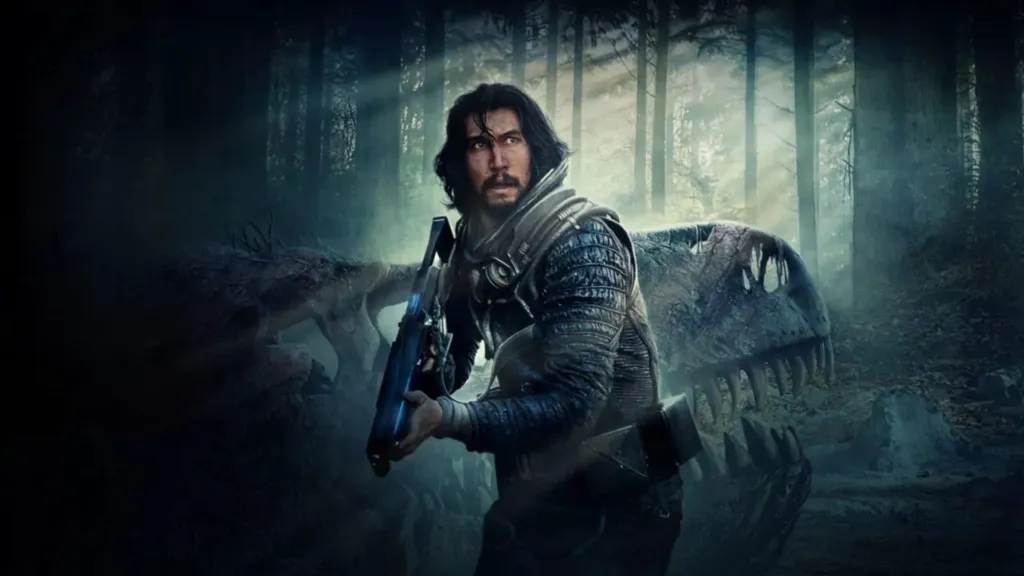
Directed by Scott Beck and Bryan Woods, 65 is a survival thriller that matches the kinetic energy of the later Jurassic World installments while maintaining a much tighter narrative focus. The story follows a pilot named Mills (Adam Driver) whose spacecraft crash-lands on an uncharted planet, which is quickly revealed to be Earth during the late Cretaceous period. Tasked with protecting a young survivor named Koa (Ariana Greenblatt), Mills must navigate a hostile prehistoric landscape teeming with aggressive predators.

The creature designs of 65 lean heavily into horror, presenting battle-scarred iterations of familiar carnivores that emphasize the sheer brutality of the ancient world. In addition, Driver delivers a physically demanding performance that anchors the science-fiction premise in genuine human exhaustion. While the movie’s pacing is sometimes uneven, and the story holds few surprises, 65 still delivers a visually impressive action experience that efficiently satisfies the primal desire for dinosaur encounters.
3) The Good Dinosaur
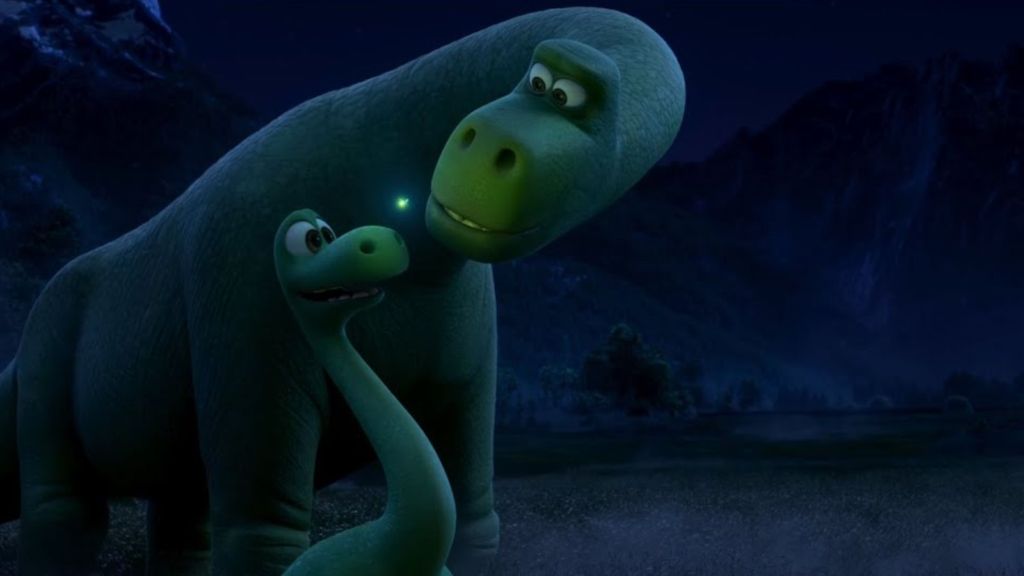
Pixar presented a visually breathtaking alternative history in The Good Dinosaur, exploring a timeline where the catastrophic asteroid missed Earth and allowed the giant reptiles to evolve into an agrarian society. The plot centers on a timid Apatosaurus named Arlo (voiced by Raymond Ochoa) who becomes separated from his family and must rely on a feral human child named Spot (voiced by Jack Bright) to survive the treacherous wilderness.
The Good Dinosaur contrasts highly stylized character designs with photorealistic environments, rendering rushing rivers and towering forests with an unprecedented level of computational power. This aesthetic choice creates a sweeping frontier epic that captures the majesty of the natural world. While the narrative structure adheres to familiar coming-of-age conventions, the poignant relationship between the central duo provides a compelling emotional anchor. As a result, The Good Dinosaur stands as a remarkably sincere adventure that utilizes its prehistoric cast to deliver a striking meditation on grief and resilience.
2) One Million Years B.C.
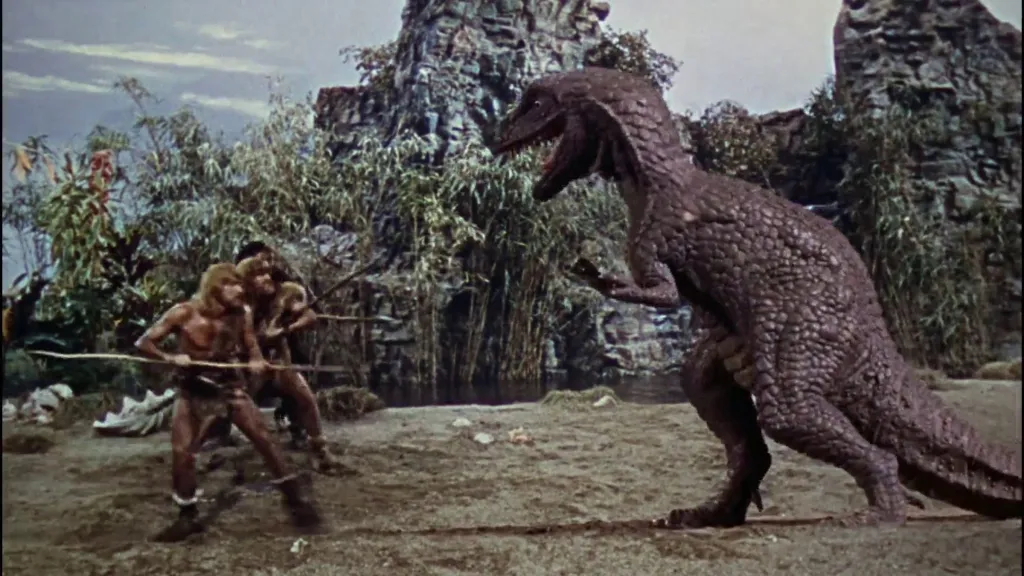
One Million Years B.C. established an enduring visual template for prehistoric cinema, relying on the unparalleled stop-motion expertise of legendary animator Ray Harryhausen. The narrative follows a caveman named Tumak (John Richardson) who is exiled from his tribe and eventually finds refuge with a more advanced coastal civilization alongside Loana (Raquel Welch). The film notoriously ignores chronological scientific accuracy by placing early hominids alongside massive dinosaurs, prioritizing cinematic spectacle over historical fact. This deliberate creative choice allowed Harryhausen to craft some of the most iconic creature encounters of the twentieth century, including a thrilling battle with a giant Archelon and a predatory Allosaurus.
The tactile nature of the animation process imbues One Million Years B.C.‘s monsters with a physical weight and aggressive personality that modern computer-generated creatures often lack. Furthermore, the total absence of recognizable spoken dialogue forces the production to rely entirely on visual storytelling and kinetic choreography. This pure reliance on visual artistry ensures that One Million Years B.C. remains a superior cinematic achievement compared to the bloated, exposition-heavy scripts found in the later Jurassic World sequels.
1) The Land Before Time
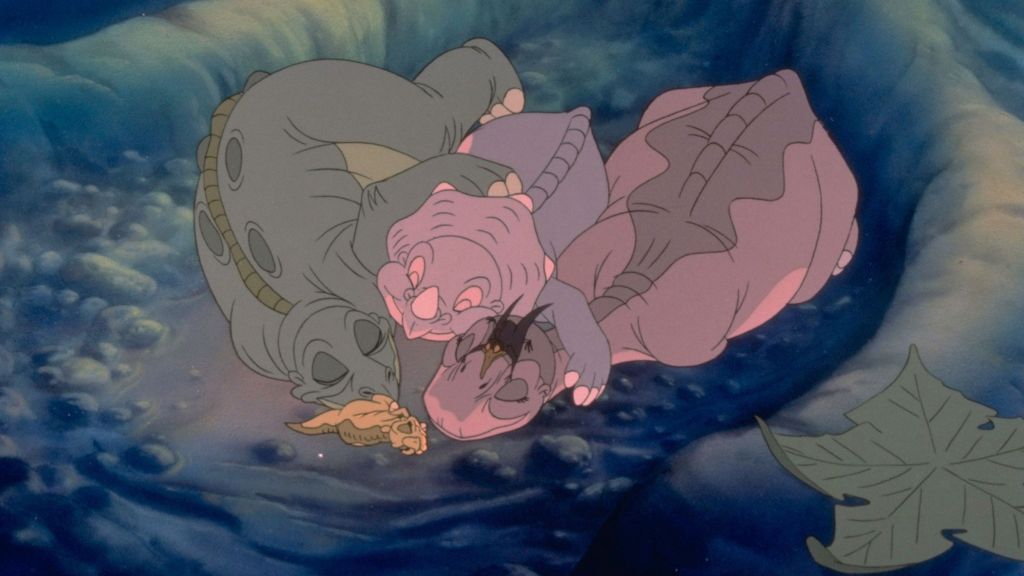
Directed by Don Bluth and produced by Steven Spielberg, The Land Before Time delivers a far more resonant emotional experience than any modern dinosaur blockbuster. The story follows an orphaned Apatosaurus named Littlefoot (voiced by Gabriel Damon) as he leads a diverse group of young dinosaurs, including a stubborn Triceratops named Cera (voiced by Candace Hutson), toward the fabled Great Valley. While the promise could give way to cliched family-friendly adventure, The Land Before Time confronts the harsh realities of extinction, starvation, and predation with a surprising level of maturity.
Bluth’s signature animation style utilizes deep shadows, muted color palettes, and expressive character movements to create an atmosphere of constant vulnerability. This uncompromising approach to family entertainment forces the young protagonists to earn their survival through cooperation and shared trauma. By prioritizing character development and thematic weight over mindless spectacle, The Land Before Time easily surpasses recent Jurassic World sequels to stand as a definitive triumph of the prehistoric genre.
Which dinosaur-centric movie do you believe offers the best depiction of prehistoric predators? Leave a comment below and join the conversation now in the ComicBook Forum!
Most Viewed
-

Official art by Bastien Lecouffe-Deharme -

A photo of the Retrovolt Arcade taken in 2017, showing several classic arcade cabinets and stools. -

Image Courtesy of MAPPA