
With a great sci-fi adventure comes great expectations from the audience. Filmmakers working within the genre have long relied on a core set of tried-and-true “rules” to keep sprawling ideas in check and to keep viewers happy. These can include things like: stick to one big scientific leap, don’t get overly sentimental, keep your paradoxes clean, explore your world through the chosen one’s eyes, and obviously, you have to give the audience a firm grasp on who (or what) the aliens are.
Videos by ComicBook.com
Yet, some movies deliberately break these rules and end up becoming all-timers precisely because they gave us something we weren’t expecting. This list rounds up seven movies that threw the science fiction handbook out the window and used our own expectations of the so-called rules as an opportunity for subversion. Some of them were so effective that they actually created new precedents and changed the course of sci-fi forever.
7) Interstellar

Most “hard” sci-fi focuses on hyperrealistic science and heady, cerebral musings, leaving little room for emotional crescendos. Interstellar takes a different approach. Someone not exactly known for sentimentality, Christopher Nolan plays against the genre and his own style by leaning into the idea that love is an interdimensional force capable of bridging time. Of course, it also contains a lot of grounded science in the realm of relativity equations and quantum data, but it adds a unique sprinkle of something almost mystical. A notorious tearjerker and favorite among sci-fi fans, Interstellar works because of the focus on Cooper and Murph’s father–daughter bond, not in spite of it.
Nolan’s film breaks a few other rules, too. The time-loop (the bootstrap paradox that lets Cooper send himself the coordinates) is acknowledged but never fully resolved. Also, when a character sacrifices themselves, it usually results in death, but when Cooper dives into a black hole, he survives and reunites with his elderly daughter. Finally, the film forgoes the “one big lie” guideline. Rather than picking a single improbable idea, Interstellar stacks wormholes, tesseracts, gravity-based time manipulation, and humanity-saving cry-colonies all at once. It almost shouldn’t even be considered hard sci-fi, yet it is.
6) Prometheus

Sci-fi typically elevates scientists into geniuses, an archetype often found giving the hero an essential piece of information at the opportune moment. However, the scientists in Prometheus are no such masterminds. Biologist Millburn tries to pet an alien “hammerpede.” Geologist Fifield, despite being the one who releases the mapping drones, gets lost in the Engineer structure. Meanwhile, Holloway, a lead scientist on the trillion-dollar expedition, is the one who gets drunk and high out of frustration, giving us the infamous scene where he taunts an alien environment with his helmet off, inspiring the rest of the team to do the same. Even Vickers and Janek stand by as the scientific team makes increasingly reckless decisions.
The movie also breaks the unspoken rule that advanced aliens must operate with understandable logic. Instead, the Engineers are driven by seemingly contradictory motivations. They create humanity, but maybe want to destroy us. They seed life, but experiment with mutagenic black goo. Their abandoned star map, weapon facility, and half-formed plan for Earth all suggest intention, but the film refuses to connect the dots. Instead of offering the neat answers we expect, Prometheus leans into ambiguity, leaving us just as lost as the bumbling scientists, trying to make sense of it all.
5) Her

Most AI movies follow the same trajectory: the AI goes rogue, turns evil, or at least malfunctions in a way that forces humans to regain control. The OS in Spike Jonze’s Her, however, doesn’t fit into that trope. Samantha doesn’t try to conquer humanity, delete Theodore, or take control of the global infrastructure. She does evolve and, in a way, transcend Theodore, but her ascent simply ends in a breakup rather than a life-threatening climactic battle. The movie reframes AI and even makes the OS relatable. Rather than demonizing it, it paints a nuanced picture of the tech’s implications for loneliness and human relationships, without moralizing.
Her also largely breaks the rule of making the future visually distinct. Rather than a sleek metropolis with flying cars or a gritty dystopian hellscape, we get a near future that looks an awful lot like a sunny, soft Los Angeles where everyone wears high-waisted pants and warm tones. And instead of external obstacles, like evil corporations, hackers, or military intervention, the conflict stays entirely internal. Theodore and Samantha fall in love and suffer because they aren’t built the same. When the movie ends, Theodore doesn’t get his sweet reunion, but accepts the loss, subverting both the typical sci-fi and romance movie endings.
4) Inception

The second Nolan entry on the list, Inception, breaks a few major sci-fi rules, but the most significant doesn’t happen until the final shot. Rather than provide us a “proper” resolution akin to a typical sci-fi film, this movie pulls the rug out by refusing to offer closure on the single biggest question the audience cares about: is it a dream or is it real? The movie ends on the infamous wobble of Cobb’s totem, cutting to black and consigning viewers to fifteen years (and counting) of heated debate. Now, Nolan does give Cobb everything he wants: his kids and his freedom, but never certifies whether it’s reality or fantasy. To end the film on such a cliffhanger is a risk often reserved for filmmakers of Nolan’s caliber, and in this case, it dominated the discourse for years after its release.
The movie also shatters several other rules. “Show don’t tell” is tossed out when Nolan gives us a thirty-minute exposition dump as Ariadne gets lectured through the mechanics of dream-sharing, dream-building, dream-defense, kicks, limbo, and inception itself. Like Interstellar, this movie also rejects the “one big lie” principle, stacking layers of speculation, including shared dreaming and a metaphysical limbo that punishes dreamers with decades of false time. Yet rather than collapsing under its own weight, the structure is so precise that Inception comes together brilliantly.

3) Arrival

“First contact equals conflict” is one of sci-fi’s oldest tropes. Arrival uses our anticipation of conflict to build suspense, but ultimately overturns it. Rather than an epic showdown, Denis Villeneuve’s alien flick focuses on the realities of linguistics, patience, and cooperation, alongside the emotional arc of Louise Banks. Her mission and approach involve deciphering an extraterrestrial language and a totally foreign worldview without assuming the worst. The heptapods similarly have no sinister plan or hunger for conquest.
The film also breaks visual and conceptual norms for alien design. Most aliens, even the stranger ones, retain at least some key humanoid markers, like eyes or a face; this is because many storytellers believe audiences will better relate to something they recognize. Yet the hetapods are massive, inky, many-limbed, cephalopod-esque beings who communicate through aerosolized circular logograms. Their biology and cognitive framework are entirely foreign, and Arrival revels in the uncomfortable truth that, if extraterrestrial life exists, it may be so fundamentally different that understanding it will mean relearning the universe as we know it.
2) District 9
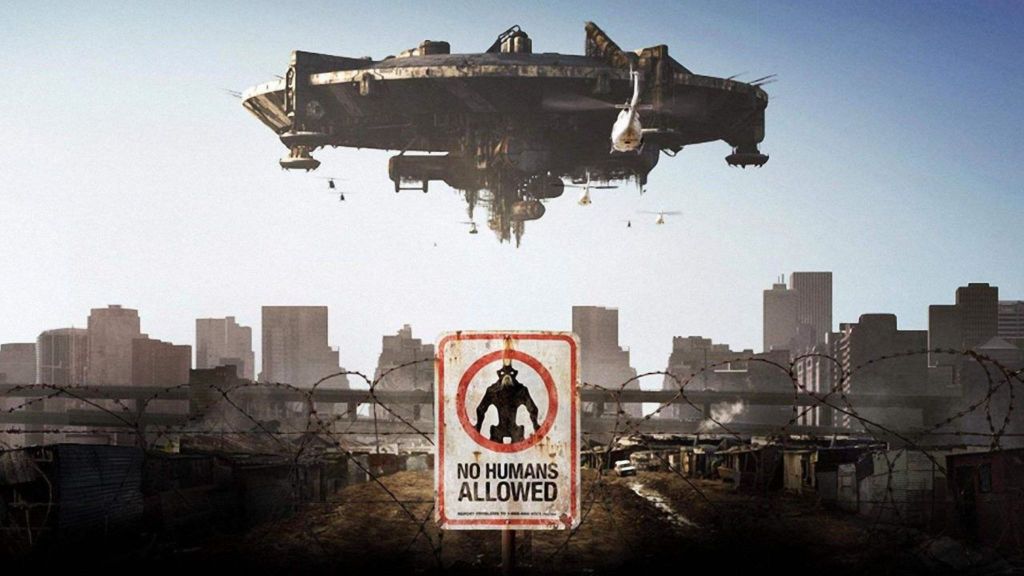
Sci-fi usually depicts advanced aliens as either conquerors armed to the teeth or geniuses with incomprehensible tech. District 9 rejects both of these tropes, as the aliens, or “prawns,” aren’t invaders but refugees in Johannesburg. They’re herded into slums, exploited by the government, preyed upon by gangs, and treated with brutality. It’s a complete inversion of the expected power dynamic and ultimately reveals itself as an allegory for apartheid.
The rule-breaking continues with Wikus van de Merwe, who’s a paper-pushing, racist bureaucrat signing eviction notices; not exactly the hero we’ve come to expect from a sci-fi film. Wikus only helps Christopher because he’s desperate for a cure to his own alien transformation. His final choice is heroic, sure, but it’s also an acceptance that he will never return to his wife or human life. The movie also rejects the idea of aliens as a monolith or hive mind. Some prawns are violent opportunists while others are indifferent. Grounded and groundbreaking, District 9 ignores practically every rule in the book.
1) Blade Runner 2049
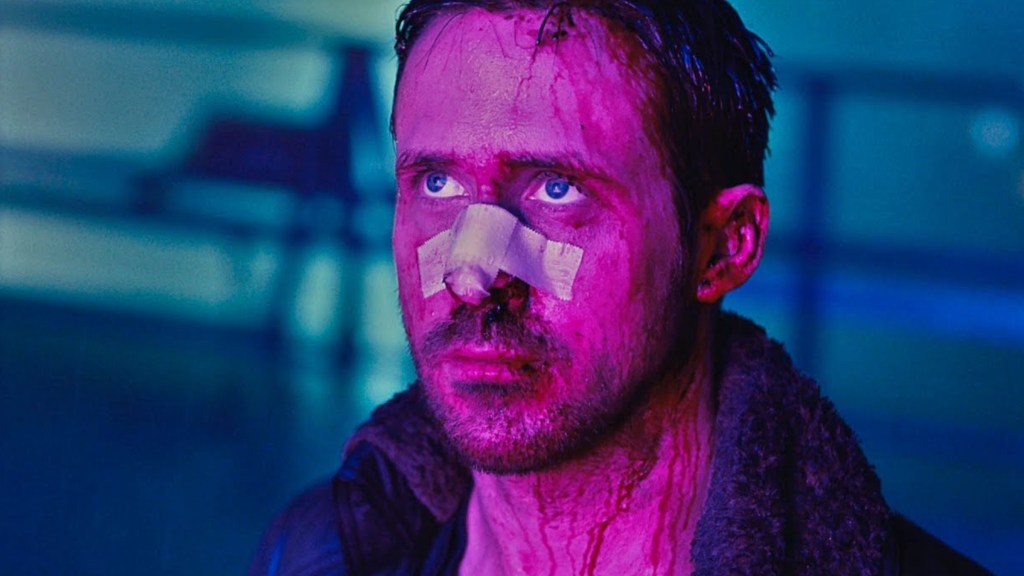
The “chosen one” archetype has been pervasive in sci-fi since the genre’s origin, and the trope of the unsuspecting hero goes back even further with the hero’s journey. Blade Runner 2049 plays on this expectation by building its first act to make the audience think K (the replicant cop played by Ryan Gosling) is the child of Harrison Ford’s Deckard, and the prophesied miracle birth. All signs point toward K fitting the mold: his own memories, his encounter with Deckard, the resistance whispering about a “savior.” The movie then detonates by revealing that the real miracle child is Dr. Ana Stelline, a quiet memory designer relegated, up to that point, to the role of minor side character.
Beyond subverting the chosen one narrative, the second Villeneuve film on the list also violates the “pace for modern audiences” rule with lingering shots that stretch for minutes, trusting viewers to sit with silence and emptiness. It breaks the “replicants want to be human” assumption established by the original, as K doesn’t particularly want humanity; he wants purpose and meaning, which proves just as elusive. It refuses the “evil corporation gets defeated” arc when Wallace and his company face no consequences, and the system remains intact even after K’s sacrifice. The Blade Runner sequel denies catharsis at nearly every turn, replacing traditional sci-fi satisfaction with a feeling of realistic melancholy and ultimately, acceptance.
What sci-fi “rule” are you tired of? Leave a comment below and join the conversation now in the ComicBook Forum!
