The idea refuses to die, and for once there’s a reason beyond fan campaigns. Zack Snyder, the director who launched the DC film universe in 2013 and last worked on it in 2021, said in an interview that he still wants to adapt The Dark Knight Returns, the 1986 book by writer and artist Frank Miller, and he named the condition attached to it. He’d want to make it outside the DC Universe, the shared continuity DC Studios co-chiefs James Gunn and Peter Safran have been assembling since Superman arrived in 2025. His reasoning goes like this. Miller’s book and writer Alan Moore’s Watchmen, which Snyder adapted in 2009, sit at opposite ends of the same argument about what superhero comics are for, so finishing the pair would complete a cycle he started with that adaptation. That’s a real pitch with a real artistic case behind it, and that’s more than most revival talk manages. He’s also been consistent about it across years of interviews rather than floating it once, and that’s part of why the idea keeps resurfacing every time DC makes news.
Videos by ComicBook.com
It’s also a pitch that collides with the current state of Batman on screen in three specific ways, and none of them are about whether Snyder is a good filmmaker or whether anyone liked Batman v Superman. The problems are structural, though. DC has a Batman film it hasn’t been able to start, a second Batman continuity that’s already occupied, and a Snyder filmography that has already used the most famous parts of the book he wants to adapt. Any version of this that actually happens has to get past all three, and the order matters, because solving one tends to make the next one worse. What follows is the case against, laid out so a fan who wants this to happen can see exactly what’s standing in the way. None of the three is a matter of taste. All three would still be sitting there if the studio decided tomorrow that it wanted this film.
3) The DCU’s Own Batman Has Spent Three Years Without A Bruce Wayne

The Brave and the Bold is the DC Universe’s Batman film, and it’s been in development long enough that the wait for the film has become its own running story. Director Andy Muschietti was hired in June 2023 and was no longer actively involved by February 2025. Writer Christina Hodson was revealed as attached in January 2026. The story is built on writer Grant Morrison’s run, with Damian Wayne introduced as Robin, making it a father and son film rather than an origin. What it doesn’t have, after three years, is a cast Bruce Wayne. That absence is the single largest hole in the Gunn and Safran slate, and it sits next to films that have been dated and delivered, including Supergirl in June 2026, Clayface in October 2026 and Man of Tomorrow in July 2027. A studio in that position isn’t obviously looking for a second Batman conversation to manage. The gap between a film being announced and a film having a lead actor is where DC projects have historically gone to die, and this one has now spent longer in that gap than the entire production of most superhero movies.
The problem for a Snyder project isn’t competition for a release date. It’s attention. Every time a new Batman story gets floated, the question that follows is what it means for the one DC has already promised, and the answer keeps being nothing, because the promised one still has no lead. Announcing a Snyder Batman before The Brave and the Bold has a Bruce Wayne would read to a large part of the audience as the studio hedging on its own film, and the coverage would write itself in that direction whether or not it was true. There’s a version of this that works, with The Brave and the Bold casting its lead first and establishing itself, but that puts any Snyder film years out and requires DC to solve its hardest open problem before it can even consider his. Gunn has spent three years insisting the slate is a plan rather than a reaction, and a surprise Batman from the previous regime is the single announcement most likely to undercut that framing.
2) The Only Door He Wants Is The One Matt Reeves Is Standing In

The condition Snyder attached to the pitch is the part most likely to break it, because the space he asked for isn’t empty. He was specific that he’d want to make The Dark Knight Returns outside the DC Universe. Outside the DCU has a name at Warner Bros., and that name is Elseworlds, the label the studio uses for DC adaptations sitting apart from the shared continuity. It isn’t an empty category, though. Director Matt Reeves’ The Batman: Part II is an Elseworlds film dated for 2028, with actor Robert Pattinson continuing as a Bruce Wayne who has become one of the least contested things in the entire DC lineup. The Elseworlds label exists so audiences can hold more than one Batman at a time without the shared universe having to explain it, which sounds like it solves Snyder’s problem. But it does the opposite. Warner Bros. didn’t invent the label for Snyder, and there’s no indication anyone has offered it to him. A label can carry two Batmen or it can carry a meaning, and Warner Bros. has already learned the hard way which one the audience keeps track of.
The reason is that Elseworlds only works as a pressure valve while it holds one version of any given character. A second Elseworlds Batman running alongside the Reeves films would mean three live-action Bruce Waynes in development at one studio at the same time, two of them carrying no continuity relationship to anything. At that point the label stops distinguishing anything and starts functioning as a shrug. Warner Bros. spent the back half of the 2010s being criticized for exactly this kind of incoherence, and the Gunn and Safran mandate was a response to it. Approving a third Batman under a banner created to reduce confusion would be a hard thing to explain internally, and that’s why Snyder’s own stated preference is the part of the pitch most likely to sink it. Reeves has a sequel dated and a Batman the audience has already accepted, so his is the claim that gets protected if anything has to give.
1) He Already Filmed The Best-Known Parts Of The Book
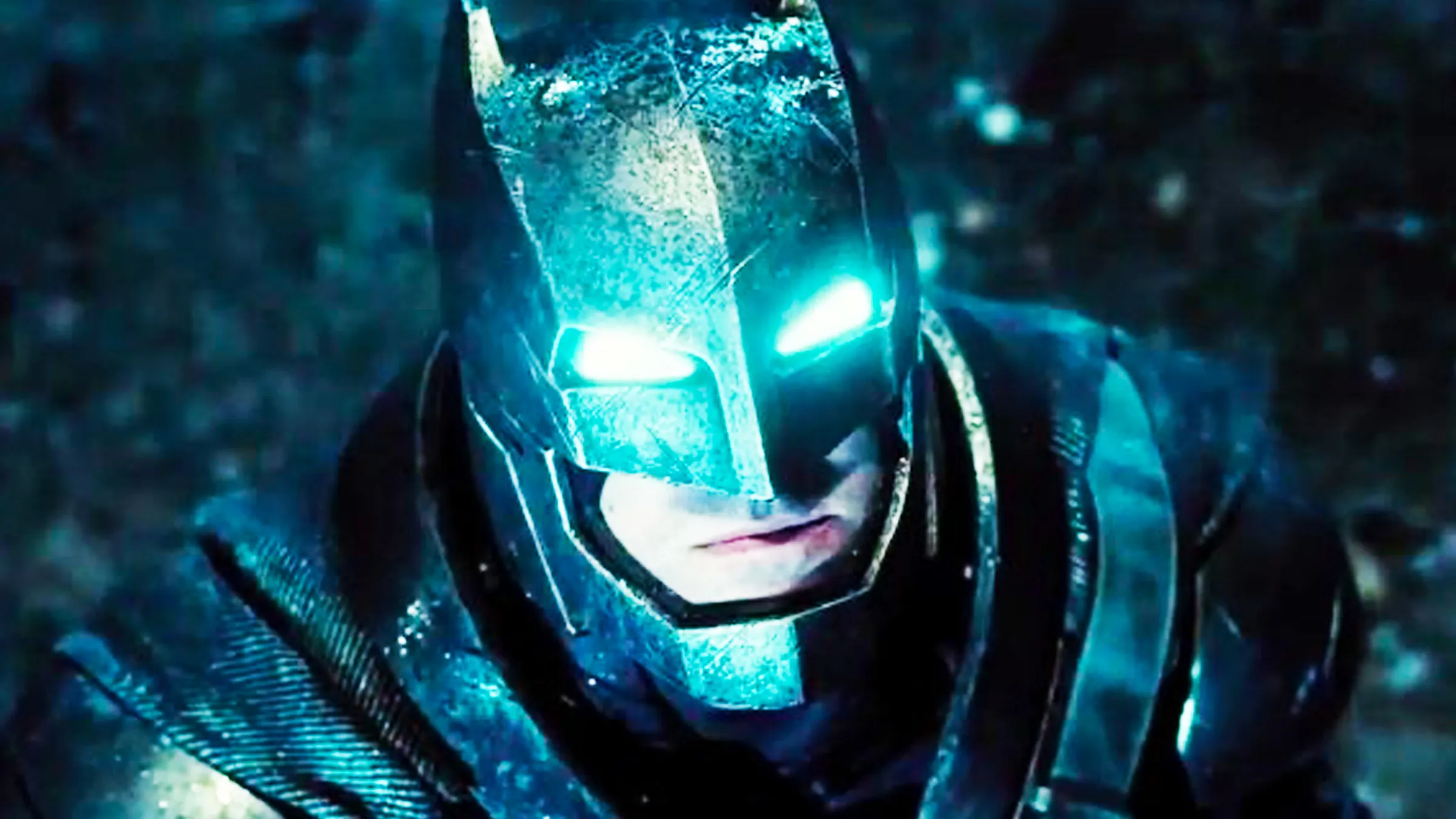
This is the one the revival conversation tends to skip past. Batman v Superman: Dawn of Justice, released March 25, 2016, is built on Miller’s book. Snyder said openly that the film drew on it. Ben Affleck plays a Bruce Wayne deliberately aged in the Miller mold. The armored suit worn for the confrontation with Superman is a modernized version of Miller’s armor, and the fight itself stages the book’s central conflict, an older ground-level vigilante against an alien who has become an instrument of the state. That footage exists, it cost a reported $250 million to $325 million to make, and it took $874.4 million worldwide. Whatever anyone thinks of it, the sequence most readers picture first when they think of The Dark Knight Returns has already been adapted by this director, with a Batman audiences spent a decade arguing about. That sequence is also why a large share of the people asking for a Snyder adaptation are asking in the first place, and that’s the awkward part.
Snyder himself named the catch at the time, saying that doing the book properly would require a different Superman. That’s a sharper observation than it looks. Miller’s story only lands if Superman has become something the reader distrusts, and the version Snyder built across two films was already a figure the public feared, which collapses the distance the book needs. So a real adaptation means recasting or reconceiving Superman at the exact moment DC has a working one in the Gunn continuity and a sequel dated for 2027. It also means asking an audience to watch the armored fight a second time, from the same filmmaker, knowing how the first one went. The version of this project that avoids repeating itself is a very different film from the one most people picturing it have in mind. A studio weighing this isn’t weighing an unmade film against nothing. It’s weighing it against footage the audience can watch tonight.
Where I come down is that the second problem is the fatal one and the third is the interesting one. The scheduling argument can be waited out, since slates move and The Brave and the Bold will eventually cast somebody. The Elseworlds collision is a decision somebody at the studio has to actively make, and I don’t think anyone makes it. What I keep turning over is the third, because Snyder is the rare case of a director who’d be remaking his own most argued-about work, and he has already said out loud that the version he made was a compromise. I’d watch that film, gladly. I’m also fairly sure that wanting to see a filmmaker finish an argument with himself isn’t a reason a studio greenlights anything, so the honest answer is that this stays a pitch. Both of the things I want from it, the completion of the Watchmen pairing and a director revisiting his own compromise, are reasons that live entirely inside my own head rather than on a balance sheet.
More Movies
-
Courtesy of Paramount Pictures / Titmouse