
The early 2000s brought a major shift to TV since it marked the beginning of the Golden Age of TV. The industry was expanding fast, but it was also still figuring out just how far storytelling could go in terms of structure and emotional risk. HBO, in particular, was establishing a new kind of drama that no longer wanted to rely on traditional formulas, instead favoring long-form narratives, deeply developed character arcs, and topics that rarely received this level of freedom before. And in the middle of all that came a series that wasn’t trying to be bigger than everyone else or compete with the most ambitious productions. Instead, it had something arguably more important: the courage to challenge its audience.
Videos by ComicBook.com
We’re talking about a show that took one of society’s biggest taboos and asked everyone to look at it from a completely different perspective. And despite what some might have expected, it turned out to be one of HBO’s most consistent and highest-quality productions. Unfortunately, it’s also one of the network’s most underrated. But the best part? It’s just as relevant and rewarding to watch today as it was when it first aired.
Six Feet Under Is One of the Most Courageous and Underrated Shows TV Has Ever Seen
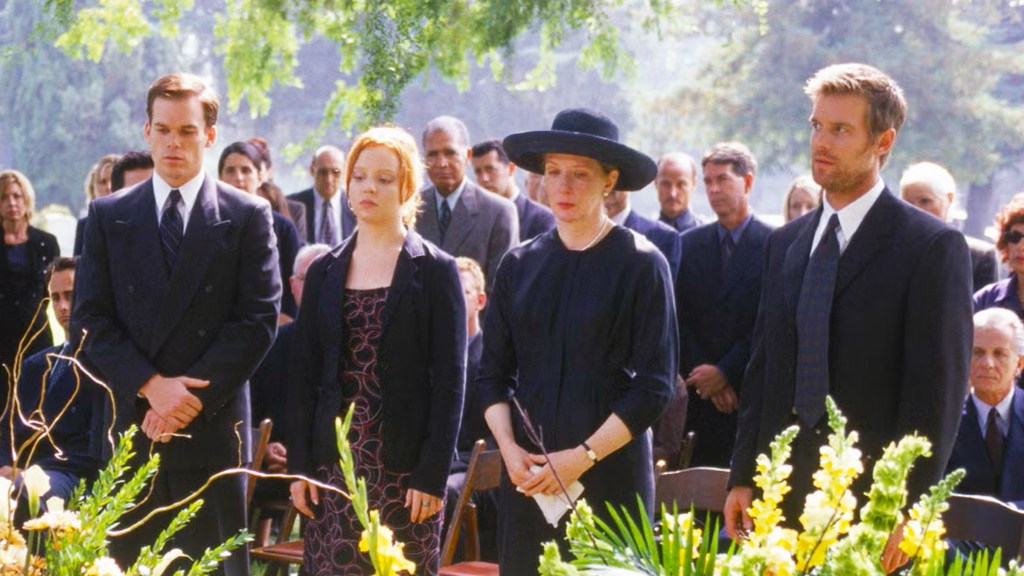
Back in June 2001, Six Feet Under, created by Alan Ball, premiered with a story centered on the Fisher family, who own and operate a funeral home in Los Angeles. The idea is to follow a group of people who deal with death every single day as part of their job, while their own lives remain far from figured out. Nate (Peter Krause), David (Michael C. Hall), Claire (Lauren Ambrose), and Ruth (Frances Conroy) are people trapped in complicated family dynamics, bad decisions, and attempts to put their lives back together while helping others navigate loss. In some ways, that’s incredibly relatable; in others, not so much. But what makes the show exceptional is that almost every episode begins with the death of a stranger, and that becomes the starting point for exploring the emotional state of the family.
Rather than treating death as an extraordinary event, the series presents it as part of everyday life — and that’s what makes it feel more authentic than most dramas (both from the 2000s and even today). And no, despite the subject matter, Six Feet Under isn’t nearly as morbid as some people assume. It just wants to approach a difficult topic in a grounded way and encourage conversations that rarely happen elsewhere. At its core, the show is about how different people process loss, which is why there isn’t a constant escalation of conflicts or an attempt to make each season bigger than the last.
Take Nate, for example. He doesn’t follow a straightforward character-growth arc. He makes impulsive choices, tries to improve, fails, backtracks, and starts over, often without learning the lessons we might expect. As for David, he struggles between control and repression, especially when it comes to his identity and the way he presents himself. Claire serves as an observant counterpoint, trying to find her place while seeing the hypocrisy and chaos around her more clearly than most. Ruth, meanwhile, is a woman who spent decades living for other people before realizing how much emptiness that created in her own life. And all of these developments feel cumulative, sometimes even frustratingly so, because personal growth isn’t linear. So Six Feet Under is ultimately a portrait of human nature, even if it takes place in a setting most people will never personally experience.
Even so, during its original run, the show never received the same level of attention as series like The Sopranos or The Wire, both of which became TV landmarks. But that has nothing to do with quality — it’s the approach. Six Feet Under is more intimate, more personal, and harder to explain in terms of immediate impact. It’s not the kind of series that can be perfectly summarized in a single sentence, and that likely worked against it when it came to wider audiences. Besides, the subject matter itself is a tough sell as well: death is still a topic many people would rather avoid, which is also probably why the series feels like it was ahead of its time. But it’s that same understanding of mortality that makes the ending one of the greatest.
The Series Finale Is One of the Best of All Time
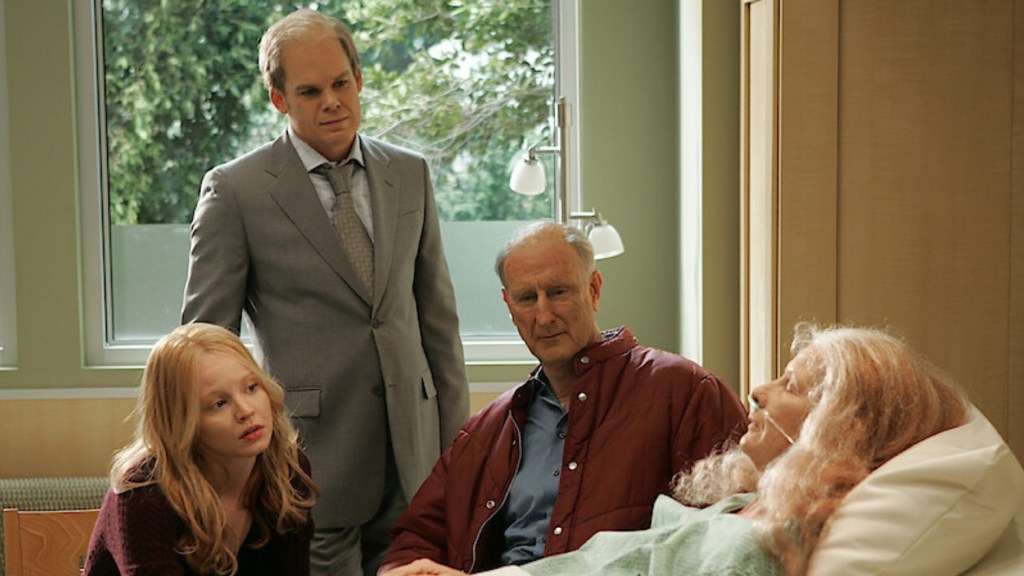
Without getting into spoilers, the ending is incredibly moving. At the same time, it’s also one of the most carefully planned conclusions in TV history when viewed in the context of everything the show builds across its five seasons. It’s so effective that it completely changes the way people remember the whole production. The series finale, “Everyone’s Waiting,” doesn’t try to wrap everything up in a conventional way, nor does it reinvent the story at the last minute. Instead, it understands the message of the show and what made it work for so long, then carries those strengths to a completely natural conclusion.
The episode also doesn’t rely on a massive twist to make an impact. At a time when many shows were increasingly looking for shocking endings or reveals that would keep people talking, Six Feet Under chose to trust its characters completely. And it works as the audience has spent years following their journeys and understanding how each of them sees the world. So by the time the finale arrives, the emotional investment is already there, and the show doesn’t need to convince anyone to care. That also helps explain why the entire episode continues to receive so much praise more than two decades later: it doesn’t come from one specific moment but from the feeling that everything lands exactly where it should. It’s a conclusion that rewards those who stayed with the show all along because it remains faithful to the themes that defined it from the very beginning.
Is Six Feet Under still underrated? Absolutely. But it’s also one of TV’s greatest dramas as it offers something that’s becoming rare: deeply written characters and genuinely human conflicts. On the other hand, in many ways, not everyone was ready for that then — and not everyone is ready for it now.
What do you think? Leave a comment below and join the conversation now in the ComicBook Forum!
