The boom of streaming as one of the biggest disruptions to television at first resulted in a major piece of that puzzle being totally left behind: the epic TV mini-series. Once a staple of the television landscape, with releases becoming a genuine phenomenon, including titles like Roots in the 1970s, Stephen King’s IT in the 1990s, and Band of Brothers in the 2000s, it’s become something of a forgotten art. TV mini-series are still around, of course, but only a handful a year really put a stranglehold on pop culture, and more often than not, their success means they cease being a mini-series and are forced to continue.
Videos by ComicBook.com
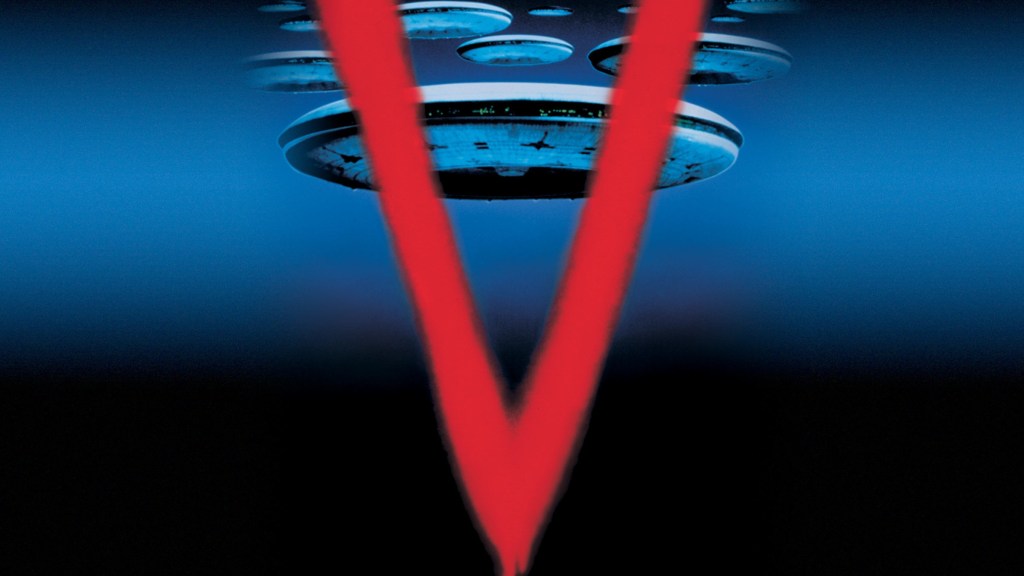
The 1980s were the heyday of the TV mini series, and forty-three years ago today, May 1, 1983, saw the debut of one of its most iconic. Simply titled with one letter, V, the sci-fi series written and directed by Kenneth Johnson arrived with a bang, not only with an incredible marketing campaign for the time, but also with a storyline that hit close to home for fans of the genre. V was an influential mini-series for the time it was released, and has aged like a fine wine in the decades since.
V Was An Immediate Blockbuster Hit
With V, Johnson crafted a story about aliens landing on Earth, seemingly with the hopes of becoming allies to humanity. Known simply as “The Visitors” (thus the name), they ask for resources from Earth to help their home planet and, in exchange, will offer alien technology. As you can expect, it’s all a ruse, with scientists who quickly start to see the cracks in the facade of the Visitors quietly removed or made into enemies of the state as the Visitors fully begin to take control of the planet. The Visitors are revealed to be reptilian aliens, not the humanoids they present as, who are keen to take all the resources of Earth entirely, and even chow down on humanity.
Inspired by the novel It Can’t Happen Here, a book published before World War II that told the story of how something like the Nazi movement and Adolf Hitler’s rise to power could occur in the United States, Johnson crafted a story about aliens landing on Earth that was a larger allegory for the rise of fascism. This is done with almost no subtlety, including a main character who is a Jewish holocaust survivor, but also the insignia for The Visitors themselves being reminiscent of a Nazi swastika.
Not everyone is keen to bend the knee to intergalactic overlords, though, with rebel groups forming around the world to fight back. Among them is Marc Singer’s Mike Donovan, a TV cameraman who was among the first to notice that the Visitors weren’t as altruistic as they first seemed. As this group continues to strike back against the Visitors, it proves to not exactly be effective, with the second episode of V (the final one at the time), ending with the Visitors in control of Earth and the resistance sending out a message to deep space for help from any other aliens that might be listening. Viewers were left hanging, but not for long.
Before it premiered, V had a provocative marketing campaign that was cutting-edge even by modern standards. Posters made their way onto subway stations in major cities, featuring one of the visitors in their uniform with the slogan “The Visitors are our friends,” only to be updated a few days later with the big red “V” on them (a relevent piece of graffitti from the series itself). In the end, it worked. An article from The New York Times in 1983 painted a major picture of how big the show really was, revealing that 39% of all TV viewers in New York watched the show when it aired, up to 41% in Los Angeles, and over 47% in Chicago. It was a proper blockbuster for the era.
V Created a New Sci-fi Franchise, One Defined by Cliffhangers
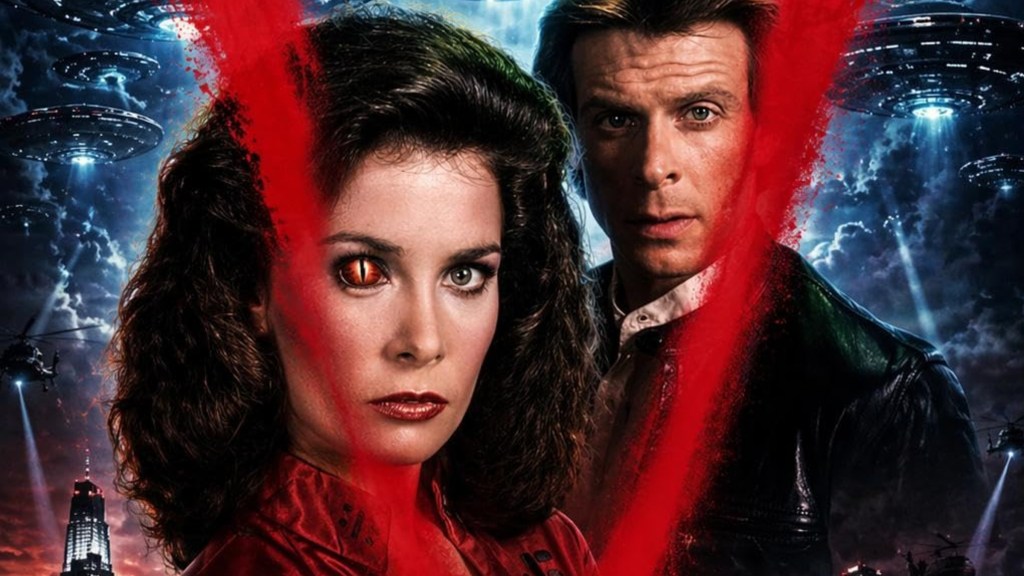
The runaway success of the two episodes of V immediately made the series a part of the pop culture lexicon. Not only were toys made to capitalize on its popularity but books, comics, and even a video game. Furthermore, the success of the series (plus its provocative cliffhanger) meant a sequel was necessary. V: The Final Battle arrived just over a year later, with a three-episode series that continued the plot of the original series and picked up from its finale. The trouble, of course, is that original creator Kenneth Johnson and NBC couldn’t fully agree on some details, leading to him leaving the sequel show behind, his credited work on the series put under a pseudonym.
Once again, though, the series proved to be a hit, and once again, the series would wrap up with an open-ended conclusion. Despite the decisiveness of the title, V: The Final Battle was far from the ending, with the miniseries leading to a full-blown show. V: The Series premiered in the fall of 1984, and though it was born from a show that had clearly made an impression on the public, it couldn’t hold them for too long.
Johnson was once again not involved in the show, which hit a major roadblock in its first and only season. Though stars Jane Badler and Marc Singer once again lead the series, V: The Series was cancelled while production on the first season was still ongoing, with the show even abandoning production on its final episode due to the cancellation. As a result, you can guess what happened: the show ended on yet another cliffhanger. When the penultimate episode became the series finale, it left what viewers were still watching without a resolution and major dangling threads.
In the time since, V remained quite popular among sci-fi fans, often with the caveat that the original series remained the high point of it all. Eventually, as all franchises do, the series came back, with a remake of the series developed in the late 2000s. Starring Elizabeth Mitchell, Morris Chestnut, Laura Vandervoort, Morena Baccarin, the new take on V aired for two seasons from 2009 to 2011. As you can expect, the pattern reared its head once again, with the Season 2 finale ending on a cliffhanger and the series getting cancelled before more answers could arrive.
In the time since, V has never fully gone away. Just two years ago, radio drama adaptations of Johnson’s original scripts were created and released, with multiple announcements of a V movie being made over the years. It remains to be seen what will happen next, but one thing is for sure, if V does somehow manage to return down the line, whoever is creatively responsible for it should decide on the ending beforehand and break the cycle of unsatisfying cliffhangers.