Before Benedict Cumberbatch became Sherlock Holmes, he was just another working actor trying to build a career. He had the voice, the face, and that slightly severe look that would eventually make him perfect for playing the world’s most famous detective. But none of that had happened yet. In the early 2000s, Cumberbatch was still turning up in whatever interesting television jobs came his way.
Videos by ComicBook.com
One of those jobs has become a pretty great piece of trivia in hindsight. Cumberbatch played the son of a very familiar face, although that face was famous for something completely different at the time. The show itself was hardly a runaway hit, either. It came and went quickly, leaving behind little more than a handful of episodes and an increasingly funny bit of television history. Because the man playing Cumberbatch’s father would soon become famous as a doctor, too. And, yes, there’s another connection hiding behind the camera. And, no, we’re not talking about his possible role as Doctor Strange in the upcoming Avengers: Doomsday movie.
Fortysomething Put Benedict Cumberbatch in Hugh Laurie’s Family
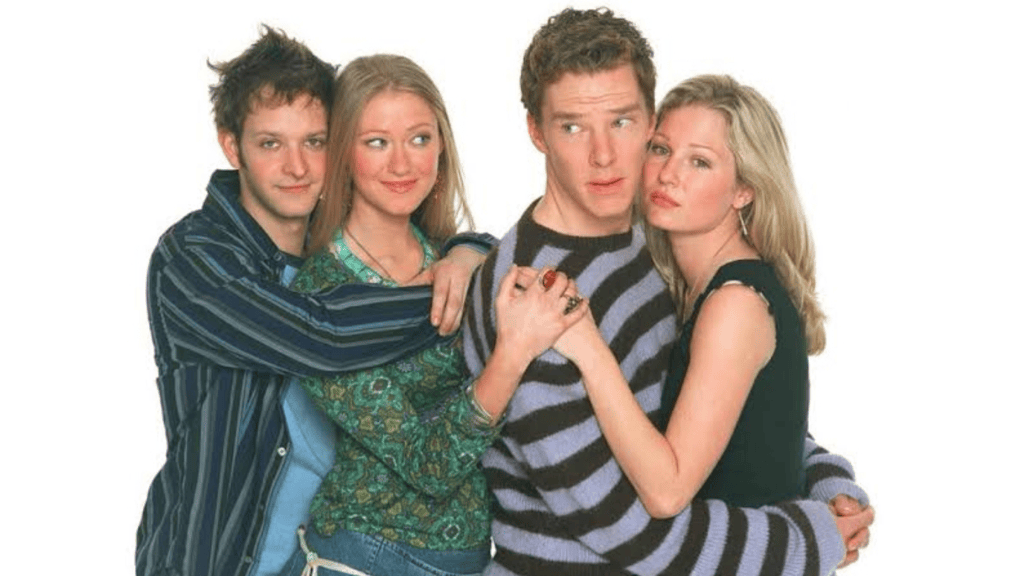
Fortysomething arrived on ITV in 2003 and lasted for just six episodes. Laurie played Paul Slippery, a doctor dealing with a midlife crisis, a complicated marriage, and three sons who were considerably more interested in sex than their father would probably have preferred. Cumberbatch played Rory, the eldest son, and the future Sherlock was still a few years away from becoming a major television name. At the time, he was simply another young British actor filling out an unusually talented cast. There was no clue he’d eventually become the Sherlock Holmes of the BBC.
Then there’s Peter Capaldi, who also appears as Paul’s colleague and nemesis. Read that cast list again. Hugh Laurie. Benedict Cumberbatch. Peter Capaldi. Three men who would go on to become some of Britain’s most recognizable television stars, all turning up in the same six-episode comedy. And Laurie wasn’t just acting. He directed the first three episodes. Watching Fortysomething now gives the whole thing an amusing bit of accidental time-travel. You aren’t watching House, Sherlock, and the Twelfth Doctor. You’re watching three future TV icons trying to survive one very strange family comedy.
Fortysomething Was a Short Run for Cumberbatch
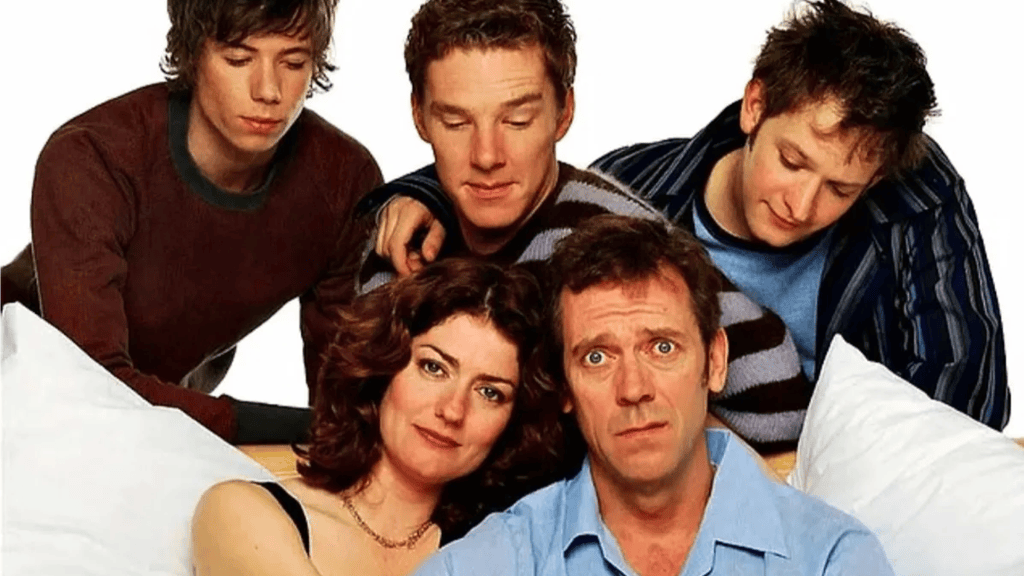
The premise was already a little bonkers. Paul suddenly discovers that he can hear other people’s thoughts, which is not exactly the sort of development most doctors expect to encounter between breakfast and the morning rounds. Meanwhile, his wife, Estelle, is dealing with her own problems, and the Slippery household becomes increasingly chaotic. Cumberbatch’s Rory gets pulled into the family mess alongside his brothers, giving the future Sherlock plenty of opportunities to show the dry comic timing that would become so familiar later.
The series never became a major hit, and ITV moved it to an off-peak slot during its original run. Six episodes and done. Yet that’s part of the charm when you stumble across it now. It’s a little time capsule from before everyone involved became famous for something else. Hugh Laurie was still a British comedy and drama favorite rather than Dr. Gregory House, Cumberbatch was still waiting for his breakout, and Capaldi hadn’t yet stepped into the TARDIS. Knowing what came next makes Fortysomething much more fun to revisit. Sometimes television history hides its best casting trivia in the shows nobody remembers. And, just like Doctor Strange said, there are 14,000,605 possible futures—at least.
What makes Fortysomething worth rediscovering isn’t just the celebrity roll call. It’s the glimpse of an alternate version of British television, before its future stars had been neatly sorted into iconic roles. Hugh Laurie was still best known for comedy. Peter Capaldi was years away from becoming the Doctor. And Cumberbatch? He was working his way through supporting roles.
There’s something sartorially fitting about that. Careers can foreshadow themselves in advance, but there doesn’t seem to be a single deducible clue about this one. The actor who would eventually turn Sherlock Holmes into a global phenomenon was once just Rory Slippery. He was a guy surrounded by a cast that looked ordinary only because nobody knew what was coming next.
And that may be Fortysomething‘s greatest oddity. A show about a man wondering what happened to his life ended up preserving a moment when three very different careers were still figuring themselves out. The midlife crisis belonged to Hugh Laurie’s character. For everyone else, apparently, it was just the beginning.