Since its inception in 1966, Star Trek has been known for challenging the status quo. Star Trek: The Original Series featured an interracial kiss between Kirk and Uhura, Star Trek: Deep Space Nine challenged notions of frontier medicine and what Starfleet had come to mean over the decades, and Star Trek: Voyager — for all its flaws — was committed to showing that a female captain was just as capable as her male contemporaries.
Videos by ComicBook.com
Star Trek: The Next Generation, starring Patrick Stewart as Jean-Luc Picard, is especially beloved and propelled the franchise into a new era. The show opened dialogues on disability, artificial intelligence, and parenthood. Star Trek: The Next Generation is fondly remembered for messages about accommodating disability instead of fixing it, along with the crew’s acceptance of Data, a sentient android. Data formed meaningful bonds with the crew and stood in as emotional support when Commander Troy gave birth.
As with many Star Trek shows, it took Star Trek: The Next Generation time to find its footing, though. The first season went through a series of writers and ongoing creative disputes with Star Trek creator Gene Roddenberry. The dialogue felt clunky at times, and fans didn’t take to Wesley Crusher, who, despite being a kid, was able to solve issues on the Enterprise that the educated Starfleet crew members couldn’t.
When looking at the first season, many consider “Angel One” an encapsulation of the show’s problems. It’s a valid critique, especially considering cast members Patrick Stewart and Gates McFadden didn’t even like the episode when they were filming it. They considered it sexist.
TNG’s Take on a Female-Dominated Society
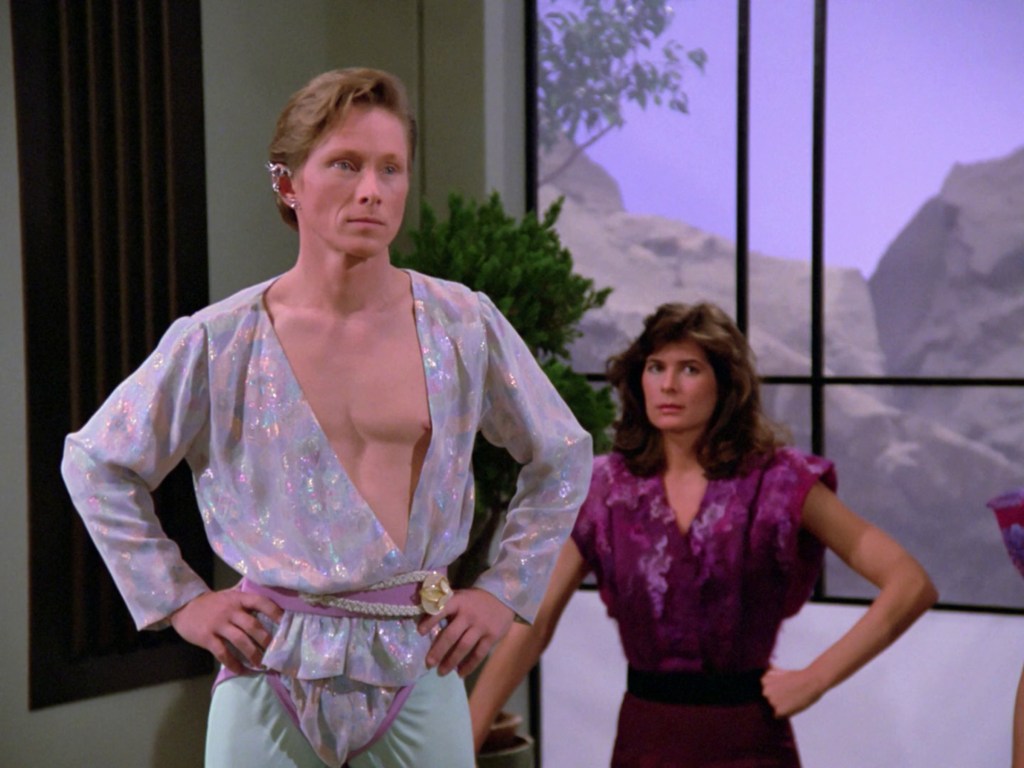
During the events of “Angel One”, the Enterprise sends an away team of Data, Riker, Tasha Yar, and Deanna Troy to the planet of Angel One. Their mission is to figure out if survivors from the Odin crash-landed there and check on their welfare. From a federation visit sixty-two years prior, the team knows that Angel One is an oligarchy — although that isn’t touched on again — and the society is dominated by women. Despite sexist attitudes towards men prevailing on the planet, the crew works under orders to prioritize diplomatic relations because Starfleet hopes to annex Angel One into the Federation one day.
The episode’s take on what a female-dominated society means is nothing new. The women of Angel One are strong, commanding, and without much empathy. They are immediately suspicious of the Enterprise. The episode takes pains to remind the audience that the women in power are beautiful, especially Mistress Beata. This emphasis on beauty doesn’t make much sense. If women are in charge, why would beauty as a value be part of their society? The episode sure doesn’t know.
There’s a gag later in the episode when Data finds a perfume bottle. Riker has to explain that people find it attractive and use it in romantic and sexual contexts, which Data doesn’t fully grasp but understands enough to move on. The gag happens when the perfume bottle doesn’t belong to one of the women, as Riker assumes, but rather to Trent, Mistress Beata’s assistant. This fully encapsulates the gender switch in the episode. The dynamics between the sexes have been swapped, but the context around them hasn’t changed, even though it should.
When Riker requests a meeting with Beata, he is given different clothing to wear that reflects cultural standards. The outfit is drastically more feminine than Riker’s regular clothing and reveals significantly more skin on his chest. Yar and Troy can’t help but laugh when they see him in it. An unspoken but clear conceit of the episode is that Riker is put in the situation of a woman. His meeting with Beata quickly veers from diplomacy, and when he expresses discomfort, Beata changes the topic and asks if he finds her attractive. Riker has a fun time, but the scene can’t help but leave a bad taste in the mouth.
The Episode’s Actual Context
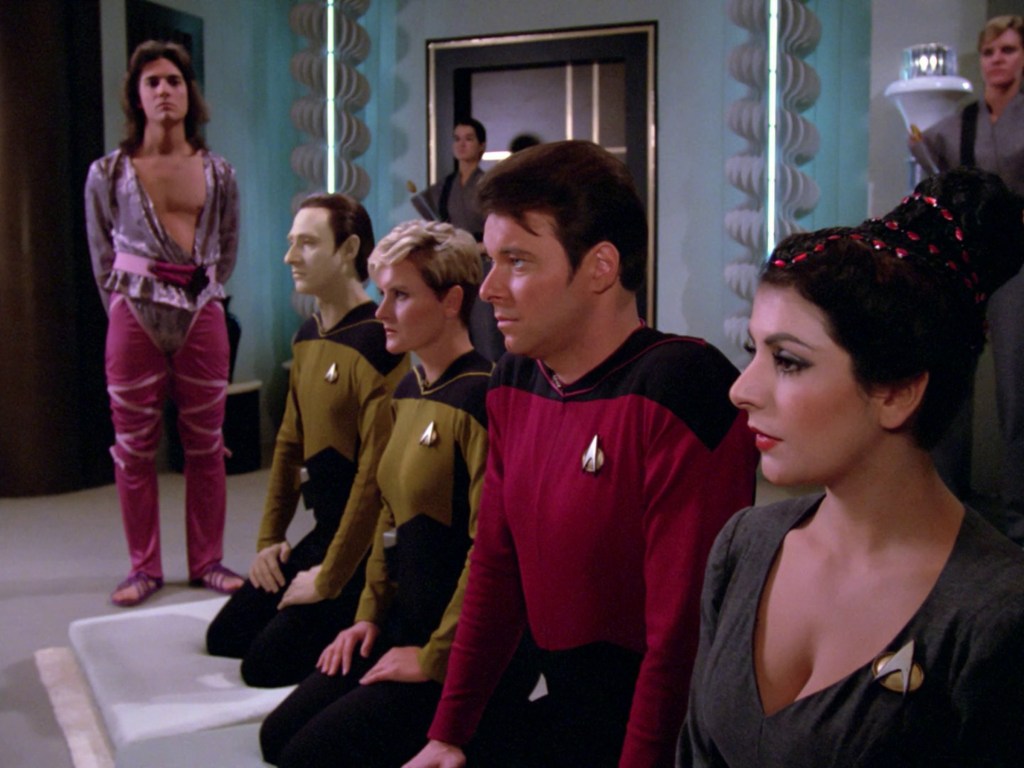
Initially pitched as a commentary on apartheid South Africa with men representing black people, the premise was nothing new for the franchise. Star Trek has done the role-reversal society time after time, and the plot of “Angel One” was hardly anything new. It feels off that even if that was the intended premise, the black crew members don’t do anything in the episode. Geordi is relegated to the virus plot, and although temporarily in charge, quickly falls ill, meaning he hardly takes decisive action.
Additionally, the mistreatment of men is focused more on the Odin passengers who are specifically not from the planet, even if they do make it their home. If all men are standing in for a minority, it feels significant that men native to Angel One aren’t given focus. Trent exists mainly to look feminine and for humor gags, not to be his own character.
The Enterprise crew are confused as to why the passengers won’t leave, going so far as to threaten to beam them off the planet against their will. The B-plot of the episode prevents them from doing this, given that a mysterious virus has spread across the Enterprise and Dr. Crusher refuses to risk further infection. The dilemma is solved by Riker giving an impassioned speech to Mistress Beata and her changing her mind about the execution. She decides to exile the men and their families to a distant region where survival will be difficult, but not impossible.
Unpopular Then, Unpopular Now
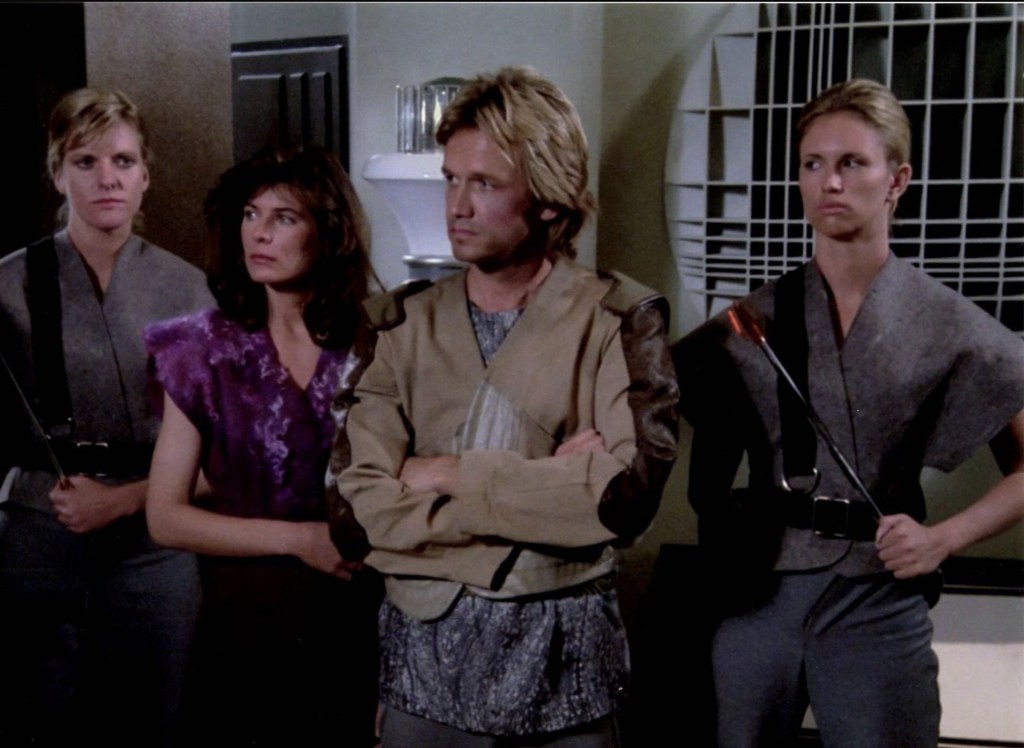
Both cast and crew disliked the episode during production. Gates McFadden called the episode “one of the most sexist episodes we ever had” and Patrick Stewart wanted the episode changed. Wil Wheaton, despite only having a small part in the episode, remembered charged disputes years later. Producer Maurice Hurley considered the episode terrible, considering it one that he’d erase if he could.
The episode was even difficult for reviewers, with many rewatching it when the season finished to try to get a new perspective on it. The episode was just as bad the second time around, with viewers questioning what the gender reversal was supposed to achieve. The episode has since been included on lists of the worst Star Trek episodes, both of Star Trek: The Next Generation and Star Trek in general.
Head down to the comments to let us know your own thoughts on the episode. Is there anything worth salvaging, or is “Angel One” a definite skip in any Star Trek: The Next Generation rewatches?