There’s been some pretty radical concepts introduced in the Star Trek Franchise in an effort to keep things fresh over nearly 60 years and ten spin-off series on from The Original Series that first captured our hearts. Voyager gave us a crew stranded 70000 light-years from home, and the first female captain; Deep Space Nine took a risk setting a series on a stationary space station, thereby limiting the potential for adventures in far-off places, and Enterprise took us back to the early days of warp travel, before the formation of the Federation. But perhaps no Trek series to date has given us a concept quite as radical and game-changing for the franchise as Discovery’s introduction of an event simply known as ‘the Burn’.
Videos by ComicBook.com
First introduced in Star Trek: Discovery’s third season, (during which in which the ship travelled 900 years into the future having started out in the 24th century), this mysterious event instantly rendered most dilithium inert. Since dilithium is the substance that stabilises the reaction between the matter and antimatter that powers warp drives, the event instantaneously caused warp cores across the galaxy to go critical, killing billions in a single moment. Without the warp technology needed to travel between planets, the Federation fractured, interstellar travel had all but collapsed, and the galaxy was plunged into a dark new age.
Understandably, since its introduction, Star Trek fans have understood the Burn as a civilization-shattering catastrophe. And yet, with the introduction of new information in Star Trek: Starfleet Academy, it turns out we still didn’t fully grasp the full scale of the destruction caused by this devastating event.
The Burn Was Always Big — But Not This Big
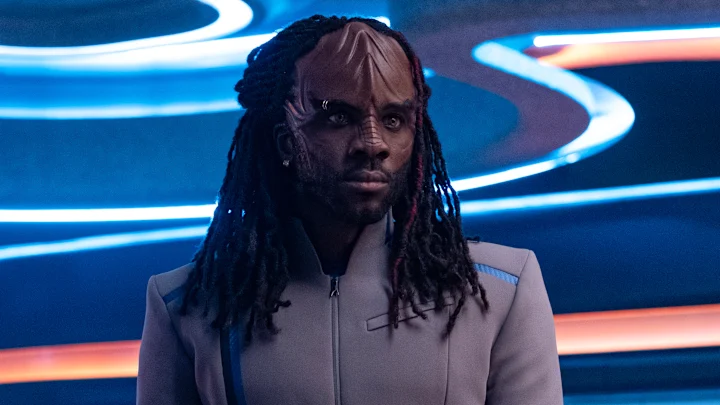
With episode 4, “Vox in Excelsio”, the franchise has quietly revealed a new, devastating detail: the Klingon home world, Qo’noS, was destroyed by the Burn. Not just incapacitated. Destroyed. With that bombshell, Star Trek has retroactively transformed the Burn from a catastrophic setback in technological progress into perhaps the most devastating extinction-level event the galaxy has ever seen.
When Discovery first introduced the concept of the Burn, the emphasis was more on its damage to infrastructure. Yes, thousands of lives were tragically lost, but the more devastating thing about such an event in the long run, (for a galaxy of peoples who had become so reliant on interstellar trade and travel) was that suddenly this technology that they had become so reliant on was gone and they were left isolated and alone in the Universe again. Fleets of ships were gone in an instant. Trade routes collapsed. The Federation shrank into a loose coalition of isolated worlds, struggling to remember what unity even looked like.
What the series didn’t dwell on was the long-term planetary toll. Most worlds were still standing, even if they were isolated or struggling. The implication was that while space travel seemingly died at least a temporary death, civilizations endured. The revelation from Jay-Den Kraag (Starfleet Academy’s resident Klingon played by Karim Diané) that Qo’noS didn’t survive and that the once proud Klingons are now eking out an existence as refugees, reframes that idea
Why Qo’noS Matters More Than Almost Any Other Planet
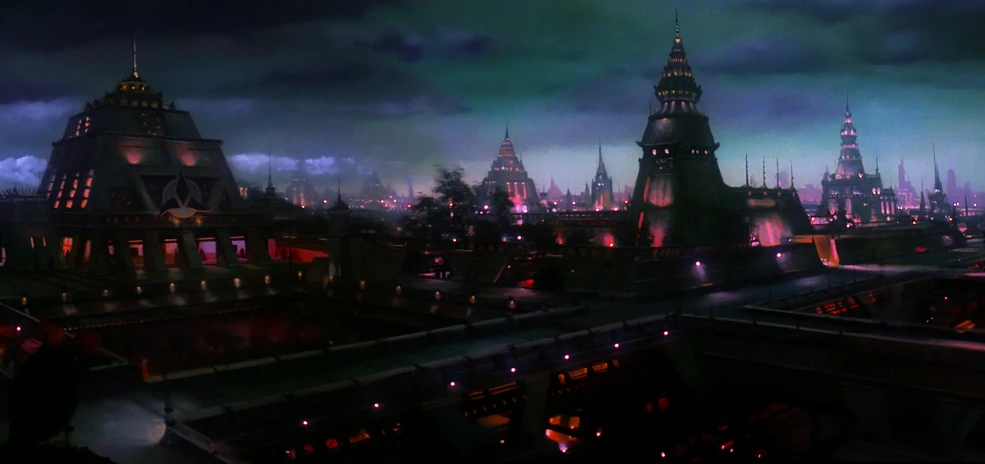
Qo’noS wasn’t just another Federation member world or regional power. It was the heart of the Klingon Empire — a culture that prided itself on conquest, honor, ritual, and a strong sense of cultural identity. Despite being sworn enemies of the Federation, throughout much of Star Trek’s early history, the Klingons have always been one of the franchise’s most developed and proud civilizations.
Once the two powers finally set their differences aside and the Klingon people finally joined the Federation, through The Next Generation, Deep Space Nine, and beyond, Qo’noS was depicted as the political, spiritual, and symbolic centre of Klingon culture and identity, the birthplace of that rich heritage.
For any species to lose their home planet would be devastating, even if it didn’t necessarily mean the end of your species, but for a culture as proud and admittedly stubborn as the Klingons, we can only imagine that to lose their home world felt like more than just a devastating blow, it was an erasure of a core part of the Klingon identity. Destroying it doesn’t just kill millions. It erases traditions tied to the planet — ancestral houses, sacred sites, and a shared sense of identity rooted in the soil of the home world.
Even when the Klingon Empire fractured politically in the past, Qo’noS endured. While the planet has found itself in danger of destruction before (most notably due to the explosion of the moon Praxis in 2293, as seen in Star Trek VI: The Undiscovered Country), the Burn finally rendered the world uninhabitable doing what centuries of war, intrigue, and civil conflict never managed to accomplish.

The Burn Wasn’t Just a Federation Tragedy

One of the slight criticisms of Discovery’s Burn storyline was that it often felt Federation-centric. We were told the galaxy suffered, but we mostly saw Starfleet and Humanity’s pain. The destruction of Qo’noS changes that perception. This wasn’t an event that merely humbled the Federation. It was a universally apocalyptic event that spelled disaster for many peoples.
After all, if a civilization as resilient, militarized, and fiercely independent as the Klingons couldn’t survive intact, then no one was safe. What if other great powers — Romulans, the Borg — suffered equally catastrophic losses that simply haven’t been spelled out for us yet?
Starfleet Academy is all about a new generation trying to find their place in the new world order and a society still recovering from the Burn’s aftershocks. The destruction of Qo’noS adds real emotional weight to that backdrop. This is a generation raised not just on stories of isolation, but with the knowledge that entire cultures (even theirs in the case of Jay-Den Kraag) were nearly wiped out. The Burn didn’t just break technology, it broke people, history… And in hindsight, the Burn needed this kind of revelation behind it to give it suitable weight if it was going to become an accepted and crucially appreciated part of Star Trek canon.
By confirming the destruction of Qo’noS, Star Trek finally communicates the true scale of what happened without spectacle or melodrama. No flashbacks or explosions, just a quietly acknowledged but devastating event, carrying enormous significance.
While the episode did have a somewhat happy ending with the Klingons ultimately provided with an ecologically similar viable planet to ‘conquer’ as their new home-world (after some inspired reverse psychology on the part of Starfleet when the Klingons are too proud to simply be given the damn thing and must instead ‘win’ it in battle…) there’s still the bittersweet realisation that although the galaxy was put back together after the burn, it lost pieces of itself that will never come back.
What do you think? Leave a comment below and join the conversation now in the ComicBook Forum!
Most Viewed
-

Official art by Bastien Lecouffe-Deharme -

A photo of the Retrovolt Arcade taken in 2017, showing several classic arcade cabinets and stools. -

Image courtesy of Tor Books/Macmillan -

Courtesy of Saber Interactive