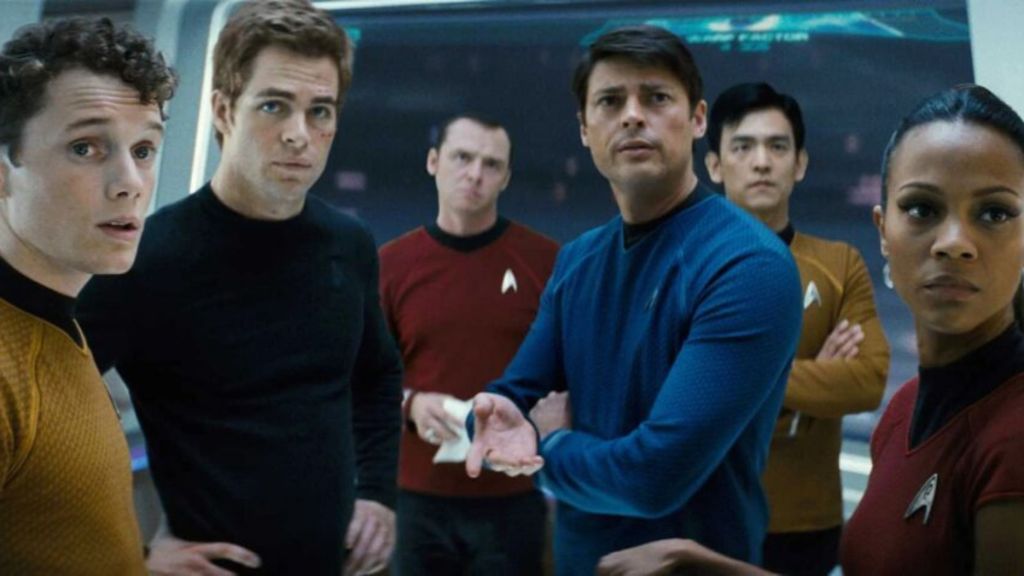
In the late 2000s, it looked like Star Trek was getting ready to be one of the biggest franchise universe IPs of the 2010s. J.J. Abrams rebooted the film franchise with Star Trek (2009), after Star Trek movies had been missing from theaters for seven years (since Star Trek: Nemesis‘s release in 2002). Not only was Abrams trying to see an entirely new generation of fans on the idea that Star Trek movies were a premium-level theatrical experience, but he was also trying to do it with a cast that was a mix of unknowns and up-and-comers, all of whom were stepping into some of the most iconic character roles in science fiction.
Videos by ComicBook.com
The gamble paid off: Star Trek (2009) ended up being a big success, earning $385.7 million against a budget of $150 million; the $257.7 million earned in US markets set a new record for the highest-grossing Star Trek movie, domestically. The film also snagged the only Oscars for the Star Trek franchise at the 2010 Academy Awards, winning in four categories (Best Sound Editing, Best Sound, Best Visual Effects, and Best Makeup). At a moment where Star Wars films were nowhere to be seen, Star Trek, its ensemble cast (and even the infamous “lens flare” style of filming the movies) became the billboard for 2010s sci-fi films. Because the story invovled a time-hopping villain changing a pivotal event in Star Trek’s past, Abrams’ film was set in a whole new variant timeline, independent of the Star Trek TV shows. This new reality was dubbed the “Kelvin Timeline” after the USS Kelvin, the ship (the USS Kelvin) carrying James T. Kirk’s father, George Kirk (Chris Hemsworth), during his final moments.

The Kelvin Timeline branding worked: diehard fans were able to still have their original series lore and aesthetics, while millions of new fans all over the world embraced Abrams’ version. The sequel film, Star Trek Into Darkness, became one of the biggest summer blockbusters of 2013, ultimately earning a franchise-high $467.4 million worldwide. The hype around Into Darkness officially warped Star Trek out of the geeksphere and into the spotlight of mainstream pop culture.
With Star Trek surging in profit and popularity by 2014, it’s hard to believe the Abrams’ Kelvin Timeline slid off the cliff so quickly. So what happened? And why has the fall-off been so hard for Star Trek to recover from?
Why Star Trek’s “Kelvin Timeline” Came to An End
While Star Trek movies seemed to be on a meteoric rise after Abrams’ first two films, that wasn’t necessarily the case. Star Trek (2009) was really a moderate success, financially: a $385M box office against a budget of $150M isn’t the best of margins, but the film did spark a wave of merchandising and promotion that was big enough to convince Paramount that Star Trek was a competitor with the likes of Marvel Studios. However, when Star Trek Into Darkness arrived in 2013, it sparked more controversy over its rebooted take on Wrath of Khan than it did merchandising opportunities. More tellingly, that franchise high $467.4M was earned against a franchise-high budget estimated to be upwards of $190M. Even with the margins still tight and the backlash strong, Paramount decided to let a third film, Star Trek Beyond, go into production, and the problems started immediately.
J.J. Abrams vacated the director’s chair, making an infamous jump from Star Trek over to the Star Wars universe, as director of Disney’s sequel trilogy film, Star Wars: The Force Awakens. The stumbles continued as Transformers and Star Trek movie franchise writer Roberto Orci was initially set to write and direct the film, but was later moved to a producer slot, for undisclosed reasons. A parade of potential directors followed, including Edgar Wright (The Running Man), Duncan Jones (Moon), and Daniel Espinosa (Morbius). The job was ultimately handed to Justin Lin (Fast and the Furious franchise), while the studio had the script rewritten by actor Simon Pegg (who played Montgomery “Scottie” Scott) and TV writer Doug Jung (Mindhunter, Chief of War, Banshee).
Even though it was a spirited effort from all invovled (including Idris Elba starring as a menacing villain in heavy facial makeup), Star Trek Beyond felt like a downgraded version of the cinematic vision Abrams had created, and more in line with a big screen version of the TV show. The real death knell for Star Trek’s Kelvin Timeline franchise was the fact that Star Trek Beyond still carried the same kind of price tag as Into Darkness, with budgetary costs estimated to be $185M. It became clear that without Abrams, the performance potential for Star Trek films wasn’t nearly as high. But the cast wasn’t daunted by that creative challenge: it was a real-life blow that really stopped their momentum…
A Beloved Star Trek Actor’s Death

Star Trek star Anton Yelchin played Ensign Pavel Chekov in the rebooted film franchise, taking over the role from actor Walter Koenig in the original series. Yelchin hit is stride as an actor in the 2010s, largely off the back of Star Trek (2009), taking starring roles in films like Terminator Salvation (2009), the remake of Fright Night (2011), and the cult-hit horror-thriller Green Room.
On June 18, 2016, Yelchin died in a freak accident involving his own car rolling down a steep driveway and striking him. Star Trek Beyond began its premiere and promotional tour just a few weeks later, and by that time, the cast had become so close-knit (Chris Pine, Zachary Quinto, Zoe Saldana, Karl Urban, Simon Pegg, John Cho, and others) that the death of Yelchin left them visibly shaken and grief-stricken in public. The franchise and its stars were never the same after that, but the studio wasn’t ready to let go of the equity Abrams had built, quite yet.
What Ever Happened to Star Trek 4?

Despite Star Trek Beyond‘s lukewarm performance, Paramount opted to start development on Star Trek 4. Complicate regnegotiations with the core cast of actors (including Yelchin) had actually been completed in 2015, with Pine and Quinto contractually locked for the fourth film. Everything was set to go, and the film was even boosted up to “event” status by an ambitious plotline that would’ve brought Marvel’s Thor star Chris Hemsworth back to Star Trek, for a more substantial role as George Kirk.
Before developing Amazon’s Lord of the Rings: The Rings of Power TV series, writers J. D. Payne and Patrick McKay were tapped to write the screenplay for Star Trek 4, following their uncredited work on the third film. Star Trek 4 was officially announced just before the release of Star Trek Beyond, and it seemed the train was running smoothly. Wandavision and Fantastic Four: First Steps director Matt Shakman was even attached to direct at one point. And then the waters got muddy…
The cast of Star Trek started to waffle in press interviews throughout 2016 into 2017, unable to provide any updates on a script or shooting schedule for Star Trek 4. Back in 2015, as contract renegotiations and plans for a fourth film were unfolding, filmmaker Quentin Tarantino sparked hype in interviews by revealing he had ideas for doing a Star Trek film, based on old episodes of the series. Those quotes turned into real meetings with Abrams and the studio over the next few years; by the time of CinemaCon 2018, Paramount’s CEO was touting both the fourth Kelvin Timeline film and Tarantino’s film being in development.
That plan for multiple Star Trek films in different timelines lasted all the way until 2019, when Paramount’s parent company, Viacom, merged with CBS into ViacomCBS (including this website). With the merger, plans were put on hold for more Star Trek movies. Instead, ViacomCBS invested its time and money in launching a whole new Star Trek TV Universe, beginning with Star Trek: Discovery (which premiered in 2017) and continuing with Star Trek: Picard in 2020.
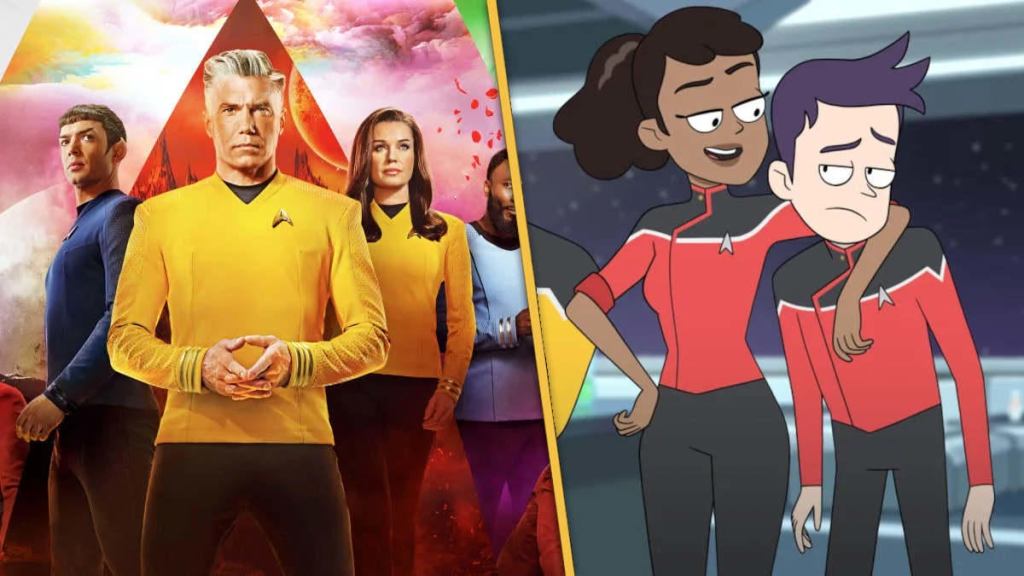
When the COVID-19 pandemic hit, ViacomCBS became “Paramount” and entered the Streaming Wars alongside every other major studio. The Star Trek TV universe was blown wide open with additional spinoff series like Star Trek: Strange New Worlds, Star Trek: Lower Decks, Star Trek: Prodigy, Star Trek: Short Treks, and, most recently, Starfleet Academy. While production on the TV shows went on full bore, the film side of the franchise got left in limbo as Hollywood hit even more turbulence, like the Writers and Actors’ strikes of 2023 – 2024. The behind-the-scenes shakeups at Paramount (first a merger with Skydance, followed by a bidding war to acquire Warner Bros.) also put the brakes on major film franchises like Star Trek.
The cast and crew of the Kelvin Timeline films never stopped endorsing the idea of doing another film: Spock actor Zachary Quinto even tried lobbying J.J. Abrams last year: “I actually just emailed J.J. this week to say, ‘Hey, this would be really exciting.’ I think fans would be really open to it and really welcome a final movie,” Quinto said. “We’ve been talking about it for long enough that it seems like time to move it forward. So, I’m beating that drum as much as I can. I think it would be really great to do a fourth movie, and let’s make it happen. There are so many possibilities in the stories we could tell. I think there’s something really wonderful about coming back to characters that we all have a history with, and we all have a real deep connection to, and a fond relationship with.”
Star Trek Is Moving On (RIP Kelvin Timeline)

Back in the Fall, Paramount finally confirmed that a new Star Trek movie is in the works, and the Kelvin Timeline is done. That could include at least two new rumored films, one about new characters, and another about established original series characters like Kirk and Spock. None of these films will be set in the Kelvin Timeline, and for the foreseeable future, the corner of Star Trek that J.J. Abrams created is closed off.
You can stream Star Trek‘s Kelvin Timeline movies on Paramount+. Let us know your thoughts about that era of the franchise on the ComicBook Forum!
Most Viewed
-

Official art by Bastien Lecouffe-Deharme -
Image courtesy of Tor Books/Macmillan -

A photo of the Retrovolt Arcade taken in 2017, showing several classic arcade cabinets and stools. -

Courtesy of TOHO Animation