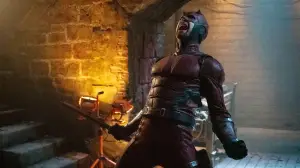
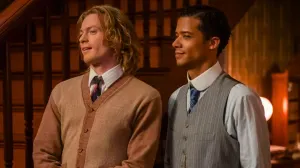
When people think of The CW and great franchises, there’s probably one that immediately comes to mind and that would be the Arrowverse. It’s a franchise that certainly deserves to be on the list of great television franchises. Spanning six official series between 2012 and 2023, the networks interconnected DC Comics inspired shows completely redefined what was possible for superhero television and made people rethink what DC live action could look like thanks to its wildly ambitious “Crisis on Infinite Earths” crossover event. But while the Arrowverse was without a doubt great, it’s not the network’s real masterpiece of a franchise. That distinction belongs to another franchise, one that spanned just three series, but gave viewers not only some of the networks highest highs, but some of its most complex and enduring characters and a rich, immersive mythology that fans are still immersed in today more than four years after the final series ended its run.
Videos by ComicBook.com
The franchise we’re talking about is The Vampire Diaries Universe. The franchise got its start in 2009 with The Vampire Diaries, an adaptation of L.J. Smith’s book series of the same name from Kevin Williamson and Julie Plec. The series would go on to run for eight seasons with 171 episodes and even if it had just been the one series it would have been notable television. The Vampire Diaries was a huge hit and influential in its own right, arriving during the peak of Twilight making vampires a big deal in pop culture and media. But The Vampire Diaries spawned a spinoff series focused on its greatest villain turned antihero, The Originals. That series, arguably even better than The Vampire Diaries, would go on to run for five seasons with a total of 92 episodes that expanded the universe and told even more mature, darker stories before it, too, got a spinoff taking the entire universe forward to a new generation with Legacies in 2018. That series would bring everything full circle, in a sense, by bringing the story back to where The Vampire Diaries began, following The Originals’ lead Klaus Mikaelson’s daughter, Hope. It would be that series that ultimately ended the universe with four seasons and 68 episodes, cementing the entire saga as a multi-generational tale for the ages that not only still defines television’s golden age of teen drama, but is just great storytelling as well.
The Vampire Diaries Universe Is a Masterclass On How to Expand and Mature a Story
There are a lot of great things that one can point to about The Vampire Diaries Universe in defense of it being The CW’s masterpiece franchise. The way the franchise started as an adaptation of a popular book series during a genre trend and made it its own complete with a full expansion into wholly original territory with its spinoffs is one major point and it’s a valid one. The Originals and Legacies both took the overall stories in directions well beyond the books and in doing so, moved things well beyond adaptation and trend territory. There’s also the pure success of the shows to consider — The Vampire Diaries was the most-watched series on The CW before Arrow surpassed it. But the thing that a lot of people don’t really talk about is how The Vampire Diaries Universe evolved itself not just in terms of adding new characters and elements that didn’t come from source materials, but in terms of tone and maturity, functionally reinventing itself with each spinoff in order to become something that anyone could watch, going well past simply “teen drama” territory.
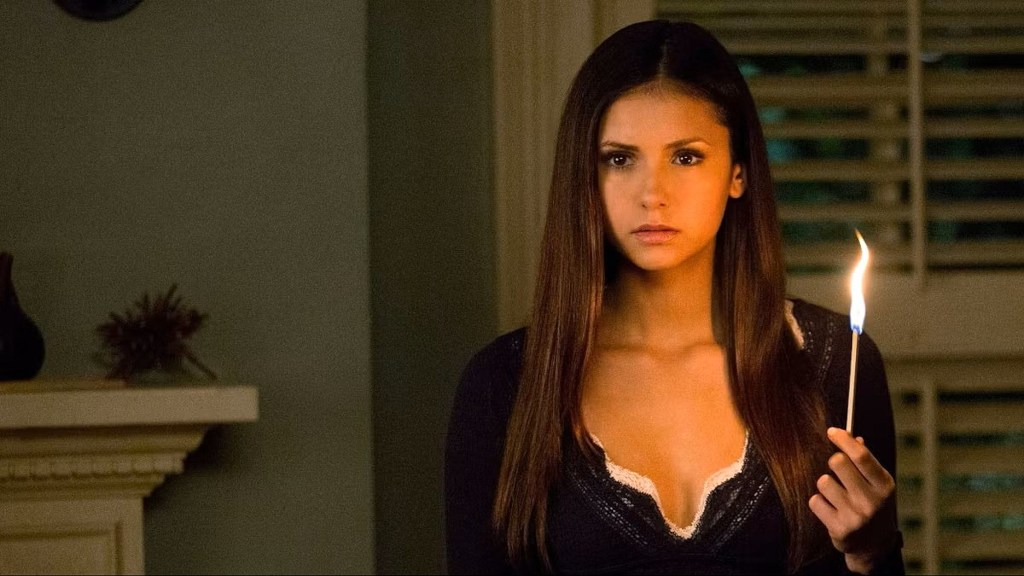
It starts with The Vampire Diaries itself. While the series starts out as a typical teen drama with vampires — after all, the general plot is that a high school student Elena Gilbert (Nina Dobrev), falls in love with a century old vampire masquerading as a high school student in Mystic Falls, a town with a deep supernatural history, and soon she and her friends are entangled in supernatural shenanigans while Elena finds herself in complicated love triangle featuring vampire brothers Stefan and Damon Salvatore (Paul Wesley and Ian Somerhalder respectively) — things get increasingly more serious and less high school focused. We watch the characters get through high school, sure, but they’re also taking on more serious issues, such as death and grief as well as huge life transformations (like becoming vampires) and what that means for their own futures. The stakes get higher than simply who kissed who and the mysteries get deeper.

But it isn’t just The Vampire Diaries where we see the maturity grow. To a certain extent, The Vampire Diaries never fully shakes its teen drama roots, but it doesn’t have to because of a spinoff, The Originals. The second season of The Vampire Diaries introduces the character that changes everything for the franchise — Klaus Mikaelson. Played by Joseph Morgan, the character was originally meant to be an antagonist for the show’s third season before being killed off, but the complexity of the villain resonated with fans in a big way. His role was expanded. Klaus became more than just a villain. He became a mature antagonist that challenged the younger characters and pushed their development before leaving Mystic Falls to be the center of his own series, The Originals. That series was definitively not a teen drama and was much more just a supernatural drama, following power struggles between supernatural factions in the city of New Orleans even as it delved into the trauma that Klaus and his family carried with them.
Between the two series, The Vampire Diaries and The Originals, you got two aspects of the same world: a younger skewed look at the supernatural and the impact of what becoming a vampire could mean and a more mature, more violent look at what it means to have actually lived with that curse for thousands of years. It was two versions of the same story, in a sense and they gave fans more depth than any other franchise the network had ever (or would ever) deliver. But they didn’t stop there. There was one more story left to tell, a third act that would bring everything full circle.
The Vampire Diaries Universe Gave a Complete Three-Act Structure By Ending With Legacies

I think the thing that fully cements The Vampire Diaries Universe as The CW’s masterpiece franchise, however, is that it fully completed what I can only call a three-act structure and it did so by giving fans a third series, Legacies. Legacies is technically a spinoff of The Originals directly, but it also is a spinoff of The Vampire Diaries. The series follows Hope Mikaelson (Danielle Rose Russell) as she attends the Salvatore School for the Young and Gifted which was established at the end of The Vampire Diaries. Sending Hope to the school brings the story back to Mystic Falls for a new generation of supernatural characters, several with ties to characters from the original series — including Lizzie and Josie Saltzman, who are the daughters of Alaric Saltzman (and Caroline Forbes… it’s complicated). The series reverts things back to more of a teen drama format with its younger characters and school setting, but it maintains much of the seriousness and emotional stakes that The Originals brought to the franchise.
It also does something you don’t always see in television franchise: consequences. The best part of Legacies is that the series sees its characters having to deal with the consequences of the actions and decisions of their parents and forebears from The Vampire Diaries and The Originals. There are old enemies that come out of the woodwork to create problems for the new generation, old secrets that come to the surface, and perhaps most interesting of all, the series explores mental health and trauma in a way that shows how all of the characters have grown across the franchise. In a very real way, Legacies is a culmination of all the storytelling as well as the lessons of the previous series and in the end, it wraps up with that new generation learning from the past to forge what is positioned as a hopefully brighter future. It’s simply something you didn’t see any other The CW franchise do — and it’s pretty rare on television in general.
Three television series, a combined 331 seasons and The Vampire Diaries Universe is still one of the best television franchises ever made. It’s not perfect and there are certainly things that haven’t aged well, but in terms of emotional depth, core development over time, and the ability to carry a comprehensive universe story across three complete arcs, there is nothing quite like it. And there probably won’t be anything quite like it again with The CW no longer being the same network and television being a much different place. But the whole franchise endures on streaming and for fans and is sure to remain one of television’s greats for years to come.
More TV Shows
-

Courtesy of 20th Television Animation / Hulu