
Superhero television has never been more popular. Invincible just wrapped its fourth season on Prime Video to enormous critical praise, while The Boys aired one of the most anticipated series finales in recent streaming history. Furthermore, Daredevil: Born Again delivered one of Marvel Television’s strongest sophomore seasons, and Wonder Man delivered a Hollywood satire no one expected could be that good. The calendar ahead is also stacked with MCU and DCU projects. Marvel Studios will keep rolling out its ambitious 2026 Disney+ slate that includes VisionQuest, and new seasons of X-Men ’97 and Your Friendly Neighborhood Spider-Man, while James Gunn’s DCU prepares its first true television test with the grounded Lanterns series.
Videos by ComicBook.com
Amid this relentless barrage of premieres, finales, and universe-building, the very shows that laid the groundwork for today’s cape craze are respected from a distance, but rarely streamed. These cult classics took wild creative swings, established character templates that later adaptations still borrow from, and built moods no modern blockbuster has replicated, yet they remain cult classics that more modern superhero fans should watch.
5) The Incredible Hulk
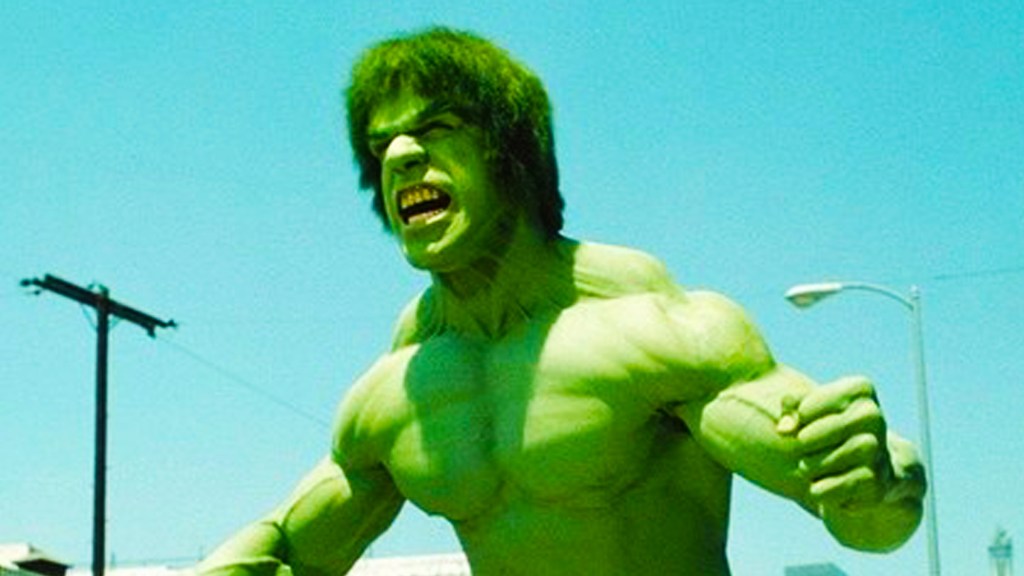
Kenneth Johnson stripped the Incredible Hulk comic down to almost nothing when he developed the CBS series. He removed the supervillains and the gamma bomb, ignored the supporting cast, renamed Bruce Banner as David Banner to avoid an alliteration, and built a quiet weekly drama about a widowed scientist (Bill Bixby) wandering America under assumed names, helping strangers while searching for a cure for his condition. Somehow, that works. Bixby plays Banner as a man who has accepted that he will never stop running, and that resignation gives every episode an undertow of grief that the action scenes don’t disrupt so much as punctuate. Meanwhile, Lou Ferrigno’s Hulk has a weight that a digital version never managed to replicate, making the consequences of Banner’s rage feel more real. The show’s recurring closing image, David Banner walking alone down an empty highway to Joe Harnell’s “Lonely Man Theme,” is among the most genuinely moving images in the genre’s history, and it achieves that effect with no action or special effects.
4) Swamp Thing
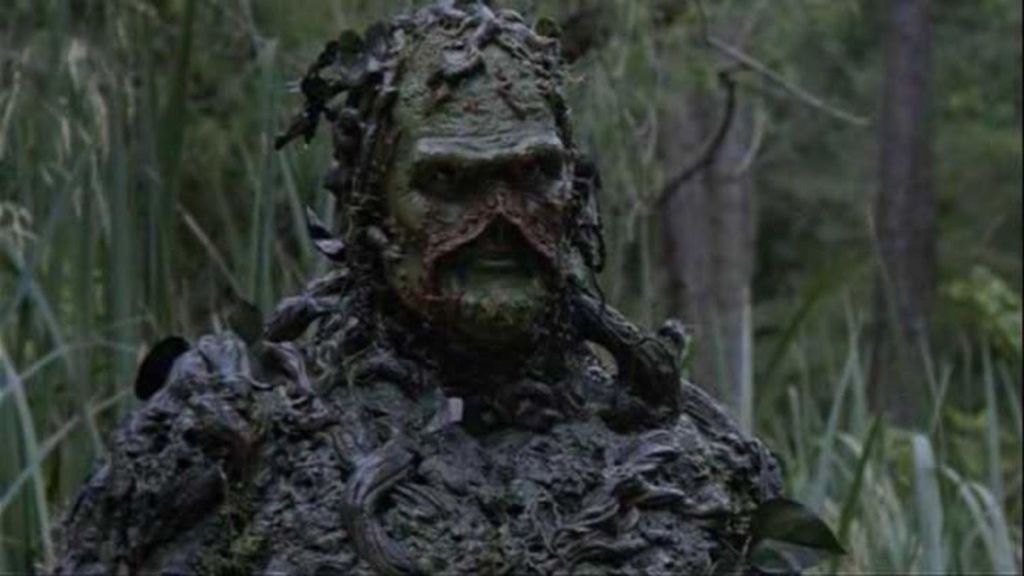
In Swamp Thing, Dick Durock plays a scientist burned alive by chemicals and dumped in the Louisiana bayou, who emerges as a plant-based creature that can grow back lost limbs and communicate with vegetation. However, the accident stripped the Swamp Thing of the things he cherished the most, as he can never become human again. The series was developed by Joseph Stefano, the writer behind Psycho and the original Outer Limits, and like both of those, it uses a monster as a way to ask questions about what people lose when tragedy permanently changes them. In addition, the villainous Dr. Anton Arcane (Mark Lindsay Chapman) wants Swamp Thing’s biological secrets and is willing to destroy anything in the bayou to get them, which gives the show an ecological dimension that feels ahead of its time. Swamp Thing ran for three seasons on USA Network and became the channel’s highest-rated original series, built almost entirely on studio sets because shooting in real Florida swamps proved too expensive and logistically unworkable. Yet, despite its success, most modern DC fans have never seen this show.
3) The Tick

A decade before Deadpool skewered the genre, The Tick gave us a live-action superhero satire that was too weird to survive. Based on Ben Edlund’s indie comic, the original live-action series starred Patrick Warburton as the nigh-invulnerable, magnificently dim blue beacon of justice who patrols The City with his moth-suited sidekick Arthur (David Burke). The show treated superhero absurdity with a completely straight face, turning grocery-store hostage situations and villainous El Seed, a mutant corn, into deadpan gold. Sadly, Fox aired only nine of the 13 produced episodes in 2001, burying it behind football and failing to market the show. Yet those nine episodes built a fervent cult following on DVD, thanks to Warburton’s pitch-perfect delivery and jokes that feel even sharper in an age of superhero saturation. The Tick anticipated everything from The Boys’ corporate takedowns to Deadpool’s meta-commentary, but it did so with a guileless sweetness that makes it utterly singular. If you’ve never seen it, you’re missing the missing link between Adam West’s Batman and modern cape comedies.
2) The Flash
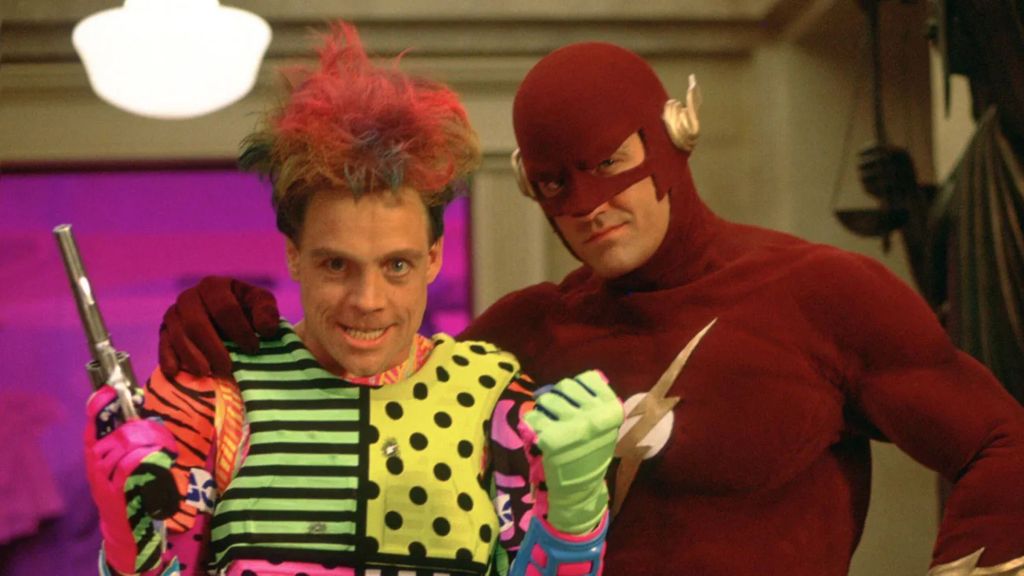
The 1990 The Flash series starring John Wesley Shipp as Barry Allen looks and sounds like a Tim Burton Batman film, with good reason. Created by the writing team behind Batman: The Animated Series, costumed by the legendary Robert Short, and scored by Danny Elfman in full Gothic-synth mode, The Flash made the most of its astronomical budget to create a mindblowing version of Central City. On top of that, the show’s blend of motion-blur compositing and in-camera tricks gives the Speed Force a handcrafted texture that feels curiously strange rather than weightless, as it often happens with more recent productions. It’s also worth noting that The Flash features Mark Hamill in two episodes as the Trickster, a performance so brilliant that Hamill would directly reprise it decades later on The CW’s Arrowverse. Unfortunately, CBS moved the show’s time slot three times across a single season and let the Gulf War preempt it repeatedly, which killed the ratings before an audience could find it. The Flash was doomed to a single season, but the show is well worth watching today.
1) Wonder Woman
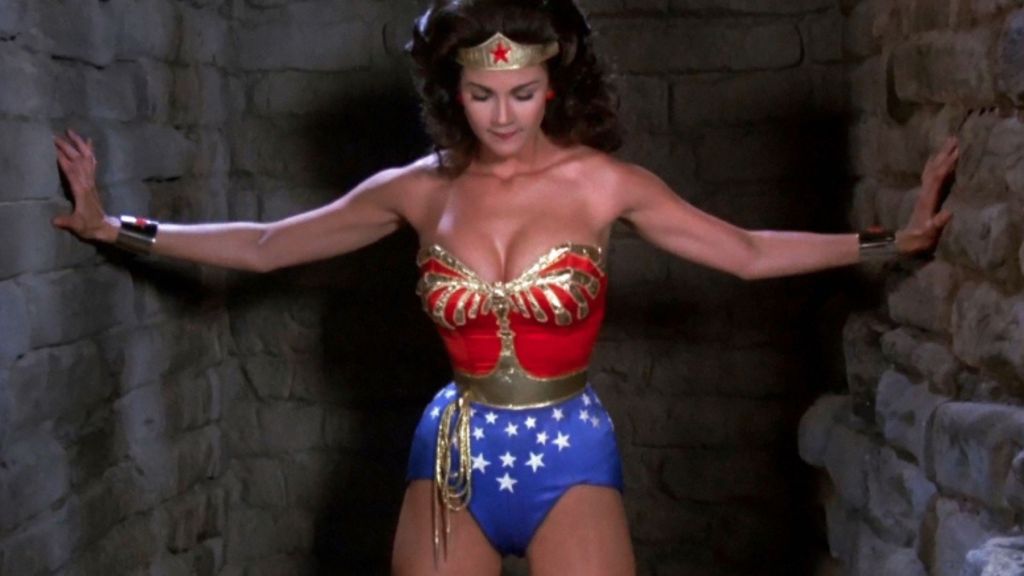
Lynda Carter’s Diana Prince remains the character against whom every subsequent Wonder Woman is measured. The first season of her show, set in the 1940s, leans into the fizzy comedy of a powerful Amazon navigating ration books and military bureaucracy, yet Carter never lets the fish-out-of-water gags undercut Diana’s solemn belief that humanity is worth saving. When the show jumped to the present day for its CBS run, it pivoted from wartime adventure to a sly exploration of a woman balancing superheroism with a professional identity, reflecting late-1970s unease about women’s expanding roles. Carter’s performance, warm but never sentimental, principled but never preachy, argues that Diana’s real superpower is her relentless curiosity about other people, defining traits that everyone now associates with Diana. Across three seasons, the series created a Wonder Woman who is formidable without cruelty, and every screen version that followed borrows from Carter, even though none has surpassed her.
Which of these cult classics are you most eager to track down? Leave a comment below and join the conversation now in the ComicBook Forum!
