The final frontier is mythic, so naturally, the Star Trek canon is also subject to widespread myth. Somewhere along the line over the past 60 years, Trek has picked up a few so-called “facts” which technically aren’t true, despite being immortalized in the fandom and beyond. You may have even quoted one or argued for another, not realizing that Gene Roddenberry’s universe didn’t quite play out the way pop culture remembers it.
Videos by ComicBook.com
Famous misquotes and misunderstood pieces of lore are among the false notions even hardcore fans still cling to. The Star Trek franchise and its constellation of misconceptions have taken on a life of their own, and we’ve scoured the vast array of shows, movies, and online forums to find the five most egregious. Read on to make sure you have all the facts before doubling down on any Trekkie convictions.
5) The Federation Doesn’t Use Money

The “fact” that Trek doesn’t use currency has spurred one of the longest-running arguments in the fandom. The common belief is that the United Federation of Planets operates as a post-scarcity utopia where money no longer exists. Captain Picard even says humanity has evolved beyond the need to accumulate wealth. This all sounds great, and their stance is admirable, until you remember all the times quiche clearly changes hands in the Trek universe.
Remember the gold-pressed latinum at Quark’s Bar on Deep Space Nine? Or the ration credit system used aboard Voyager? Whatever the form, currency is currency. Star Trek has repeatedly shown that economic exchange is alive and well. Even within the Federation, we hear about transporter credits, wages for civilian workers, and independent traders making deals with Starfleet officers. The truth is, Starfleet might not use cash the way we do, but that doesn’t mean the galaxy runs on goodwill alone. Just ask a Ferengi or con man, Harry Mudd.
4) Red Shirts Always Die
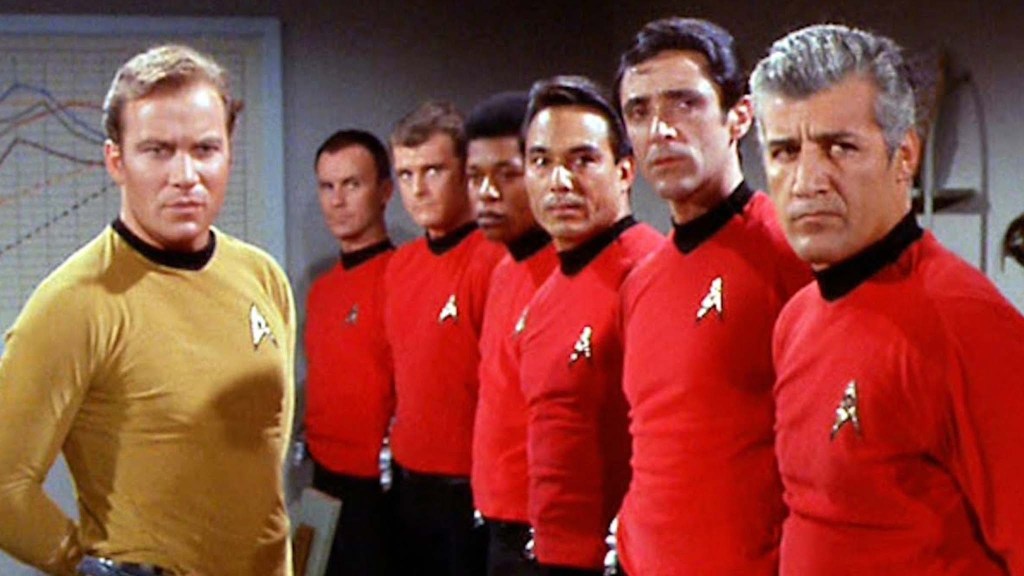
“Never wear red on an away mission” has been an inside joke among Trekkies for decades. Between the original series’ countless nameless crewmen vaporized, stabbed, or flung across alien planets, the redshirt trope became shorthand for “doomed extra.” Even Family Guy made a joke about it, which is how you know the idea has its claws deep in the culture. Yet, in reality, Red shirts weren’t actually that much more likely to die than anyone else.
When fans analyzed the data, they found that slightly more red-uniformed crewmen died than gold or blue, but not by the huge margin the zeitgeist suggests. It may have felt that way to viewers because the show’s operations division (which wore red) included security, and were therefore the officers most likely to beam down and get shot at. Meanwhile, command (gold) and science/medical (blue) included the main characters, who were essentially plot-armored. So, yes, redshirts had rough odds, but the idea that wearing one was an automatic death sentence is an old wives’ tale.
3) The First Interracial Kiss
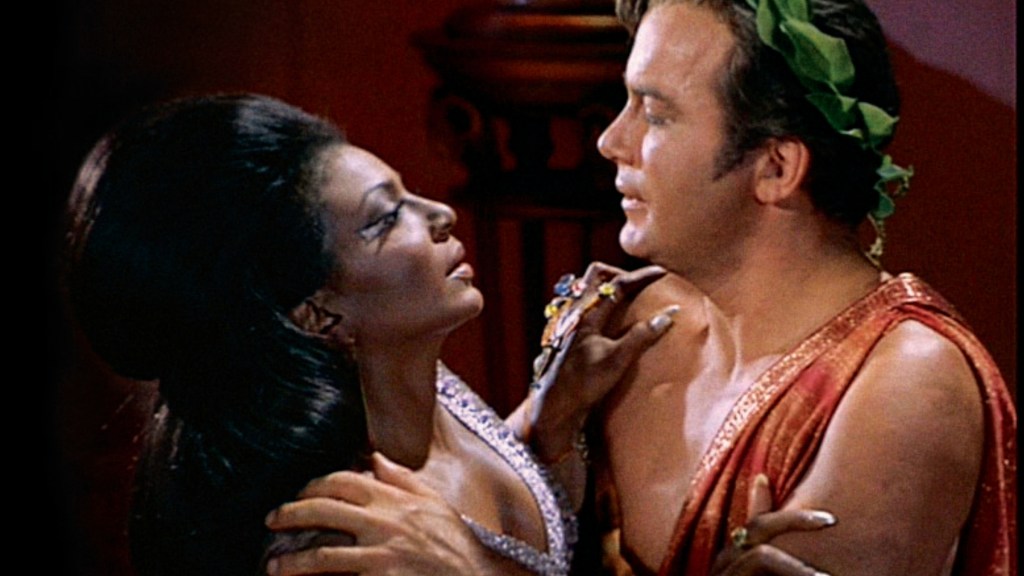
You probably know the infamous episode: “Plato’s Stepchildren,” where Captain Kirk and Lt. Uhura share what’s often called TV’s first interracial kiss (I even accidentally cited it as so in the article linked above). It’s an iconic, history-making moment, and it was groundbreaking for a scripted television drama. But technically, it wasn’t the first interracial kiss ever broadcast on American television.
That honor technically goes to Movin’ with Nancy, a 1967 TV special starring Nancy Sinatra, where she kissed Sammy Davis Jr. months before Star Trek’s episode aired. Granted, it wasn’t a romantic moment, as it was a kiss on the cheek, but it did air nationally and technically came first. Star Trek’s kiss, however, was the first scripted one, and unlike Sinatra’s friendly peck, it was written into the story. So while Kirk and Uhura didn’t break the barrier first, their kiss was far more progressive, even catching the concern of some Southern TV execs.
2) The Next Generation Was the First Sequel Series
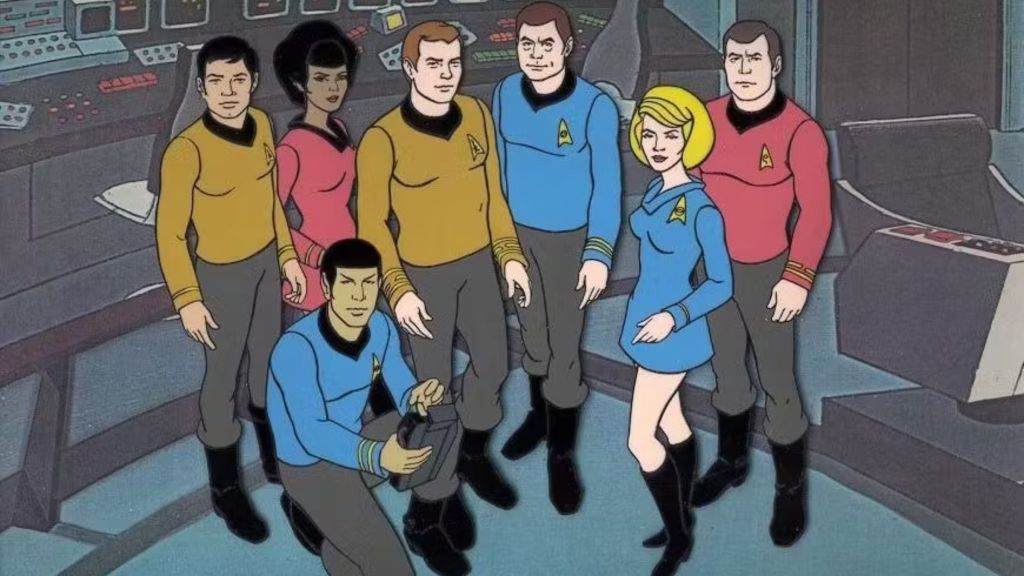
It’s easy to assume that Star Trek: The Next Generation, which first aired in 1987, was the franchise’s first true sequel. It launched a whole new era of Trek, and many fans went straight from TOS to TNG. But before Picard ever set foot on the Enterprise-D, there was Star Trek: The Animated Series (1973–1974). Produced by Filmation, TAS continued the adventures of Kirk, Spock, and the rest of the original crew with new stories, canon-level scripts, and even the same voice actors.
A few fans have claimed they don’t consider The Animated Series a sequel, but rather, an additional two TOS seasons in animated form. However, going by the official Webster definition, TAS is a sequel in every sense of the word. It’s also worth mentioning that Phase II almost beat them both. In the mid-’70s, Paramount developed a live-action TOS sequel series to launch the new Paramount Television Service. That project eventually evolved into Star Trek: The Motion Picture instead. So while TNG is the sequel in the hearts and minds of the fans, the first continuation was technically animated.
1) “Beam Me Up, Scotty”

The most famous line in Star Trek is probably “Live long and prosper,” but right after that comes the famous “Beam me up, Scotty.” Except… “Beam me up, Scotty” was never actually spoken in any Star Trek television episode or movie. Not even once. Captain Kirk came close several times with variations such as “Scotty, beam us up,” “Beam me up,” and “Mr. Scott, beam us up,” but the exact phrasing “Beam me up, Scotty” doesn’t appear anywhere in TOS or the films.
This particular myth was so pervasive that even James Doohan, who played Scotty, embraced it. His 1996 autobiography was titled Beam Me Up, Scotty, and the phrase was even misquoted in his obituary. Eventually, fans got their canonical wish when William Shatner delivered the full line in the audio adaptation of his novel, Star Trek: The Ashes of Eden. So while Kirk never said it on-screen, “Beam me up, Scotty” became something of a self-fulfilling prophecy.
How many of these Star Trek myths did you believe? Leave a comment below and join the conversation now in the ComicBook Forum!
Most Viewed
-

Official art by Bastien Lecouffe-Deharme -

A photo of the Retrovolt Arcade taken in 2017, showing several classic arcade cabinets and stools. -

Image Courtesy of MAPPA