Star Wars: The Phantom Menace was arguably the most anticipated film of all time. Fans were very excited to see George Lucas return to the galaxy far, far away to tell the story of how Anakin Skywalker became Darth Vader, filling in the backstory alluded to in the original trilogy. There was so much hype surrounding The Phantom Menace that it was borderline impossible for it (and, by extension, the prequel trilogy as a whole) to live up to the sky-high expectations. Still, moviegoers — particularly older viewers who grew up with the original trilogy — couldn’t help but feel very disappointed with what they saw. Initial reaction to the prequels was quite mixed, with people criticizing wooden acting, an over-reliance on CGI, and poor plotting.
Videos by ComicBook.com
These days, the Star Wars prequels have been reappraised, garnering a deeper appreciation from viewers. Some of this stems from the fact that fans who grew up with the prequels are now adults themselves, so they have a more powerful voice they can use to highlight the merits of the films. But Lucasfilm itself also contributed to the prequel trilogy redemption arc by releasing Star Wars: The Clone Wars. What began life as a critically panned animated movie about Anakin Skywalker rescuing Jabba the Hutt’s son turned into a beloved series that added so much to the already deep Star Wars mythology. The Clone Wars ended up fixing some infamous problems with the prequel trilogy.
1) Showing the Clone Wars in Detail
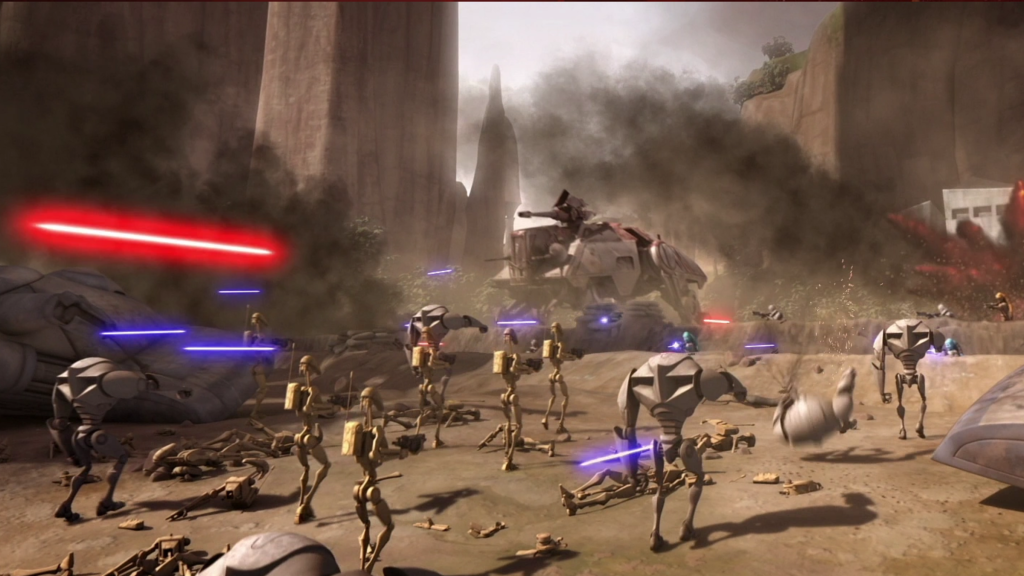
In contrast from the other two trilogies in the Skywalker Saga, the prequels do not immediately thrust viewers into the middle of an ongoing galactic war. Instead, the first two movies are largely concerned with laying the foundation for the Clone Wars, depicting Palpatine’s schemes to become Supreme Chancellor and unraveling the mystery of the creation of a secret clone army. Famously, the Clone War does not begin until the end of Star Wars: Attack of the Clones. Then, when the action picks up in Revenge of the Sith, the characters express relief about possibly ending the conflict at last.
For anyone who’s only seen the movies, this could be a bit jarring. Almost the entire Clone War unfolds off screen, creating a disconnect between the audience and the story being told. In the original trilogy, fans experienced the Battle of Yavin, the Battle of Hoth, and the Battle of Endor (in addition to other encounters), so the Rebels’ victory at the end of Return of the Jedi felt like a triumph that was years in the making. In just the films, there’s nothing cathartic about the Clone Wars ending because viewers barely saw them. But with the added context of seven seasons of the TV show, knowing how all corners of the galaxy were impacted by the conflict, the characters’ sense of relief is much more understandable.
2) The Portrayal of Anakin Skywalker

There were times in the movies where Anakin could come off as a whiny, entitled brat, but his characterization in The Clone Wars was seen as a marked improvement. For starters, on the TV show, Anakin is a well-meaning, noble hero committed to keeping the galaxy safe. He’s a powerful, intelligent leader who commands the respect of his troops. The Anakin we see on The Clone Wars feels like the powerful Jedi Obi-Wan fondly reminisced about. Throughout the series, Anakin and Obi-Wan have more of a buddy cop dynamic that truly sells their friendship. They have a bond, making their duel in Revenge of the Sith all the more tragic.
Of course, it’s impossible to talk about The Clone Wars without mentioning Anakin’s relationship with his padawan Ahsoka Tano. This was one of the most meaningful developments for Anakin’s character, allowing fans to see a completely different side of him as he found his place as a mentor to an enthusiastic youngster. Their friendship provided viewers with a plethora of great moments, and it also informed Anakin’s decision to turn to the dark side. Ahsoka leaving the Jedi Order after being framed for bombing the Temple planted the seeds of Anakin’s distrust in the Jedi institution, adding greater depth to his fall.
3) Humanizing the Clone Troopers
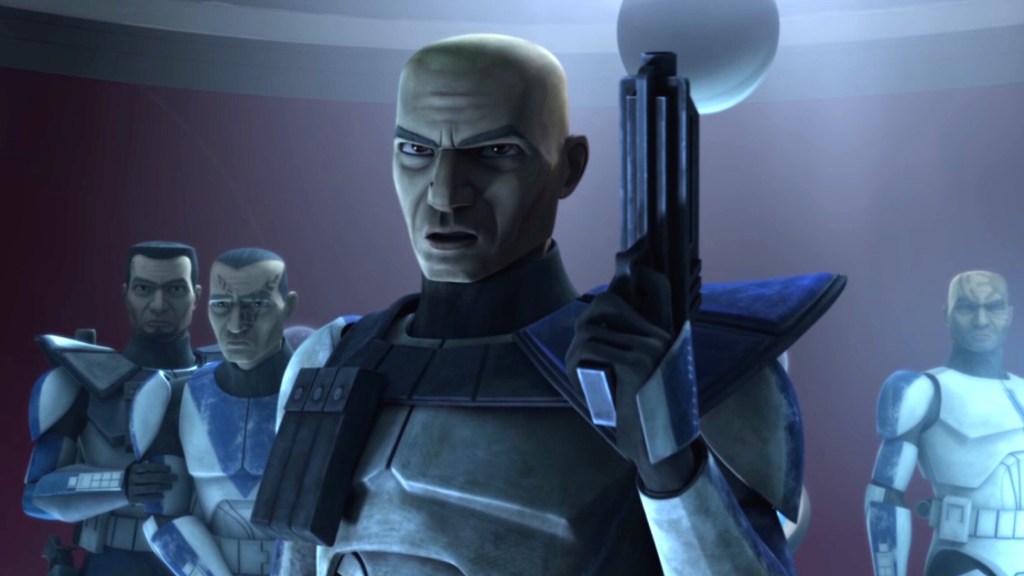
In the films, the clone troopers are little more than disposable infantry, as nameless and faceless as the Imperial stormtroopers who would eventually succeed them. Even though the clones were bred for the purpose of being an army for the Republic, this was still one of the biggest shortcomings of the prequels. Whereas the original trilogy made a point to spotlight unsung Rebellion heroes like Wedge Antilles, Biggs Darklighter, and Jek Porkins (who became fan favorites), audiences never got an opportunity to learn any of the clone troopers as individuals.
Perhaps the greatest strength of The Clone Wars was fundamentally changing how fans perceived the clone troopers. The show went to tremendous lengths to highlight the fact that even though each soldier was created in a lab on Kamino, they were human beings. The depiction of the clone troopers on The Clone Wars has a lot in common with some of the best war films, showcasing how each squad was like a brotherhood consisting of distinct personalities. Dee Bradley Baker deserves all the credit in the world for making each trooper feel unique, giving the Republic army its own set of fan favorites like Captain Rex, Fives, Echo, and more. The Clone Wars also never shied away from how fighting in war impacted the troopers on an emotional level, making them much more well-rounded.

4) Bringing Back Darth Maul
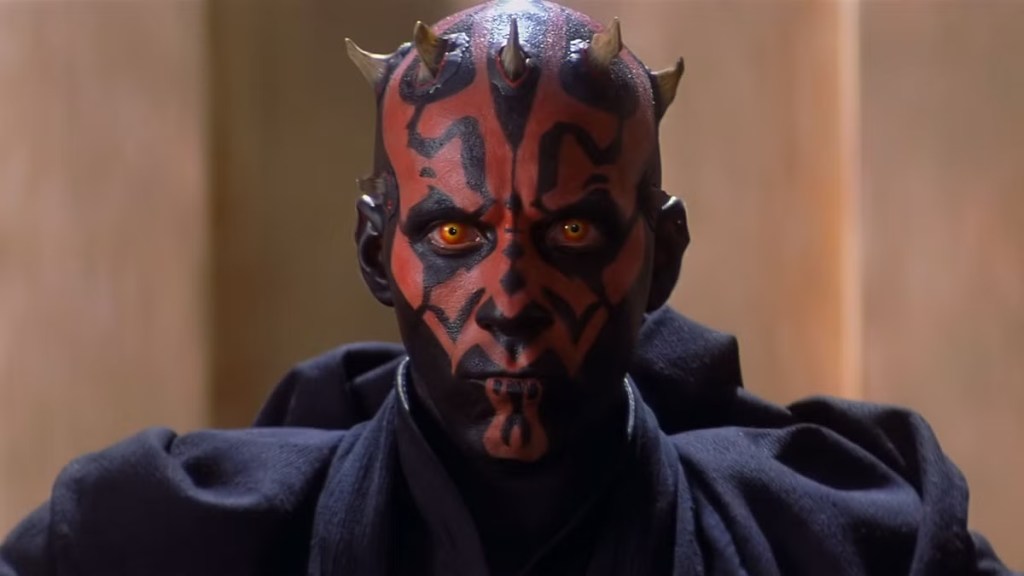
Unsurprisingly, Darth Maul was a key component of the Phantom Menace marketing campaign. With his nightmare-inducing character design and signature double-bladed lightsaber, fans would have been forgiven if they thought he was going to be the prequels’ answer to Darth Vader, serving as the trilogy’s main villain (until Anakin turned). Of course, that wasn’t the case; Maul seemingly dies at the end of The Phantom Menace, which was a very disappointing development even for those who enjoyed the film. The feeling was the potential of Maul as a character had been wasted.
Years later, George Lucas realized the error of his ways when he brought Maul back at the end of The Clone Wars Season 4, revealing the former Sith had survived his encounter with Obi-Wan and had been driven mad with hatred. This was the start of Maul becoming one of the most fascinating characters in Star Wars lore, as he orchestrated a takeover of Mandalore and would later become a power player in the galactic criminal underworld. The Clone Wars was where Maul truly came into his own as a fully formed character, giving the show a wild card villain who was as ruthless as he was compelling.
5) Fleshing Out General Grievous

Another prequel villain who benefited greatly from The Clone Wars is General Grievous, who is a secondary antagonist in Revenge of the Sith. In the context of the film, it’s hard to shake the feeling that Grievous is just a case of “villain of the week,” serving as an obstacle for Anakin and Obi-Wan on their opening mission. If you’ve only seen the movies, the lack of history with Grievous is something else that creates a bit of a disconnect between the audience and the narrative. Since he doesn’t arrive in the Skywalker Saga until Revenge of the Sith, it’s hard to get fully invested in the Jedi’s desire to eliminate him. Grievous’ demise on Utapau isn’t the cathartic moment it’s designed to be.
Fortunately, The Clone Wars spends a lot of time fleshing the character of Grievous out, establishing him as a thorn that was constantly in the Republic’s side. He was both intelligent and brutal, making him a truly terrifying presence who was capable of getting the upper hand on anyone — even a Jedi. His exploits in The Clone Wars illustrate why it was deemed such a priority to kill him (outside of simply his association with the Separatists). For those who have watched the show, seeing Obi-Wan set Grievous aflame with a blaster is a very satisfying sight.
6) Deepening The Anakin/Obi-Wan Dynamic

In addition to conveying the brotherly bond Anakin and Obi-Wan shared on the battlefield, The Clone Wars went to great lengths to flesh out their overall dynamic in multiple aspects. Most notably, the show highlights the key differences between them — particularly when it comes to the topic of romantic relationships. Through the Sabine arc, we learn that Obi-Wan once faced the same choice as Anakin in the prequels, but he realized it would be impossible to try to lead a double life. Obi-Wan sacrificed what could have been a very happy life with Sabine to remain with the Jedi, highlighting his selflessness. He always stayed true to the light, while the buckling pressure Anakin faced with his lie became his catalyst for joining the dark side.
Related to this is how The Clone Wars is smart about handling Obi-Wan’s knowledge of Anakin’s relationship with Padmé. In the final season, there’s an amusing moment where Captain Rex attempts to prevent Obi-Wan from interrupting Anakin’s hologram call with Padmé. Rex and Anakin do their best to keep it a secret, but Obi-Wan sees through the ruse, saying to his friend, “I hope you at least told Padmé I said hello,” essentially revealing that he knows about the two. It’s a fun revelation that improves Obi-Wan’s character, making him seem far more observant. He kept Anakin’s secret because he was a good friend.
7) Exploring the Chosen One Prophecy
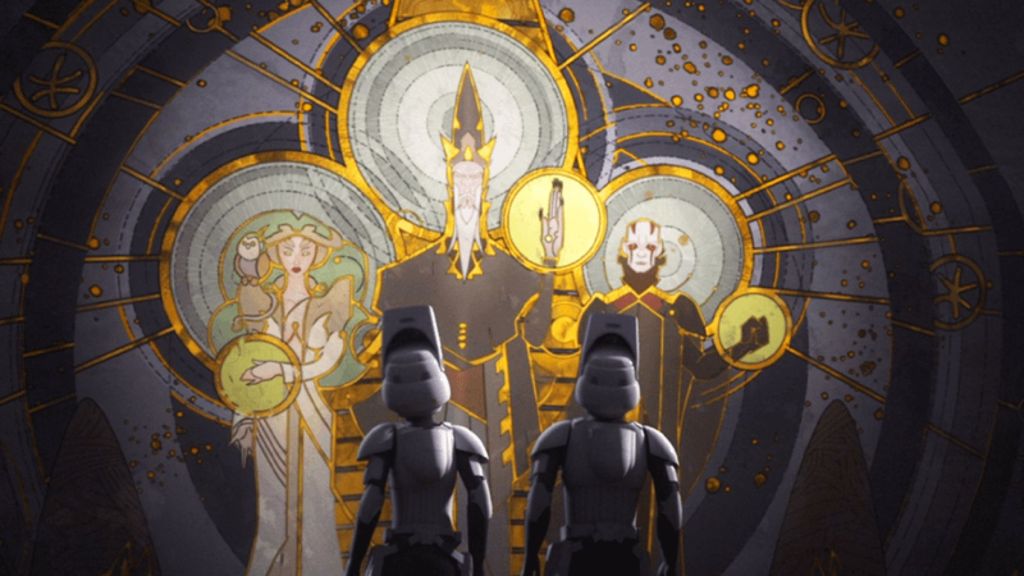
In The Phantom Menace, Anakin is believed to be “the Chosen One,” a being referenced in a Jedi prophecy that speaks of the one who will bring balance to the Force. Since the prequels were more occupied with depicting the rise of the Empire and how Palpatine came to power, there wasn’t much time to do a deep dive into the prophecy or the mythology of the Force. Lucas used The Clone Wars as an opportunity to flesh out the Force itself with the much-discussed Mortis arc. The storyline sees Anakin, Ahsoka, and Obi-Wan investigate a strange transmission and come across the Mortis gods, three beings who represent all aspects of the Force.
The Daughter represents the light side, the Son is the dark side, and the Father is the balance between them. The Mortis arc is particularly meaningful for Anakin, as the Father wanted him to take his place and keep the balance between the Daughter and the Son. The Mortis arc has been subject to several debates since it originally aired, but it remains a truly fascinating exploration of the mythological side of Star Wars, trying to deepen fans’ understanding of the Force and what it means to be the Chosen One.
What do you think? Leave a comment below and join the conversation now in the ComicBook Forum!
Most Viewed
-

image courtesy of Studio Ghibli -
Image courtesy of Studio Bones -
Image Courtesy of Toei Animation -

Promotional art for Rock Band 4. -
Image Courtesy of Studio Ghibli