Some episode titles have become a regular format for Doctor Who, but the “… of the Daleks” episodes are some of the most iconic and terrifying in the show’s 62-year history. After the Doctor’s very first on-screen foray with Susan, Ian, and Barbara in the TARDIS back in November 1963, their next adventure introduced them to the Daleks. 1963’s “The Daleks” marked the start of a monumental rivalry between the Doctor and the titular mutated inhabitants of the planet Skaro, as the Daleks have become the Doctor’s longest-lasting and most deadly villains in the 62 years since.
Videos by ComicBook.com
While the First Doctor took on the Daleks on several occasions, it wasn’t until the Second Doctor story “The Power of the Daleks” in 1966 when the “… of the Daleks” format began. In the almost six decades since, there have been 13 more “… of the Daleks” episodes, making it one of the most frequent episode title formats in Doctor Who’s history. Almost every incarnation of the Doctor has embarked on battles against the Daleks in an “… of the Daleks” episode, and this format will surely continue when Doctor Who returns in the future.

14) “The Power of the Daleks” (1966)

After the First Doctor (William Hartnell) took on the Daleks a number of times, the Second Doctor (Patrick Troughton) was thrust right into a battle with his archenemies after Doctor Who’s first ever regeneration. “The Power of the Daleks” was the Second Doctor’s first adventure which sees the Doctor, Ben Jackson and Polly land on the planet Vulcan, where they find Daleks acting as a human colony’s servants in an effort to gain influence and power to aid the reproduction of more Daleks. “The Power of the Daleks” has gained reputation as one of the Daleks’ strongest stories.
13) “The Evil of the Daleks” (1967)

Only six months later, the Second Doctor took on the Daleks again in “The Evil of the Daleks,” now alongside Jamie McCrimmon and Victoria Waterfield. This time, the Doctor is transported to 1866 and forced to help the Daleks add the “human factor” to their genetics to humanise them into deadlier weapons. It soon turns out that the Dalek Emperor — introduced for the first time — wanted to use the “Dalek factor” to imbue humans with Dalek personalities. “The Evil of the Daleks” was a great expansion of the Daleks’ mythology, and its themes have been repeated in subsequent Dalek-centric stories.
12) “Day of the Daleks” (1972)
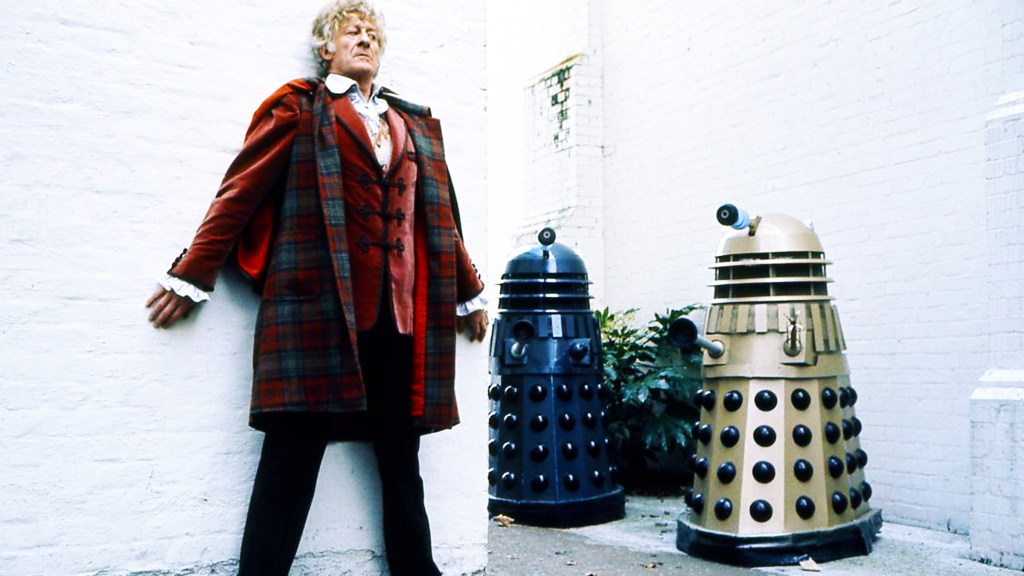
Shockingly, the Daleks weren’t seen at all in the five years between “The Evil of the Daleks” and the Third Doctor (Jon Pertwee) story “Day of the Daleks.” During the Third Doctor’s exile on Earth, he, companion Jo Grant, and UNIT come face-to-face with a group of freedom fighters from the 22nd century who travel back in time to stop the Daleks enslaving humanity in the future. This clever time travel storyline was a brilliant addition to the Daleks’ lore, and this was the first Doctor Who episode to feature the Daleks in color, which was game-changing for the series.
11) “Planet of the Daleks” (1973)
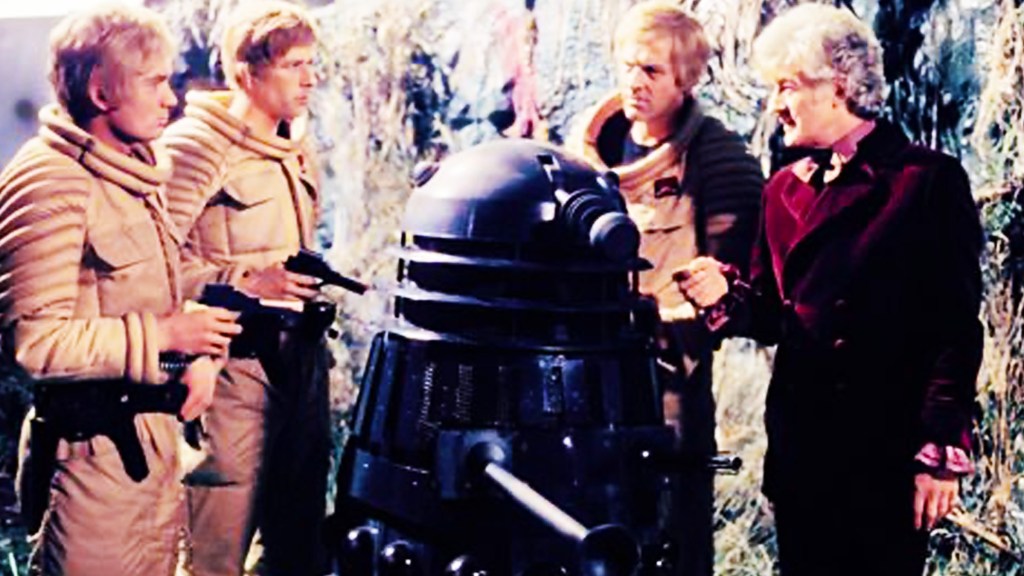
Back in 1973, the Daleks’ creator, Terry Nation, returned to Doctor Who to write his first Dalek story since 1965’s “The Daleks’ Master Plan.” “Planet of the Daleks” followed on from “Frontier in Space,” following a group of Daleks trying to free a much larger army from suspended animation inside the planet Spiridon. This story is widely regarded to have marked the return of the threatening and terrifying Daleks, rather than the easy-to-beat villains they’d become. This also marked the final otherworldly adventure for companion Jo Grant, who departed the TARDIS in the subsequent story, “The Green Death.”
10) “Genesis of the Daleks” (1975)
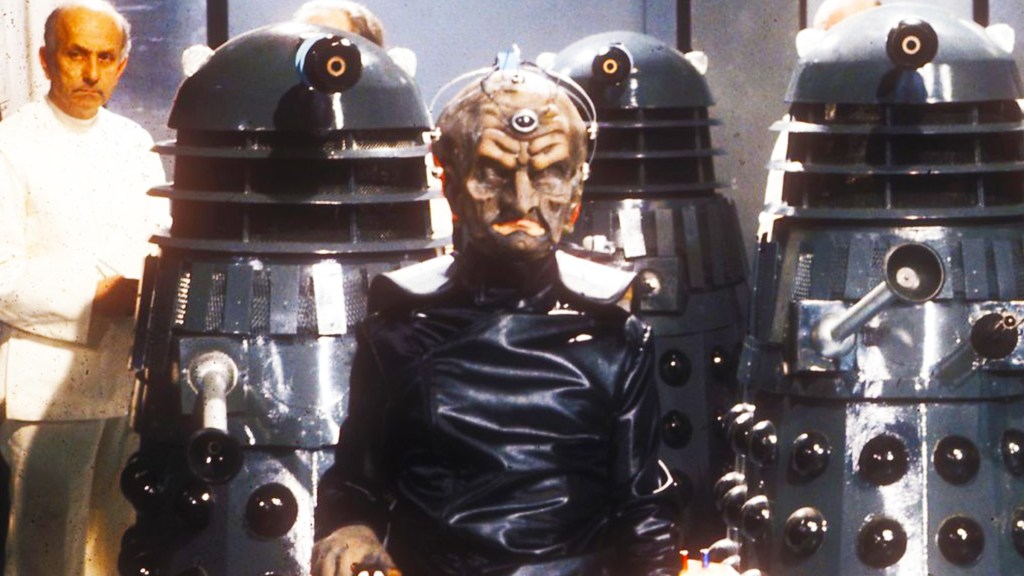
The Fourth Doctor’s (Tom Baker) fourth serial has been celebrated in the years since its release as one of the greatest, most important, and most entertaining Doctor Who stories ever. “Genesis of the Daleks” took the Doctor, Sarah Jane Smith, and Harry Sullivan back to the very beginning, as they are sent to Skaro by the Time Lords to stop the Daleks from becoming the universe’s dominant race at the dawn of their creation. “Genesis of the Daleks” introduced the Daleks’ creator, Davros, and furthered the circumstances of their transformation from the humanoid Kaleds into the mutated and armored Daleks.
9) “Destiny of the Daleks” (1979)
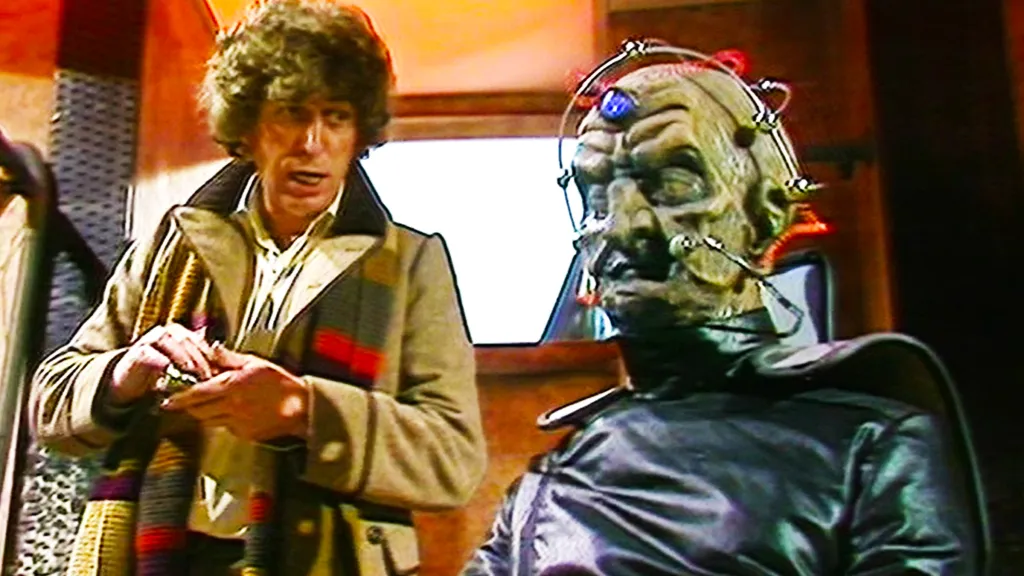
“Destiny of the Daleks” not only marked the debut of Romana II (Lalla Ward), but also reintroduced the Daleks to Doctor Who after a four-year absence. Centuries after their creation, the Daleks return to Skaro and retrieve Davros from suspended animation to aid in their battle against the Movellans — a war which the Fourth Doctor and Romana inadvertently get involved with. “Destiny of the Daleks” was Dalek creator Terry Nation’s final Doctor Who story, marking an important turning point for the series and for the Daleks as a whole, as they were in new hands constantly in following years.
8) “Resurrection of the Daleks” (1984)

The Fourth Doctor didn’t battle the Daleks again, and the Fifth Doctor only fought them on one occasion in 1984’s “Resurrection of the Daleks.” One of the Daleks’ most violent stories in Doctor Who, “Resurrection of the Daleks” marked Davros’ turn against his own creations. The Fifth Doctor (Peter Davison) bade farewell to Tegan in this story, as she chose not to continue traveling with the Doctor and Vislor Turlough. The Daleks gun down countless humans, Davros tries to wipe out the Daleks with a virus, and the Doctor himself contemplates murdering Davros in this remarkably dark Doctor Who story.

7) “Revelation of the Daleks” (1985)
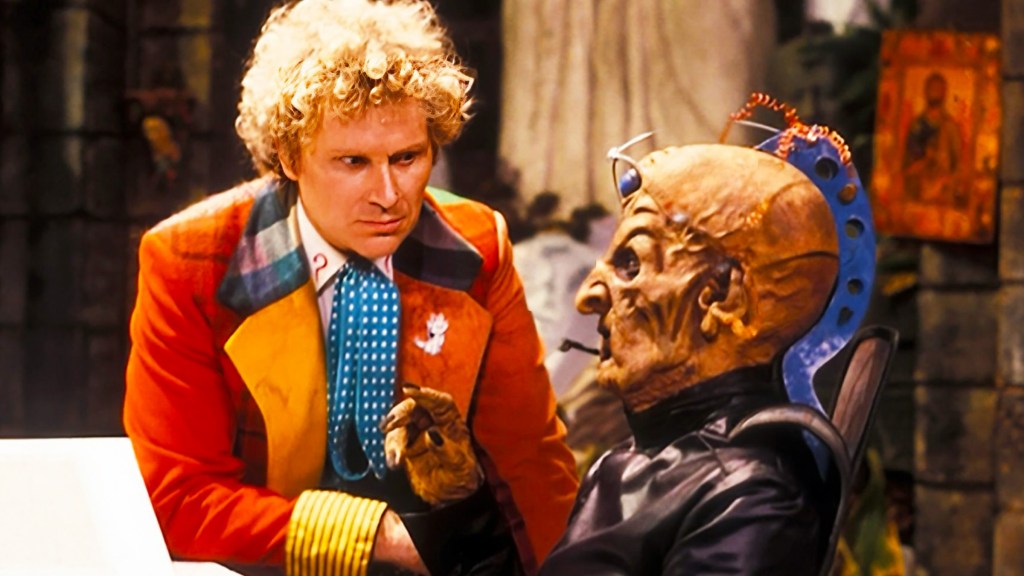
Marking the only time the Sixth Doctor (Colin Baker) fought the Daleks on-screen, “Revelation of the Daleks” saw Davros masquerade as the Great Healer of a famine-ridden galaxy, but he actually sought to turn humans into a new army of Daleks. This story marked the separation of the Daleks, as some — those in gray — were loyal to the Dalek Supreme, while others — gold — were loyal to Davros. “Revelation of the Daleks” was also the end of 45-minute episodes that wouldn’t return until Doctor Who was revived in 2005, marking a huge shift in the series’ history, perhaps for the worse.
6) “Remembrance of the Daleks” (1988)
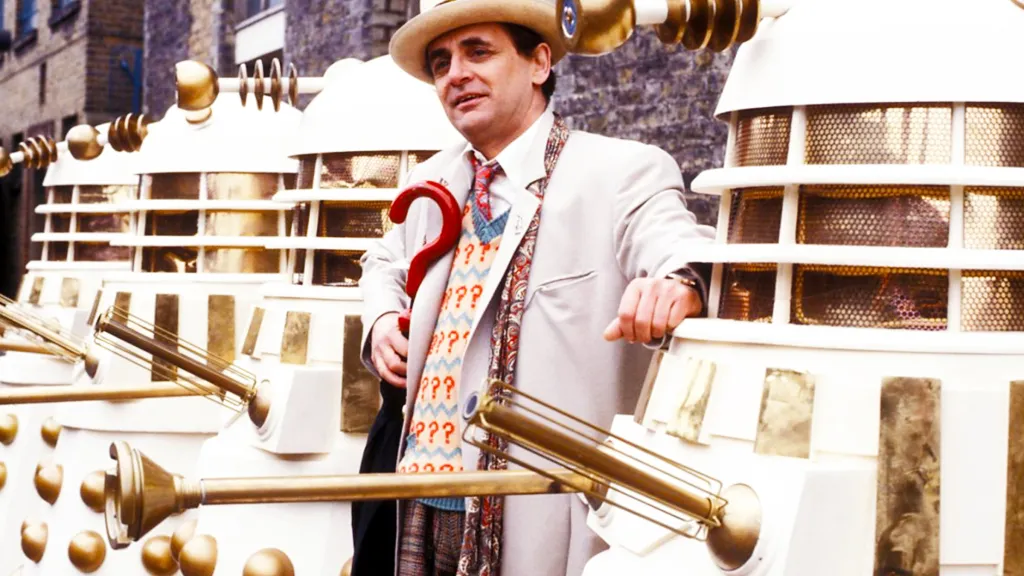
The final “… of the Daleks” episode before Doctor Who’s cancellation in 1989 was the Seventh Doctor (Sylvester McCoy) story “Remembrance of the Daleks.” This marked the start of the classic Doctor Who’s penultimate season in 1988, and saw the Doctor and Ace travel back to 1963 to retrieve the Hand of Omega, a Time Lord relic, so the Daleks can’t use it for their own benefit. Traveling back to 1963 — the year Doctor Who premiered — gave the story the opportunity to pay homage to the series’ history, and this has been lauded as one of the Seventh Doctor’s best adventures.
5) “Evolution of the Daleks” (2007)
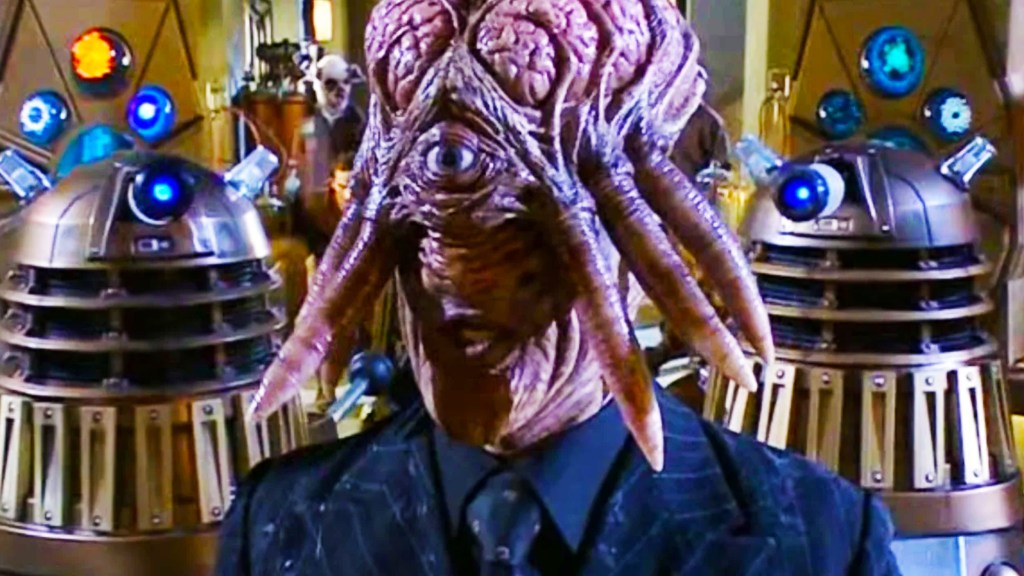
The Daleks made several appearances following Doctor Who’s revival before the modern era featured its first “… of the Daleks” episode in 2007. “Evolution of the Daleks” continued the story of “Daleks in Manhattan,” which saw the Tenth Doctor (David Tennant) and Martha Jones try to stop the Daleks from turning New Yorkers in 1930 into human/Dalek hybrids. Sound familiar? This story effectively replicated themes from the Second Doctor’s “The Evil of the Daleks,” but far more gruesomely and with modern special effects. This Doctor Who two-parter was a great turning point for Martha, who really came into her own here.
4) “Victory of the Daleks” (2010)
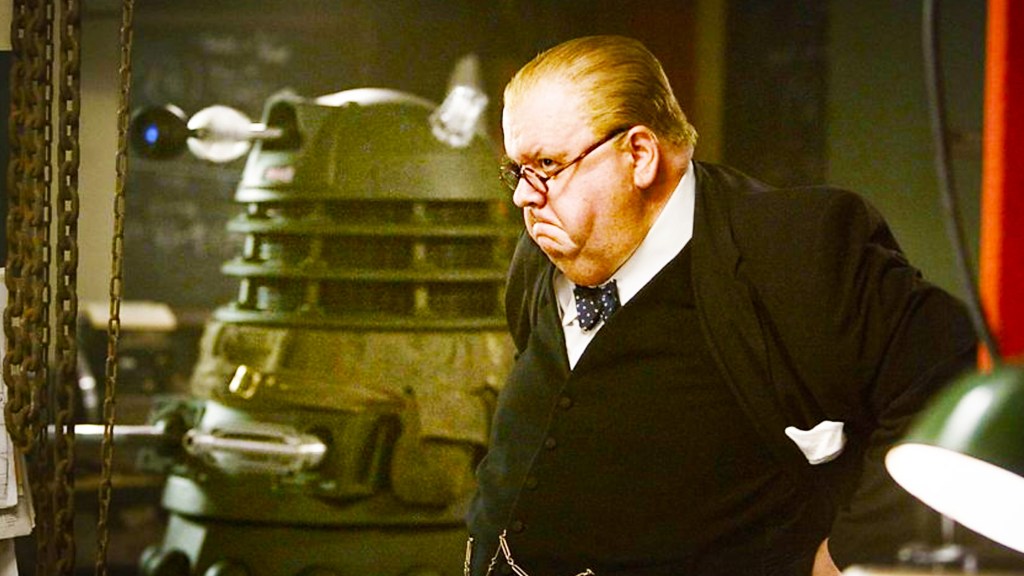
The Daleks pretended to be human servants in 1966’s “The Power of the Daleks,” and did the same in the Eleventh Doctor (Matt Smith) story “Victory of the Daleks” in 2010. In this story, the Doctor and Amy Pond meet Winston Churchill in the bunkers beneath London during World War II, and learn that Professor Bracewell has invented the “Ironsides,” a machine the Doctor instantly recognises as the Daleks. The Daleks sought power and invention to evolve into bulkier, differently-colored versions of themselves, establishing a new status quo for the Daleks in Doctor Who, reestablishing them as a major threat.
3) “Asylum of the Daleks” (2012)

In 2012, “Asylum of the Daleks” took the Eleventh Doctor, Amy Pond, and Rory Williams to a Dalek prison planet to deactivate a security system and allow the healthy Daleks to destroy their defective and insane compatriots. This was a dangerous mission that eventually brought separated Rory and Amy back together, while also introducing Jenna Coleman to Doctor Who as Oswin, before she became companion Clara Oswald, who had been transformed into a Dalek in a shocking and unexpected twist. “Asylum of the Daleks” was one of the Eleventh Doctor’s best adventures, and one of Amy and Rory’s last.
2) “Revolution of the Daleks” (2021)

The New Year’s special “Revolution of the Daleks” marked the first “… of the Daleks” episode in nine years, completely skipping over the Twelfth Doctor (Peter Capaldi) to pit the Thirteenth Doctor (Jodie Whittaker) against the Daleks on the streets of London. “Revolution of the Daleks” marks the rebirth of the Doctor’s greatest enemy, as Dalek parts are used to create defense drones, but living cells are discovered inside, allowing new clones to be birthed. This episode also saw Graham and Ryan leave the TARDIS team, marking the beginning of the end for the Thirteenth Doctor.
1) “Eve of the Daleks” (2022)

Released on New Year’s Day in 2022, “Eve of the Daleks” was one of Jodie Whittaker’s final three adventures as the Thirteenth Doctor. The Doctor, Yasmin Khan, and Dan Lewis find themselves trapped in a time loop at a storage facility with Sarah and Nick (guest stars Aisling Bea and Adjani Salmon), during which all five are chased by Daleks. This was the first episode to explicitly confirm a romantic connection between the Doctor and Yaz, and marked a return to the classic, stripped-back narrative that many loved from previous eras, but had been missing in Whittaker’s era. Only time will tell what “… of the Daleks” episodes expand the lore of the Doctor’s greatest enemy in Doctor Who’s future.
What do you think? Leave a comment below and join the conversation now in the ComicBook Forum!
More TV Shows
-

cyclops and jean in "No Mutant is an Island"