For more than three decades, the Borg have cast an ominous shadow over the Star Trek franchise. Introduced in The Next Generation’s “Q Who,” they were a near-instant force of nature – an unstoppable hive-minded collective that didn’t want your land or your resources; they wanted total assimiliation. The end of your individuality, replaced by cold, mechanical efficiency. In 2026, their existential dread feels a little more… relevant. And after their debut, they were responsible for some of Trek’s best moments – particularly the assimilation of Picard, all of First Contact, and lots of Voyager high-points. In fact, few Star Trek villains ever came close to being as great.
Videos by ComicBook.com
But as time passed, though, and the Borg lost some of their aura through familiarty, they became less of a mysterious dark force and more a recurring, less-than-invincible villain. And crucially, the cracks in their logic have become a little harder to ignore. Between muddied motivations, sometimes baffling tactical decisions, and the introduction of an illogical hierarchy, the Borg’s commitment to “perfection” falls apart. And frankly, there are some pretty glaring holes to pick at.

7) Borg Cubes Are Terribly Designed
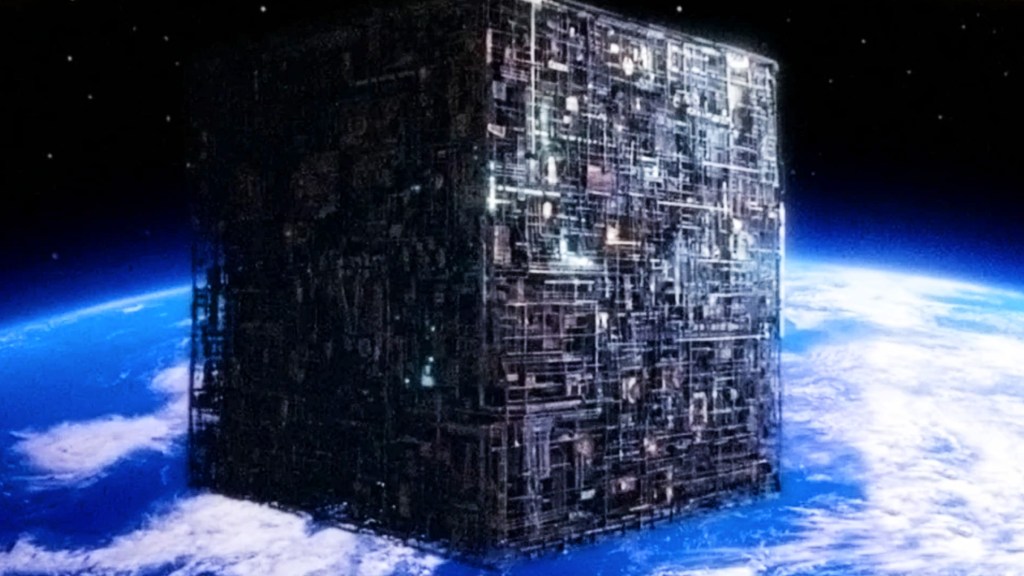
For a species that supposedly prides itself on “total efficiency” and “achieving transhumanist perfection,” the choice of a giant cube as their primary ship has always been baffling. In the vacuum of space, aerodynamics may not matter, no matter how much Starfleet sought increasingly sleek designs to seemingly maximize speed (it’s not really that), but physics still does. Not to get too boring here, but a cube is a nightmare for energy distribution and structural integrity. Most Starfleet vessels come with specialized hulls to deflect energy or specially designed nacelles, but the Borg simply opt for big boxes with no added shield plating.
Maybe it’s hubris, and a belief that their adaptive defence measures will hide all weaknesses, but the cubes trade practicality for aura. There is an in-built logic that a decentralized vessel removes weak spots, but the frequent looks at the interior of Borg cubes reveals a rat’s nest of inefficient design. A logistical nightmare, in other words, that is completely at odds with what we’re supposed to accept about the species. And then there’s the energy inefficiency, which also doesn’t fit with a hive mind that supposedly constantly calculates the odds. It’s like a weird flex.
6) The Seven of Nine Long Game
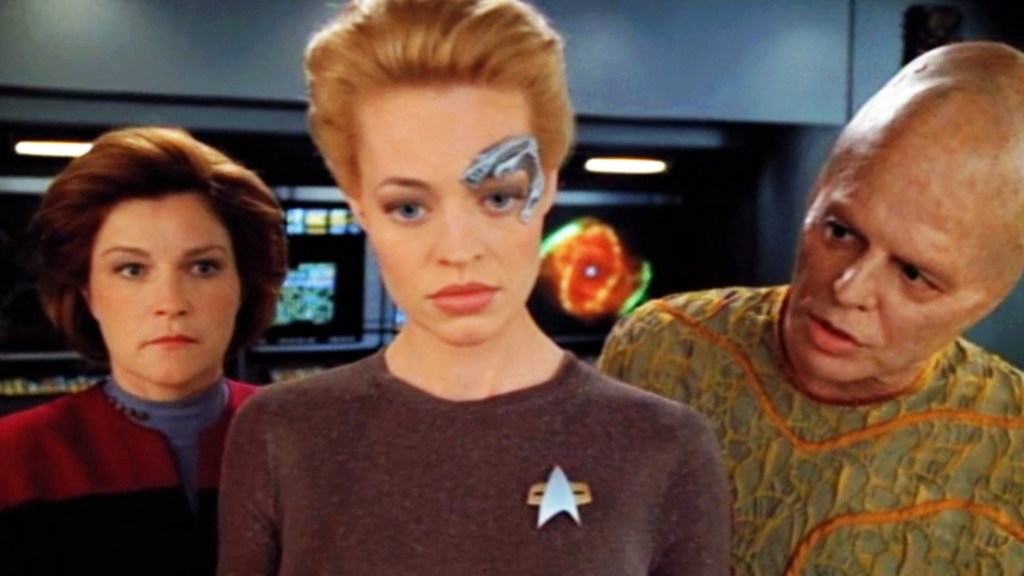
In Voyager‘s “Dark Frontier” episode, it’s revealed that the Borg’s loss of Seven of Nine wasn’t actually a defeat, but rather a complex and calculated tactical decision. The idea was that as a “reclaimed” drone, Seven would become a mole inside the Federation and eventually provide the Collective with the required information to finally develop a solution to the problem of assimilating the ultimate resistant species: humanity. That would be achieved through the mass-infection of Earth using an assimilation virus sent into the planet’s atmosphere.
This plan is at best misguided, and at worst, completely idiotic. In allowing Seven to regain her individuality, the Borg Queen arrogantly gambles against the thing the Borg claim is a sign of inferiority: human emotion and free will. Allowing Seven to live among the Voyager crew for years radicalized her in the most unfortunate way, weaponizing her against her own species. Ultimately, the foolish “long game” only resulted in the Borg losing a transwarp hub and having their entire infrastructure crippled by a neurolytic pathogen thanks to Seven. And really, relying on a de-assimilated drone to remain loyal under the power of human influence suggests the Borg never actually paid any attention to their own deep research of humanity.
5) They All Look Different
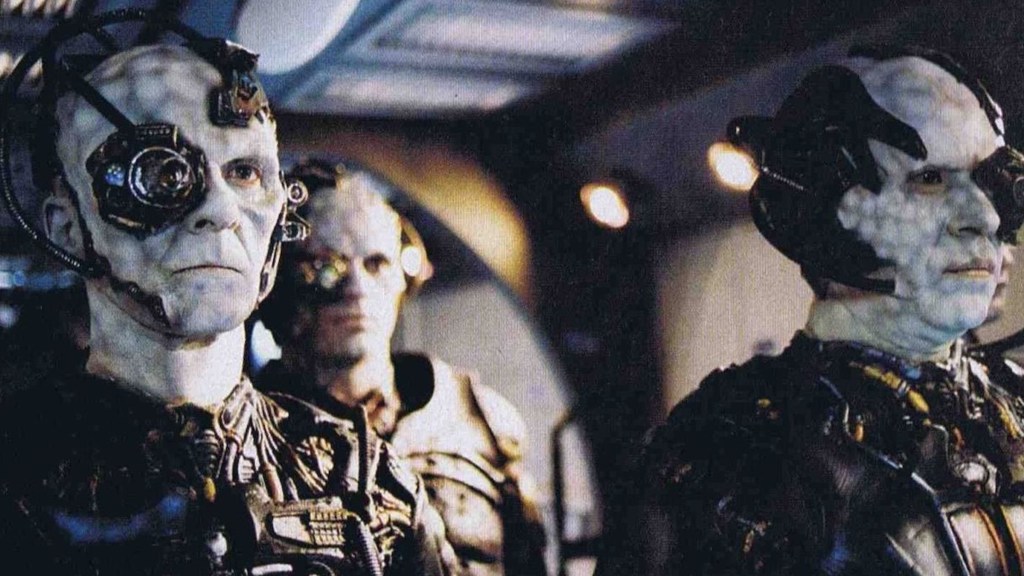
One of the core tenets of the Borg is conformity: it’s literally inherently written into their most famous mantra: “You will be assimilated. Resistance is futile.” Individuality is removed in service of creating a harmonious, singular consciousness. The beauty of order. So, with that in mind, why does every single Borg drone look like a unique steam punk project gone slightly wrong?
If the Borg were truly efficient, they would have a standardized kit for assimilation that would create the order they claim is their prime objective. But the variation is staggering: sometimes we see some drones with ocular implants on the left, some on the right, some with massive hydraulic claws, and others with delicate sensory arrays. It makes for good horror movie-like impact, but it doesn’t make sense. It would perhaps make sense for clusters of similar designs to exist based on individual tasks, but Borg appear to be a violation of the very thing they abhor: they’re all individuals.
4) The Borg Queen (& Their General Origin, to be Honest)
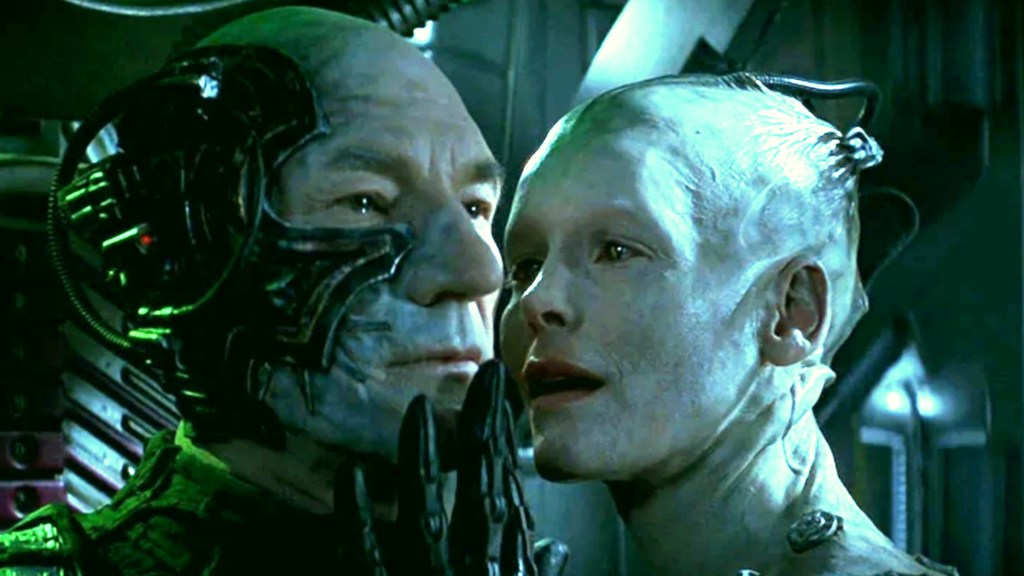
The introduction of the Borg Queen in Star Trek: First Contact was a turning point that arguably broke the concept of the Borg forever. I’m not going to argue that it wasn’t excellent – particularly because Alice Krige embodied the role so perfectly – but if we’re focusing on logic here, something was badly amiss. As originally designed, the Borg were terrifying because they were an idea over a flawed individual: an irresistible force of nature, really. Adding a Queen who has “feelings,” a personality, and a taste for delicious monologuing turned the Borg into just another empire with a caricature of a leader. There also isn’t any consistency in how her dynmic is presented: at first she’s an expression of the Borg, but then by the time of Voyager she’s explicitly shown as commanding the drones.
The Borg’s origin is murky, to say the least, but what we do roughly know is that they were a humanoid species who overreached in their attempts to self-improve, eventually losing their individuality. But that was clearly a result of their forced evolution, not an accident of it, and the subsequent urge to bring in a Queen is a contradiciton. Especially when she proved herself flawed like a human. If the Queen is “the one who is many,” why does she possess individual desires, such as her obsession with Data or her personal vendetta against Janeway?
3) They Let Voyager Escape
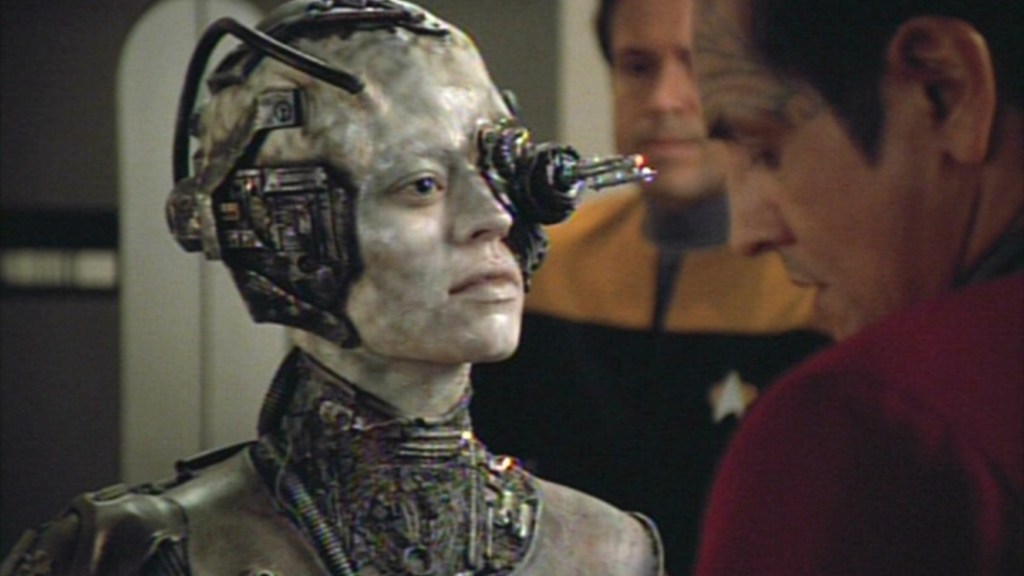
One of the silliest examples of “plot armor” in Star Trek history occurs in Voyager Season 3 double-header “Scorpion,” which sees an alliance between Voyager and the Borg formed to defeat Species 8472. Faced with an enemy from fluidic space that could destroy them, the Borg agreed to a truce. However, once the threat was neutralized, the Borg… just let Voyager go.
Granted, they tried a half-hearted attempt to assimilate the ship via Seven of Nine at the very last second, but for a hive mind that operates on cold logic, the decision not to immediately swarm Voyager with multiple Cubes when the war with Species 8472 is over makes no sense. After all, the Borg instigated the war against Species 8472, because of their superior technology, and that desire would not dissipate. Species 8472 are beaten using Voyager technology, so the idea that the Borg would also simply let the means to achieve their goal slip by is doubly illogical.
The Borg don’t have “honor.” They don’t respect treaties. A ship full of unique biological and technological should, by their own nature, inspire the immediate urge to consume it. And allowing a ship with top-tier Federation technology and intimate knowledge of Borg space to continue its journey is a tactical failure of such magnitude that it suggests the Collective’s “efficiency” is somewhat muddled.
2) Not Assimilating The Enterprise on First Meeting
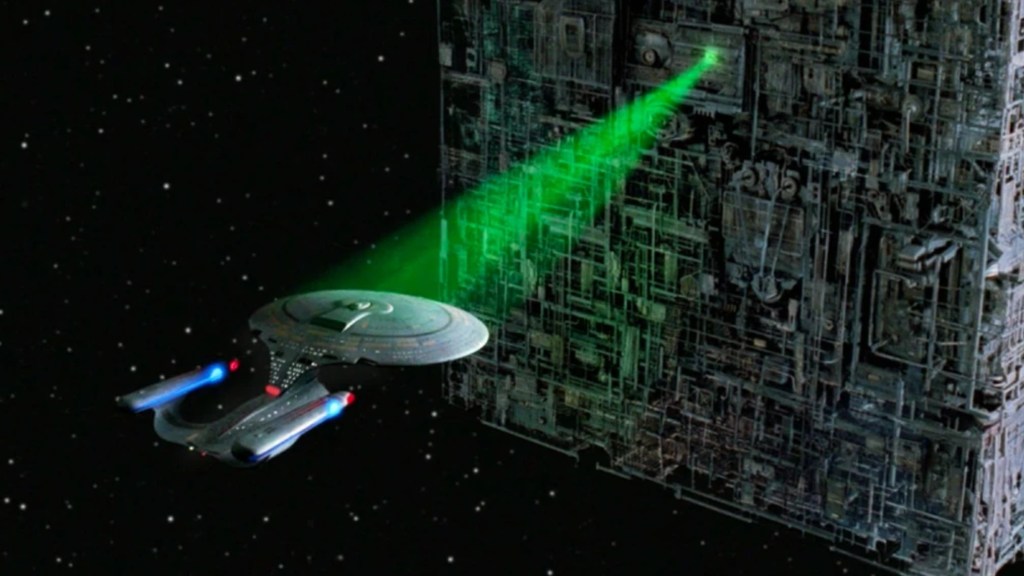
When John de Lancie’s excellent Q first introduces the Enterprise-D to the Borg in “Q Who,” the Borg’s behavior is notably very different from the “zombie apocalypse” hive mind you’re conjuring in your mind reading this. Initially, the Borg didn’t actually care about the people; as Q says, they’re just scavengers of hardware on the hunt for more technology to absorb. They beam onto the ship, ignore the crew entirely, and start cutting pieces out of the engineering hull. Obviously, their modus operandi was then retconned, but the retcon never came with an explanation of why they ignored their fundamental instinct in “Q Who.”
Also, “Q Who” isn’t actually the Federation’s first encounter with the Borg. Chronologically, the events of Star Trek: Enterprise‘s “Regeneration” and the El-Aurian refugees in Star Trek: Generations both establish that the Borg were active and known long before Picard’s era at the helm of the Enterprise. The retcon was one thing, but adding earlier points to the timeline whre the Borg and the Federation crossed over made the failure to address that encounter more confusing. If the Collective already had data on humans and Federation precursors centuries earlier, their “disinterest” in the Enterprise crew in “Q Who” makes even less sense.
1) Ignoring the Easiest Way To Take Down Earth
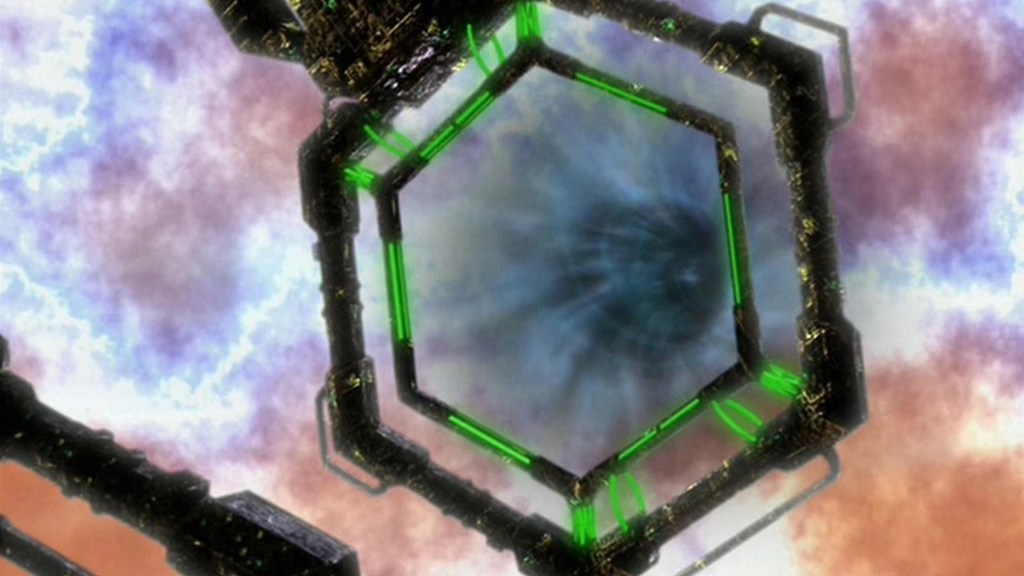
Easily one of the most talked-about issues with the Borg is the fact that they were both apparently driven by an irresistible desire to taken down humanity and at the same time completely ignored the easiest way to achieve it. The Borg had a network of transwarp conduits throughout the galaxy to allow for near-instant travel to their targeted planets. Eventually, in “Endgame”, it turns out there’s always been one in the Alpha Quadrant, literally right next to Earth.
There is no reasonable explanation for why the Borg didn’t send a sufficient armada to the Alpha Quadrant to quickly overwhelm Earth. One prevailing theory suggests the Borg were farming humanity and the Federation, and taking their technology, but betrayal of the Borg’s prime directive doesn’t stand up, especially when the Borg Queen revealed to Seven of Nine that they developed a plan to assimilate humanity in a more complicated way than seemed necessary (as Seven even said). Giving the Borg the benefit of the farming theory directly contradicts that (even if Voyager never mentioned the plan again), and there was never a strong enough in-universe explanation for why “Endgame’s” revelation was never used earlier.
What do you think? Leave a comment below and join the conversation now in the ComicBook Forum!
More TV Shows
-

Courtesy of 20th Television Animation