IT: Welcome to Derry has finally wrapped up its first season, and the series had major hurdles to overcome even to make it to this point. Not only did the series have to contend with two major strikes that disrupted Hollywood for months, but the series was also announced before it was confirmed if fan-favorite actor Bill Skarsgård would even return as Pennywise the Dancing Clown. In the end, things seemed to work out for the series, which not only got its lead back but boasts an 80% approval rating on Rotten Tomatoes and has been a ratings smash.
Videos by ComicBook.com
Despite the hype around the series, there have been lingering criticisms about the show as a whole. Not only has IT: Welcome to Derry had to walk a fine line in making sure it doesn’t totally mess up the continuity of the first two IT movies, but the series has also come under fire for its extensive use of CGI effects. Now, one of the stars of the series has pulled back the curtain with a major complaint of their own as actress Taylour Paige reveals her real feelings about the season finale. Spoilers will follow for the Season 1 finale of IT: Welcome to Derry.

IT: Welcome to Derry’s Taylour Paige Roasts Season Finale Script
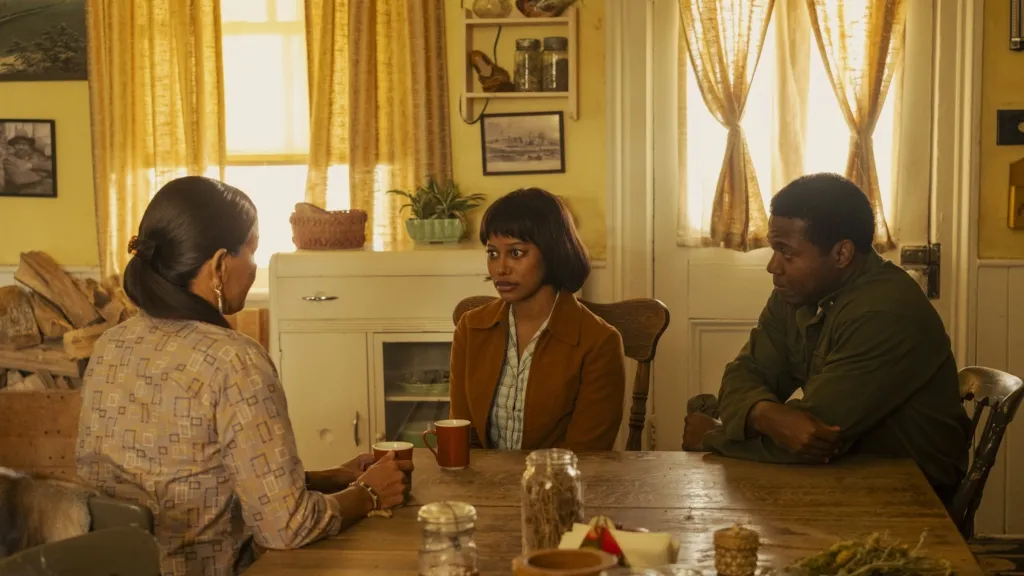
In the final minutes of IT: Welcome to Derry, many of the characters are planning to finally escape. With IT finally sleeping for the next 27 years, they’re eager to skip town for good. Among them, the Hanlons, with Leeroy (Jovan Adepo) having been honorably discharged from the military, he and his wife, Charlotte (Taylour Paige), and their son Will (Blake Cameron James) are primed to exit Derry for good. At the last second, though, they have a change of heart. Specifically, Charlotte has a change of heart, electing to stay in Derry and work with Rose and the native american tribe in Derry to keep the town ready for Its next arrival. Speaking with Deadline, Paige did not mince words about her feelings for the finale and the way her character was written in the final moments.
“No, I’m not happy with the way this was written, if I’m being honest. I’m like, ‘There’s no f–king way.’ I mean, I guess the lore is that you forget when you’re in Derry, but I don’t buy it. I guess, maybe it makes sense for 1962 that you kind of shut up and you get back to business, you get back to being a homemaker, and you’re the nucleus of the family, I guess. I wanted more for Charlotte and this family, but I think it would have been maybe too radical for Charlotte to leave. And also too radical for women of 1962 to be like, “I’m out.” That was very rare. It just didn’t really happen then, right? Most people stayed in loveless marriages. Most women, I think, were martyrs had to deny themselves to keep the family together.”
To her credit, Paige is right. The entirety of IT: Welcome to Derry Season 1 had positioned Charlotte as a woman who always does the right thing, but who also puts her family first. For the character to suddenly have a change of heart and believe that “the really radical” thing to do would be to stay in the town and fight feels like compulsory writing, pigeonholing her and her family because of what happened previously. As IT fans know, Leeroy is still alive at the time of the first IT movie (alongside their grandson, Mike). The series writing Charlotte in this way feels like the team moving pieces around to make sure they fit in a specific place in the larger IT tableau, not staying true to the characters that they wrote all season.
What makes this feel like disingenuous writing as well is that, based on what we do know about Mike from the first IT movie, it doesn’t really seem like the Hanlons did much to get their grandson ready for the next arrival of IT. Had they really stayed behind to work with the native americans of Derry to monitor IT and keep the story alive for future generations, they sure didn’t prepare their most vulnerable family member for that moment. One could argue that this was the influence of Pennywise’s evil, or one could see it for what it is, sloppy work.
Most Viewed
-
Image courtesy of Virgin Films -

Image Courtesy of Netflix -
Image courtesy of Monolith