The Spider-Verse is a sprawling concept in Marvel Comics that explores the idea of countless alternate versions of Spider-Man across the multiverse. It revolves around the idea that the “Spider-Man mantle” is not unique to one individual or one universe but is instead a recurring phenomenon, with different people in various realities gaining spider-like powers.
Videos by ComicBook.com
Each alternate Spider-Man reflects their own world’s culture, technology, and challenges. These alternate versions allow for reinvention of the Spider-Man character, exploring how the same origin — being bitten by a radioactive spider or equivalent — can lead to wildly different heroes.

10. Spider-Man Noir
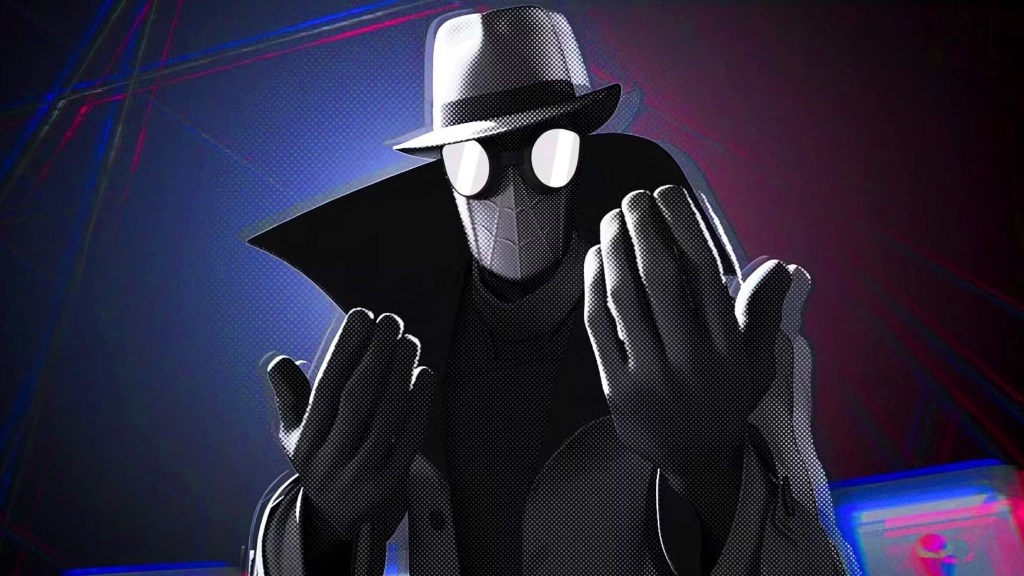
Spider-Man Noir is what happens when Peter Parker’s origin gets filtered through a 1930s gangster movie and soaked in rain and grit. In his world, Peter grows up during the Great Depression, fighting mobsters, corrupt politicians, and the vices of society rather than supervillains with laser beams. His world is grim — and so is he. Unlike the cheerful quip-machine we know, this Peter operates more like a detective than a friendly neighborhood hero.
While not the strongest in terms of raw power, Spider-Man Noir’s deadliness lies in his cunning and ruthlessness. Armed with a pistol and a trench coat, he’s a predator in a world of predators. He earns his spot here because surviving a noir universe requires more than strength.
9. Spider-Man India (Pavitr Prabhakar)
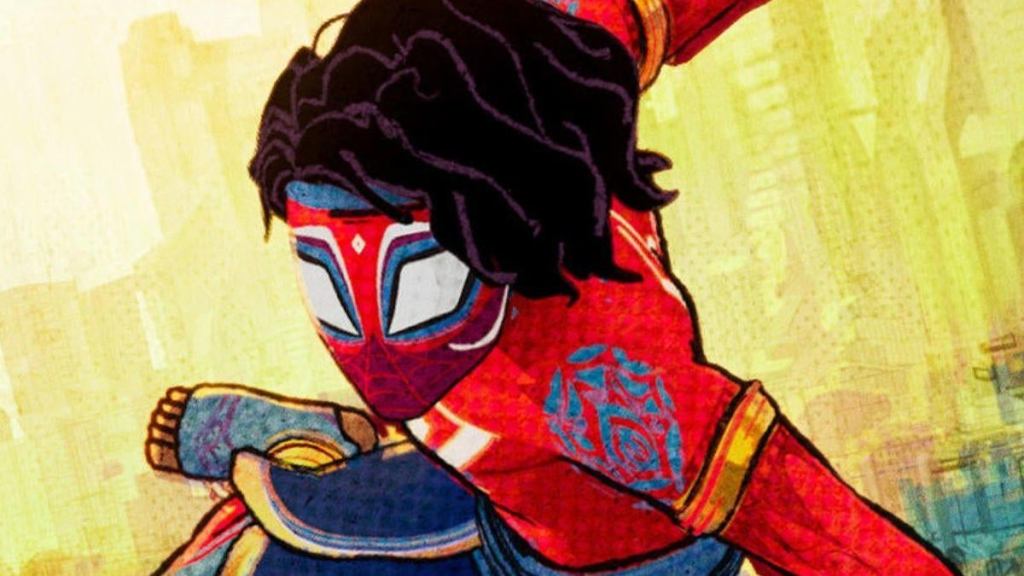
Pavitr Prabhakar’s story mirrors the classic Spider-Man origin, but draped in the colorful, mythic energy of Indian culture. A village boy blessed by a yogi instead of bitten by a radioactive spider, Pavitr becomes the protector of Mumbai. His villains, too, are myth-inspired hybrids.
His power level closely matches 616 Peter Parker, but what elevates Pavitr is his mythological weight. In Across the Spider-Verse, Pavitr finally got the spotlight he deserved, proving that optimism, confidence, and style can be forms of power too.
8. Spider-UK
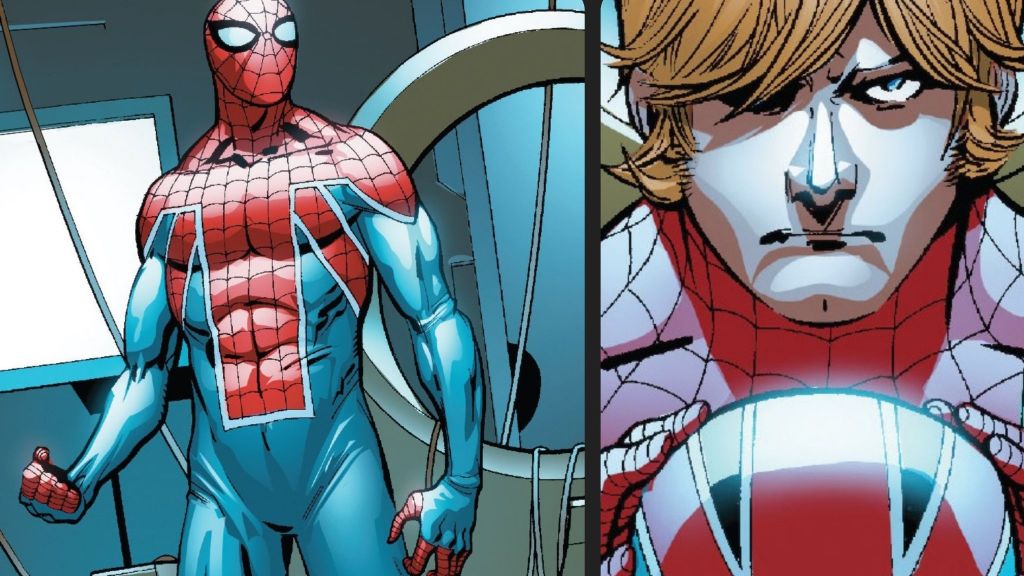
William “Billy” Braddock isn’t your average spider. He’s essentially the Captain Britain of his world and a member of the Green Lantern–style Captain Britain Corps. That dual responsibility makes him both a dimension-hopping law enforcer and a Spider-Man with authority. During the Spider-Verse storyline, he was the one who kept the sprawling army of Spider-People coordinated.
7. Spider-Man 2099 (Miguel O’Hara)

Miguel O’Hara is the product of corporate dystopia and genetic tampering gone wrong — or right, depending on how you see it. Unlike Peter, he didn’t gain powers by chance; it was a scientific experiment that rewrote his DNA with that of a spider. In the neon slums of Nueva York, Miguel fights system-level corruption with equal parts intellect and ferocity.
Miguel’s powers are a few notches above classic Spidey. His talons, fangs, and enhanced reflexes make him a predator that borders on terrifying. Plus, his intellect surpasses most versions of Peter. If not for his often abrasive personality and stubbornness, he could arguably have united the multiverse himself — but the man’s a perfectionist, not a team player.
6. Spider-Gwen (Gwen Stacy)

Gwen Stacy’s world flips the famous tragedy on its head — she’s the spider-powered hero, and Peter Parker becomes the one lost to science and circumstance. Her guilt and grief give her story an emotional depth that rivals even the original Spider-Man. She embraces her own version of responsibility — not because she wants to save everyone, but because she can’t bear losing anyone again.
Spider-Gwen’s agility, reflexes, and sense of rhythm (she’s a drummer!) give her a fighting style that’s both elegant and unpredictable. She’s not the strongest Spider-Person, but her adaptability and emotional resilience make her one of the most balanced. She carries the spirit of Spider-Man — rebellious, empathetic, resilient — but with a punk-rock edge that makes her instant legend.
5. Superior Spider-Man (Otto Octavius in Peter Parker’s body)
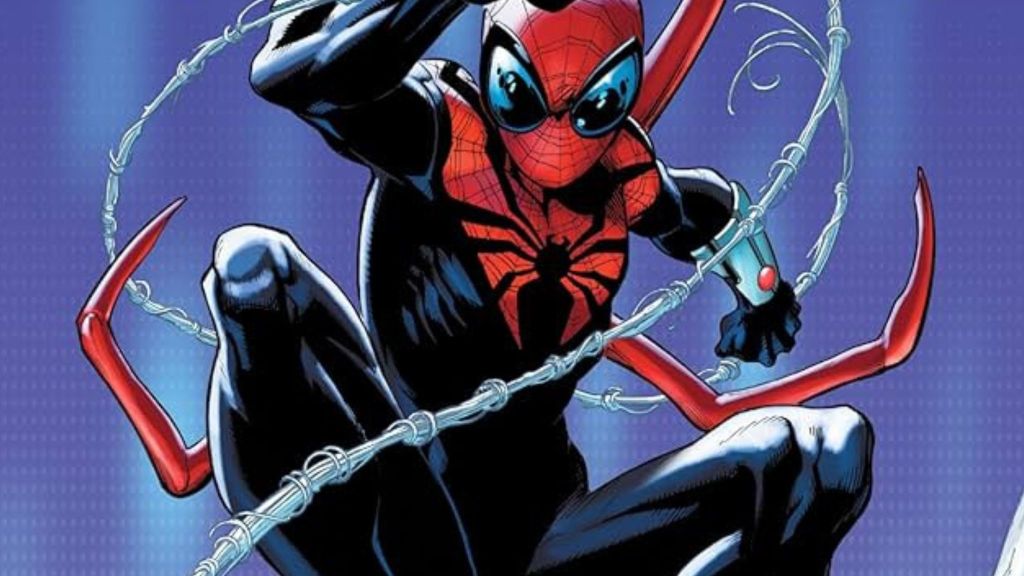
When Doctor Octopus usurped Peter Parker’s body, he didn’t just become Spider-Man — he became a better Spider-Man, at least in his own arrogant eyes. Otto brought scientific precision and ruthless logic to the persona, turning Spider-Man into a far more efficient, strategic force. For a while, he was genuinely superior — until his own ego brought him down.
Otto’s intellect combined with Peter’s power made him a near-unstoppable force. He wasn’t scared to break rules, manipulate allies, or take out threats permanently. You could argue that he represents the terrifying potential Spider-Man would have if stripped of morality. Love or hate him, the Superior Spider-Man proved what happens when power and genius meet without restraint.
4. Spider-Punk (Hobart “Hobie” Brown)
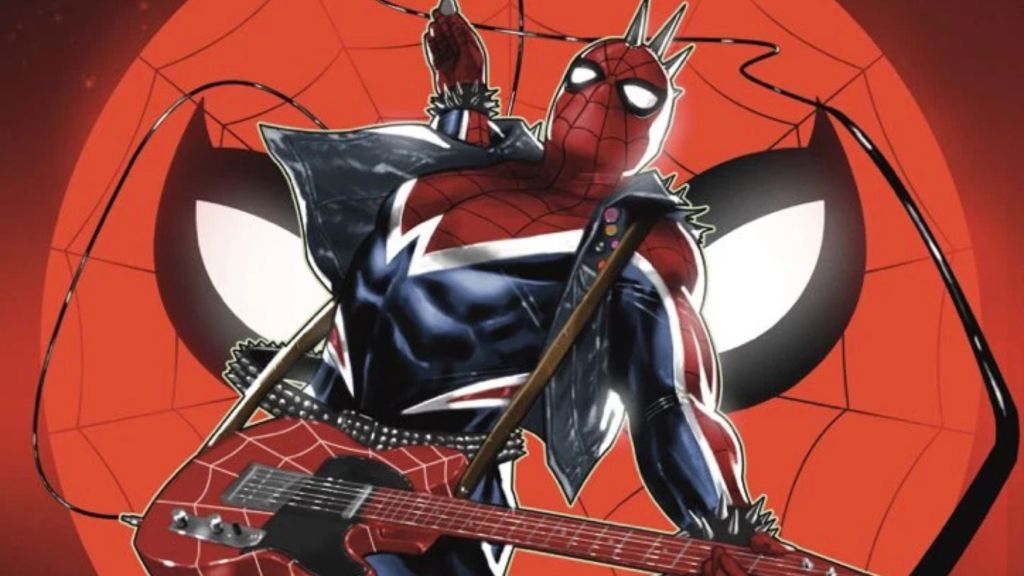
Spider-Punk is rebellion personified — a punk-rock anarchist fighting against fascist regimes and corrupt corporations. On his Earth, he literally overthrows Norman Osborn’s tyrannical government with nothing but his guitar, his webs, and an unshakable sense of defiance. He doesn’t do subtle — he breaks faces, busts laws, and smashes systems.
Power-wise, Hobie’s on par with a standard Spider-Man, but his influence is what makes him stronger. His entire existence is a statement — that power should always question authority. He’s the chaotic heartbeat of the Spider-Verse: the one who refuses to conform even when surrounded by literal variants of himself. In short: Spider-Punk doesn’t just web-swing. He revolts.
3. Miles Morales

Miles Morales was never meant to be Spider-Man — not in his own mind, at least. But his blend of humility, creativity, and courage made him one of the greatest successors in any universe. Bitten by a genetically altered spider, Miles inherited Spidey’s mantle after Peter’s death and brought a new flavor to heroism — quieter, more emotional, and deeply human.
What makes Miles extraordinary isn’t just his bio-electric “Venom blasts” or his ability to turn invisible — it’s his heart. He embodies the idea that anyone can wear the mask, redefining what Spider-Man means for a new generation. In many ways, Miles has surpassed even Peter in adaptability and inspiration. He doesn’t imitate Spider-Man — he evolves him.
2. Cosmic Spider-Man (Captain Universe)
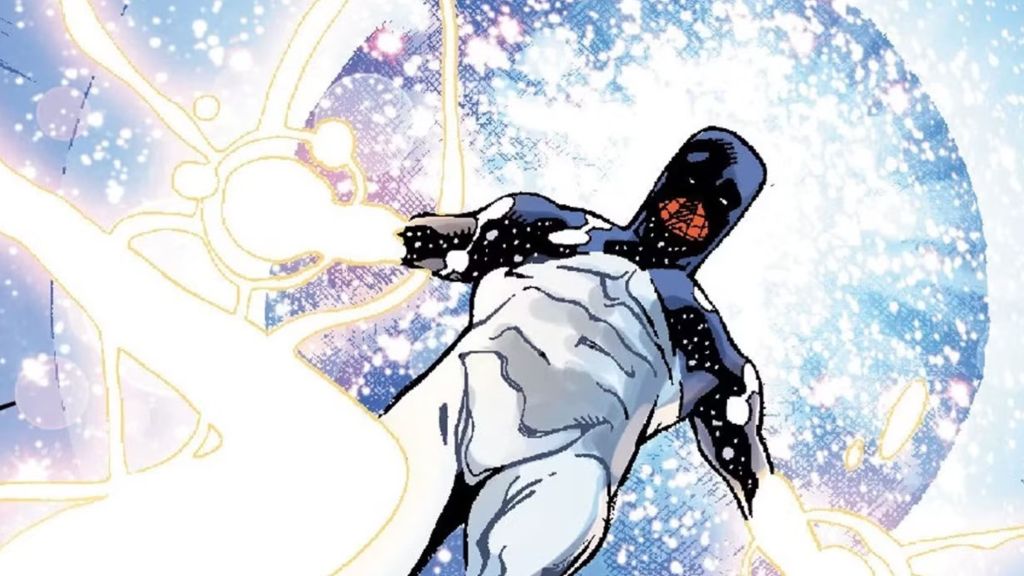
Cosmic Spider-Man is Peter Parker after he merges with the Enigma Force — the power source that turns ordinary people into Captain Universe. The result? A godlike Spider-Man who can manipulate energy, fly, and even bend matter itself. You’re no longer dealing with your average, wisecracking wall-crawler; you’re dealing with a multiversal deity in a hoodie.
His power level eclipses nearly every Spider-person ever. He once punched the Hulk into orbit. If Spider-Man’s core was always about the struggle between great power and great responsibility, Cosmic Spidey is what happens when that power becomes infinite. He’s terrifying — but still Peter at heart, proving that even omnipotence can’t corrupt a truly grounded soul.
1. Spider-Man (The Other, Earth-616 — Evolved Form)
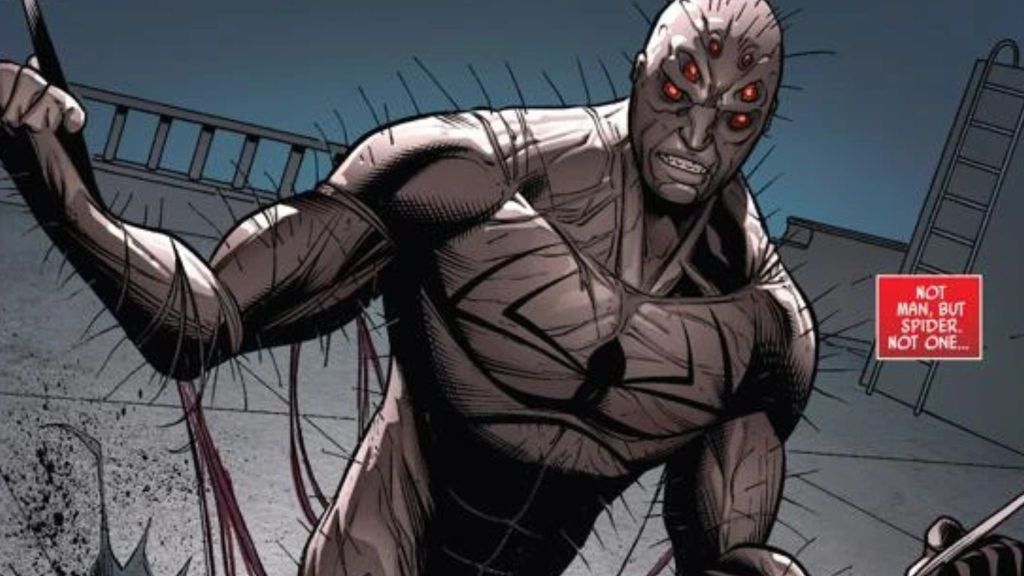
When Peter Parker bonded with the mystical “Spider-Totem” known as The Other, he transcended into something primal and terrifying — the fully realized Spider-Man. This version has organic webbing, night vision, autonomous stingers, supernatural senses, and even regenerative immortality.
“The Other” Peter isn’t limited by science or morality; he’s guided by instinct and destiny. He’s simultaneously Spider-Man’s ultimate nightmare and his most complete self. If every Spider-person represents some facet of heroism, The Other is the deepest fear — and greatest truth — of what happens when the spider finally stops holding back.
What do you think? Leave a comment below and join the conversation now in the ComicBook Forum!
Most Viewed
-
Courtesy of TOHO Animation -

Image Courtesy of A-1 Pictures -
Image Courtesy of Marvel Comics -

Image Courtesy of MAPPA