For nearly a decade now, Star Trek: Discovery – both the series and the ship, has occupied something of a strange space in the franchise. Like many Star Trek shows before it, Discovery prompted mixed reactions from viewers, but it arguably had a harder job than most in winning people over. After all it had some pretty big boots to fill being the ‘flagship’ (if you’ll pardon the pun) of the modern Star Trek revival. In many ways, its success, or otherwise, would determine whether Star Trek could work for a modern audience. It walked, so Strange New Worlds and Starfleet Academy could run. Whatever your thoughts on the series, there’s no denying it was an important part of bringing the franchise back to the small screen for a new generation.
Videos by ComicBook.com
Part of what makes its place in the franchise so unique is its positioning in the timeline. Discovery was originally set in the mid-23rd century, before pivoting dramatically in its third season by having the crew jump nearly a millennium into the future to the 32nd Century. Being from two different time periods, Discovery was neither truly a prequel like Strange New Worlds, nor a sequel like Starfleet Academy. Like Spock, it was in many ways, a child of two worlds. That move to the 32nd Century opened up a new era of storytelling for the franchise — but it also created something of a problem that Star Trek still hasn’t entirely solved.

Starfleet Is Shut In

Especially now that its successors have done such a good job of filling in the gaps on Pike, Kirk and Spock’s early days in the Enterprise in the case of SNW, and bringing us a new generation of cadets to root for in Starfleet Academy, Discovery sometimes feels, well, a little redundant in this new era, both in and off the screen. After Lieutenant Sylvia Tilly’s sweet but arguably unnecessary return in the previous episode. The latest episode of Star Trek: Starfleet Academy highlights that issue in a pretty glaring way.
In episode nine, “300th Night”, as the academic year begins to draw to a close, we finally learn of Nus Braka’s diabolical master plan. After stealing highly classified experimental weapons from ransacking the space station J-19 Alpha, the Venari Ral pirate has now pulled off one of the most audacious moves against the Federation in recent Star Trek history.
It turns out Braka’s real target was weapons using Omega 47, a volatile particle with the ability to shred space and subspace for light-years, rendering warp travel impossible in any sector it is detonated. Warp travel in the 32nd century is already complicated thanks to the lingering effects of the Burn, and Braka’s actions are bound to hit a nerve with the Federation who remember those dark days of relative isolation. In response to the imminent threat, the Federation goes into lockdown, recalling all Starfleet vessels to Federation space. But once again, it turns out they’ve played directly into Braka’s hands. As soon as the Starfleet cavalry is back into Federation space, Braka surrounds them with Omega 47 time-delayed mines, triggered by energy fields, meaning they have no way to get in or out of Federation space unless they want to set them off and blast themselves to oblivion.
The usually indomitable Federation fleet essentially finds itself boxed in. Starfleet suddenly looks vulnerable, stuck at home instead of being able to meet the threat head-on. In theory, this should obviously create a massive dilemma for the Federation. After all, while presumably they can produce most of what they need within the Federation, what about the things they can’t? What will happen to trade with non -federation worlds? How long can they survive cut off from the rest of the Universe? Except… there’s one rather obvious loophole: The USS Discovery.
Starfleet Academy Just Ignored The USS Discovery Loophole

As dedicated Trekkies will know, Discovery has one defining unique piece of technology: the experimental spore drive. Unlike warp travel or impulse speed, the spore drive allows the ship to jump instantly across vast distances using the spores of a space-dwelling organism (Prototaxites stellaviatori) to jump between points in the universe, bypassing conventional space.
In other words, Discovery can pretty much go wherever it wants. Of course, it’s not confirmed, but surely this means, theoretically, Discovery could bypass Braka’s blockade, slipping past the mines without disturbing space and detonating them? This makes the whole “Starfleet is trapped” situation feel a little less dire than it initially appears. Maybe they don’t want to risk it, but if the Federation truly needed to break out and respond to Nus Braka head-on, surely Discovery is exactly the loophole they need? In many ways, this perfectly sums up the franchise’s Discovery problem that has been going on for years now.

The Spore Drive Has Always Been a Storytelling Problem
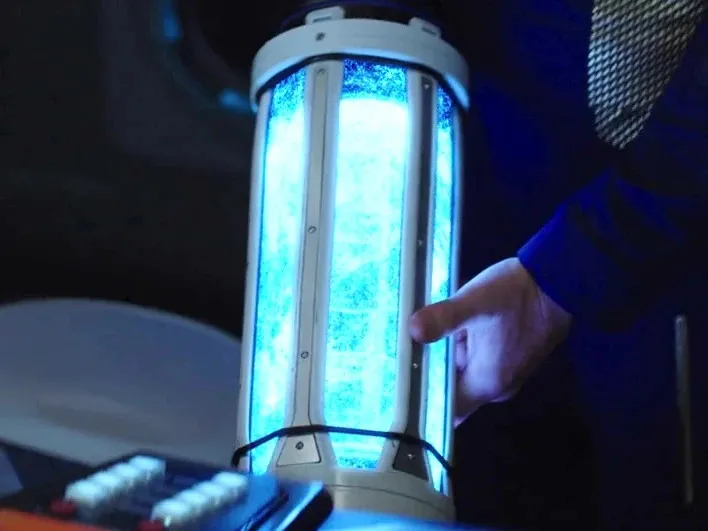
The spore drive is such a powerful device and provides such plot armor that it constantly threatens to undermine the seriousness of the threat, particularly in situations like these. Even now, the technology remains a bit of a narrative plot device — one that writers often have to awkwardly sidestep when it doesn’t suit.
What’s more, modern Star Trek keeps introducing alternative space travel concepts in the 32nd century. From the newly explored transwarp tunnel systems, (which the cadets conveniently use to get to Ukeck to rescue Caleb’s mum from immanent Vanari Ral attack) to experimental propulsion systems, there are many other new technologies that have gradually appeared in the franchise. These ideas might help expand the universe beyond the traditional warp drive, but they do make situations like this feel less of the Federation-ending threat they are intended to. It seems hard to believe that with so many potential options, the Federation can’t find some sort of way around Braka’s blockade.
Is Star Trek Quietly Moving Beyond Discovery?
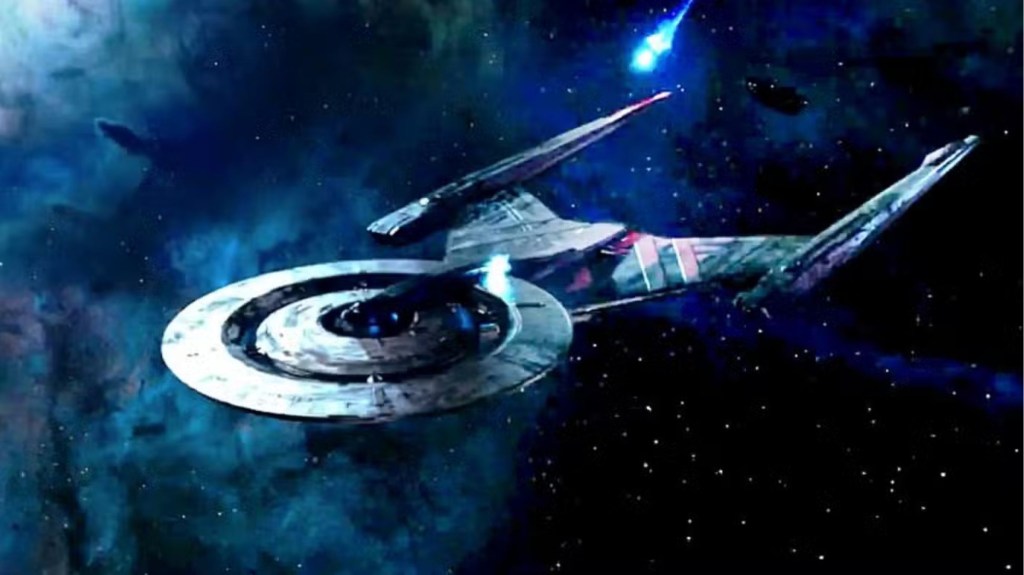
Having so many potential options for faster than light travel also quietly dilutes the importance of Discovery’s original advantage. If everyone eventually finds ever faster and inventive and ways to move around the galaxy, the spore drive stops being the ultimate gamechanger. In that context, the USS Discovery starts to look less like the centrepiece of the era and more like a transitional relic — the ship that helped bridge the gap between two different versions of the Federation.
That might be a good thing. Starfleet Academy seems more interested in building a broader picture of the post-Burn Federation than relying on a single miracle ship to solve every problem. While we’re not denying it would be great to see a Discovery cameo at some point, the Athena provides an impressive enough successor and the show is clearly exploring a galaxy that’s still rebuilding, where new technologies and political realities are reshaping how Starfleet operates.
It’s been nine years after its debut, and Star Trek still can’t seem to completely figure out what role Discovery should now play in the larger franchise. But if the 32nd century keeps evolving the way Starfleet Academy suggests, the galaxy may finally be learning how to move forward without depending on it.
What do you think? Leave a comment below and join the conversation now in the ComicBook Forum!
More TV Shows
-

Side-By-Sides of the posters for Good Omens 3 and Supernatural Season 15 -

Courtesy of 20th Television Animation / Hulu -

Courtesy of South Park Studios / Rockstar Games