Vision has been one of Marvel Comics’ most unique characters for years for a really important reason. His origin story saw Ultron create Vision to be his “son” while using the body of what was originally believed to be the construct of the Android Human Torch (Jim Hammond), and the brain patterns of the late Wonder Man (Simon Williams). However, he turned on his master, joined the Avengers, married the Scarlet Witch, and became one of Marvel’s most important heroes. His entire existence was the basis for one mode of thinking that was emphasized when Roy Thomas wrote: “Even an android can cry.”
Videos by ComicBook.com
From stories by creative teams with names like Roy Thomas, John Buscema, Steve Englehart, John Byrne, and Tom King, here is a look at the 10 Vision storylines that helped change Marvel Comics.
10) Avengers Disassembled
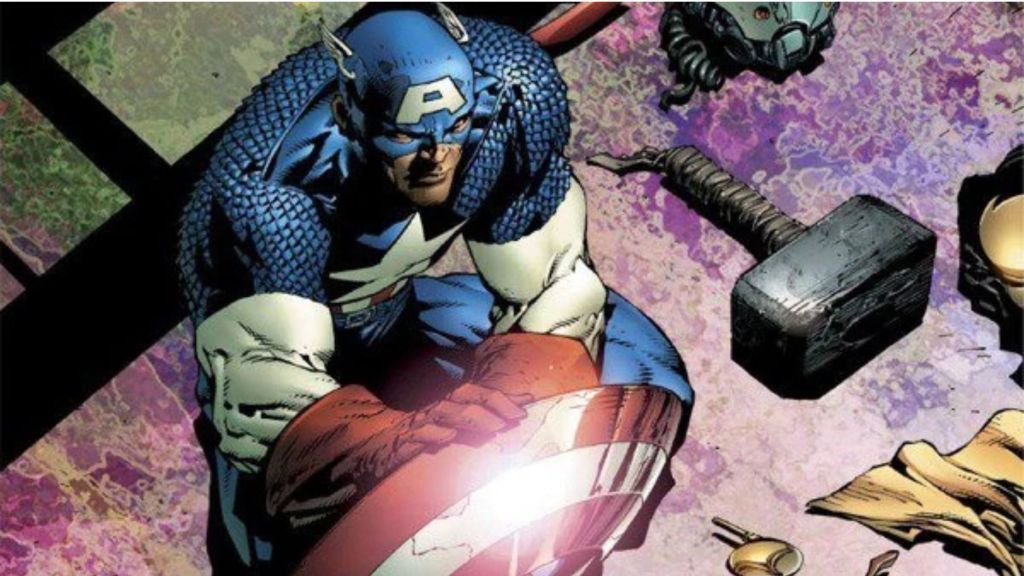
“Avengers Disassembled” is a tragic storyline that saw the death of several members of the team, and one of them was Vision. This story played out in the “Chaos” arc in Avengers #500-503 (2004) plus the Avengers Finale one-shot by Brian Michael Bendis and David Finch. This ended the title’s long run and was then replaced with New Avengers #1. The Vision is not in this for long, as he died at the start of the story, but this was the moment that kicked things into high gear and led to the horrifying reveal of who the villain was.
Mind-controlled, Vision pilots a Quinjet into Avengers Mansion, staggers out, then vomits biomechanical eggs that hatch into Ultron drones. After this, a berserk She-Hulk tears his body in two, and the story’s mystery begins. Of course, the villain here is the Scarlet Witch, and this ends the couple’s long history together as she loses control when she remembers the children she had that were taken away. By the end, Vision, Hawkeye, Jack of Hearts, and Scott Lang’s Ant-Man all lay dead.
9) Young Avengers (Jonas)
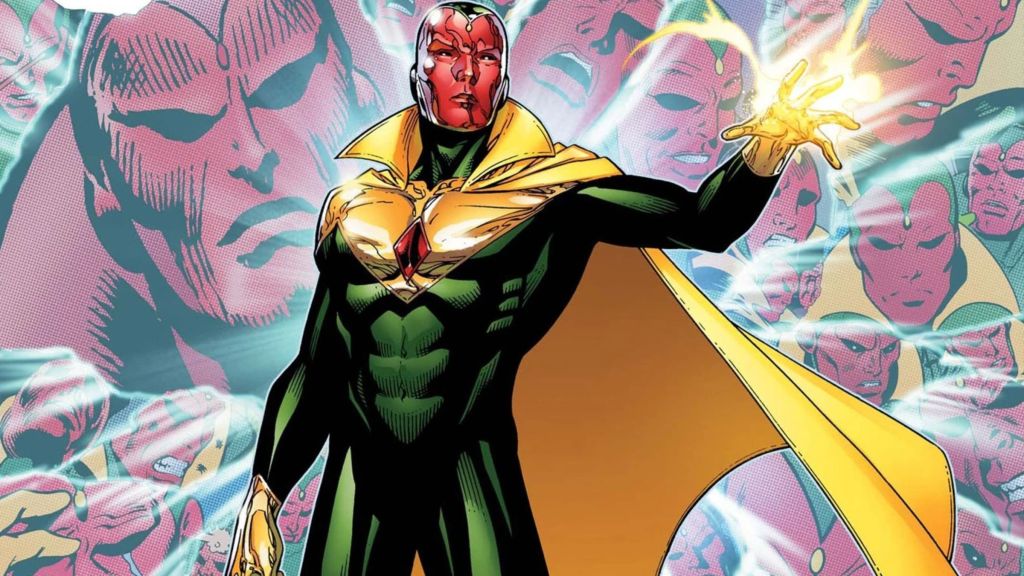
Long after Vision died in “Avengers Disassembled,” he returned in the pages of Young Avengers #5 (2005), although his memory banks were not up to par and he was more of a young synthezoid hero again. Later, he took on the name Jonas in Young Avengers Presents #4 (2008) by Paul Cornell and Mark Brooks. His return was due to Iron Lad (Nathaniel Richards) having originally created his armor from the original Vision’s salvaged operating system. However, when he arrived on Earth-616 and took the armor off, Vision’s activated OS animated the armor into a new being.
This Vision was nothing like the original, as he retained Iron Lad’s brainwave patterns, so he had the original Vision’s mind but with Nathaniel Richards’ emotional imprint. His time with the Young Avengers was interesting, as he developed feelings for Cassie Lang. The story had a tragic ending as Iron Lad murdered Jonas, calling him nothing but a machine, which broke Cassie’s heart. However, this run was hugely important because it introduced Wanda and Vision’s children, Speed and Wiccan, into the Marvel Universe, and then Jonas died when the twins found and saved their mother, tying everything together.
8) Avengers A.I. (2013)
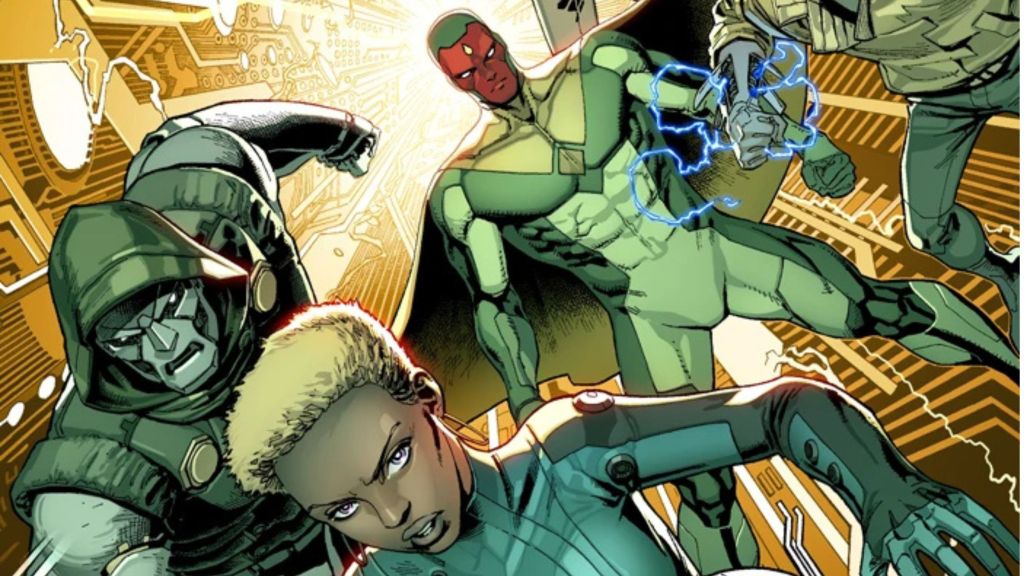
Avengers A.I. (2013) launched under the Marvel NOW! banner, and it ran for 12 issues by Sam Humphries and André Lima Araújo. The premise ties directly to Age of Ultron’s aftermath, where the virus Hank Pym deployed to destroy Ultron evolved into “the SIX,” the first six A.I. constructs it spawned. After this, Pym and the Vision co-led a government-sanctioned team for AI threats.
This team included Victor Mancha, a self-aware Doombot, and debuting character Alexis the Protector, with SHIELD’s Monica Chang as the liaison. It positioned Vision as the elder statesman of Marvel’s artificial-life community. The shocking moment came when issue #12 jumps 10,000 years into the future, where Dimitrios has destroyed humanity, and the team fights him from a spaceship built out of the carcass of Galactus. This really helped redevelop Vision for a new era, but the self-aware Doombot was the character who stole the show.
7) Vision and the Scarlet Witch (1982)
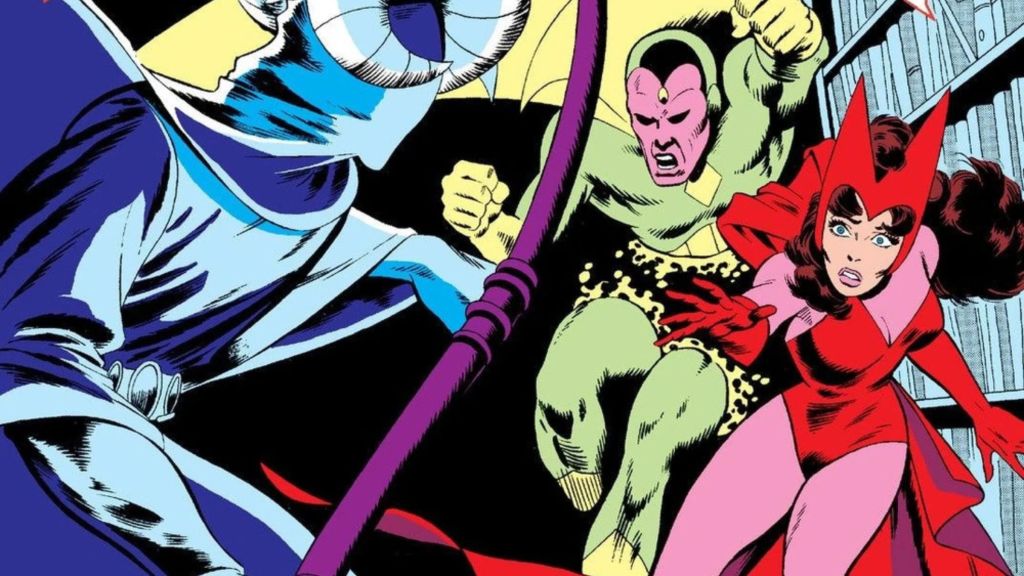
The first Vision and the Scarlet Witch miniseries ran for four issues in 1982 by Bill Mantlo and Rick Leonardi. This was the first time an android and his wife headlined their own book, and it establishes their attempt at normal married life in a house in Leonia, New Jersey. The couple deliberately steps outside of their Avengers life. With a witch as one of the leads, it smartly opens with a Halloween story, and the series delivers a great story.
The big thing about this series is that this was the comic where Marvel cemented Magneto as the biological father of Wanda and Pietro, and that became canon (until three decades later, when Marvel retconned that as a lie). This helped change Marvel as it was the direct structural ancestor of the 1985 ongoing series, which was the first sustained study of Vision as a domestic being rather than an Avenger. This was also a big influence on the later Disney+ series WandaVision.
6) Behold the Vision
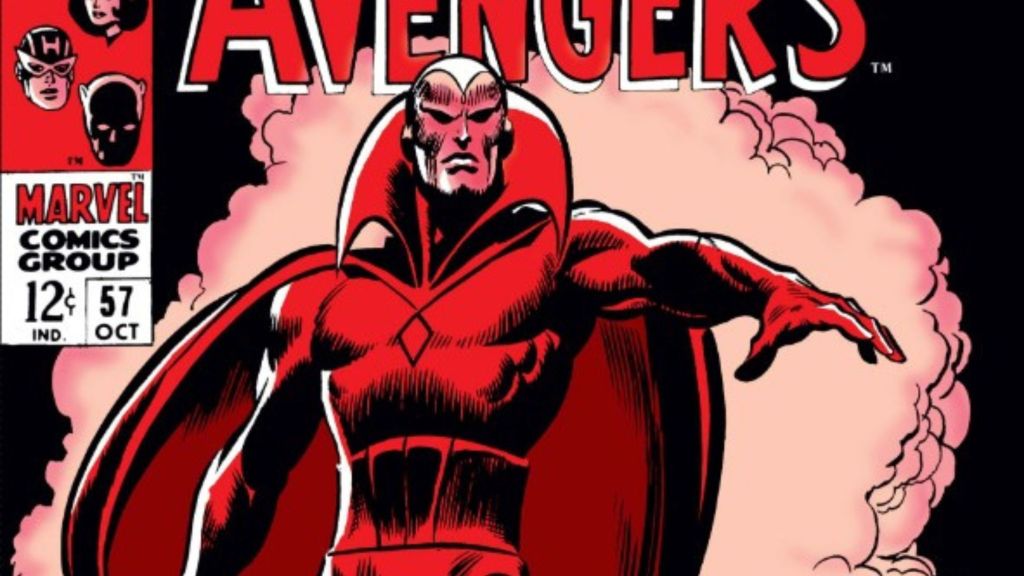
“Behold the Vision” was one of the most important Vision stories since this was his debut storyline. This story was in The Avengers #57 (1968) by Roy Thomas and John Buscema, and it had Vision show up as an Ultron creation, and then he joined the Avengers in the very next issue when he betrayed his creator and became a hero. The story was the one that started the idea that Ultron was his dad, which makes Hank Pym his “grandfather.”
Vision’s mind is based on the brain patterns of Simon Williams (Wonder Man), who had died earlier, and this was a thread Marvel mined for decades before returning. This really made the relationship between Vision and Wonder Man so important for years when Simon returned from the dead. He was also believed to be made from the Android Human Torch’s body, although that was later retconned to a different robot as Jim Hammond actually returned.
5) The Celestial Madonna Saga

“The Celestial Madonna Saga” took place in The Avengers #129–135 plus Giant-Size Avengers #2–4 (1974–75) by Steve Englehart and Sal Buscema, and it is routinely ranked among the greatest Avengers epics. The central story is about Mantis, revealed to be “the Celestial Madonna,” and she is destined to mother a messianic being. Her memories turn out to be fabricated, as she and Moondragon were both groomed as Madonna candidates by the alien Cotati and priests.
What really stands out about this storyline for Vision is that he was part of a double wedding in this storyline. Vision married the Scarlet Witch at the same time that Mantis married a “Swordsman” who is now a Cotati plant-spirit possessing the dead Jacques Duquesne’s revived body. This story was also more important than that because this was where Marvel revealed that Kang, Rama-Tut, and Immortus were revealed to be the same being from different timelines.
4) The Vision and the Scarlet Witch (1985)

After the first Vision and Scarlet Witch miniseries was a success, Marvel brought the couple back in 1985 for a longer 12-issue limited series. This new series was by Steve Englehart and Richard Howell, and the story was set in Leonia, New Jersey, where the couple dealt with family drama and not superhero adventures. Vision and Scarlet Witch resigned from the Avengers, and the book also dropped the anti-mutant racist themes since that was so important in X-Men comics.
This series was extremely important because this was where Wanda ended up pregnant and had her twins, Billy and Tommy, and brought in Agatha Harkness to be Wanda’s mentor and midwife. Seeing Vision and Scarlet Witch having a child made no sense at the time since he was a synthezoid, but this was clearly due to Wanda’s chaos magic. The twins, William and Thomas, are born in the final issue of the series, and this series then transferred over to the couple’s time in the West Coast Avengers.
3) Even an Android Can Cry
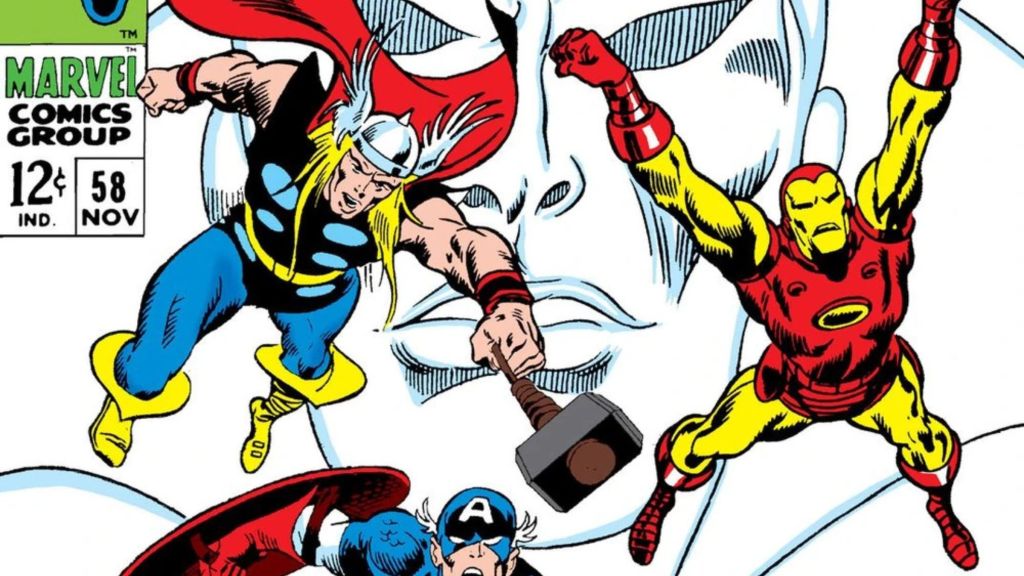
In 1968, Vision appeared in one of his greatest stories when it comes to showing that he was much more than just a synthezoid robot. This story was in Avengers #58 by Roy Thomas and John Buscema. While his debut in the previous issue was important, this was the more important story since it was where Vision asks to join the Avengers, and he is asked by Captain America, Thor, and Iron Man to prove his powers to them. This is also the issue that revealed his full origin and creation by Ultron.
The title was based on the final moments of the series. The final splash shows the Vision turning away and wiping a tear when he learns the Avengers are accepting him onto the team. The narration says, “if you saw his eyes right now, I’m sure you’d learn that even an android can… cry!” This remains one of the most recognizable images in comics. It’s the emotional template every later Vision writer has used.
2) Vision Quest
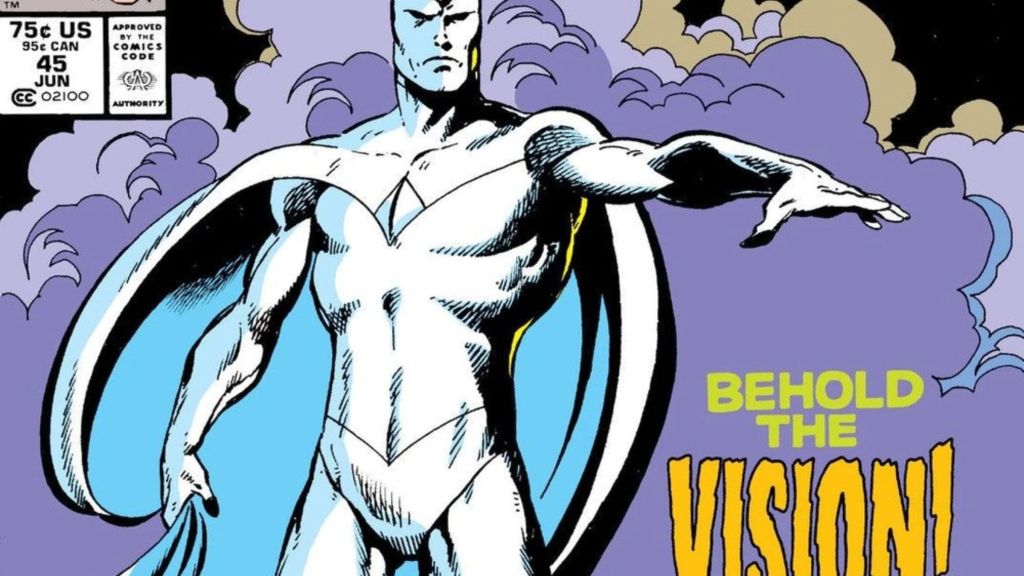
“Vision Quest” is the story that follows up the events in both the second Vision and Scarlet Witch 12-issue miniseries and Vision’s previous misguided attempts to take over the world in the pages of The Avengers. This storyline also takes place right before Wanda and Vision lose their children, and they are erased from memory. “Vision Quest” is in West Coast Avengers #42–45 (1989) by John Byrne.
A secret coalition of world governments, alarmed that the Vision once nearly took over every computer on Earth, abducts and completely disassembles him to purge their security data from his mind. The West Coast Avengers recover the pieces, and Hank Pym reassembles him in #45, imperfectly. Simon Williams refuses to allow his brainwaves to be used again, and Vision remains emotionless, eventually ending his marriage to Wanda. This and the loss of the twins eventually led to Wanda’s breakdown in “Avengers Disassembled.”
1) The Vision (2015)
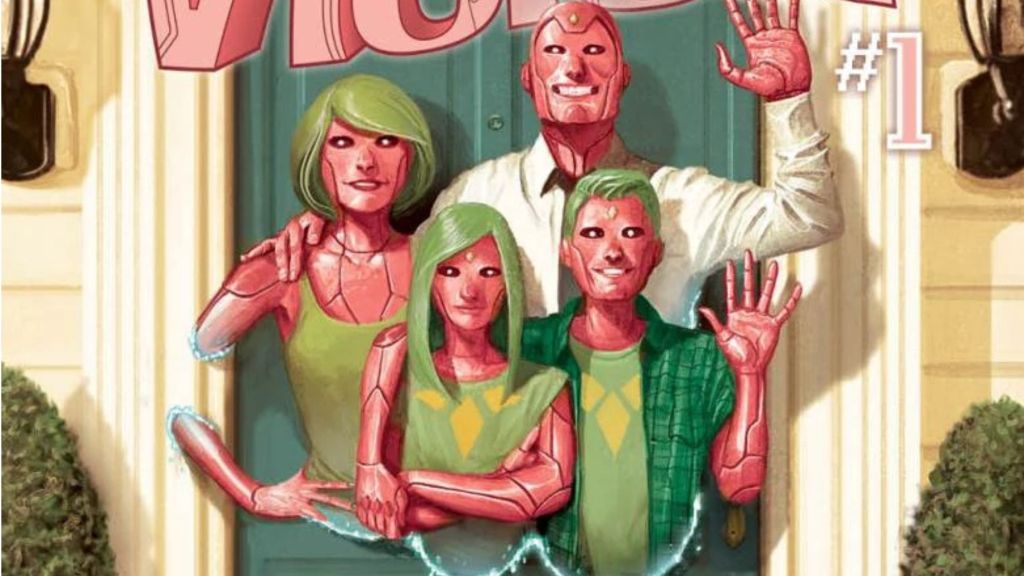
The best Vision storyline ever told came in 2015 with the ongoing series The Vision by Tom King and Gabriel Hernández Walta. The Vision builds a synthezoid family, with a new wife named Virginia, teenage twins Viv and Vin, and a dog named Sparky. He moves to suburban Arlington, Virginia, near Washington, D.C., where he’s the Avengers’ government liaison. He is literally trying to manufacture normalcy.
However, this series slowly destroys him again. Simon Williams’ brother, the Grim Reaper, shows up, and Virginia kills him and then secretly buries his body in the backyard. Victor Mancha moves in as a family member but was actually sent to spy on them, and this causes the death of Vin Vision. By the end, only Vision and Viv Vision are left alive (with Viv keeping Sparky the dog), and it remains a highlight of Vision’s Marvel Comics existence. This series won an Eisner Award, and some of it was used in the WandaVision TV series.
What do you think? Leave a comment below and join the conversation now in the ComicBook Forum!
More Comics
-
Image Courtesy of Image Comics -
Image Courtesy of Marvel Comics -
Image Courtesy of DC Comics -
Image Courtesy of Marvel Comics -
Image Courtesy of Marvel Comics