The New History of the DC Universe is exactly what the doctor ordered. Superman‘s success is going to bring a lot of people to comic stores, and since tangled continuity is a big complaint about DC, this series is perfect for new readers who want to know the history of the publisher’s multiverse. It’s also perfect for fans who have been following DC for decades. One of the coolest parts about being a DC fan is trying to figure out what happened and what didn’t happen, as the tides of DC history change with every continuity changing event series, and it’s great to have our head canons canonized. The New History of DC Universe is giving readers exactly what they want, laying out the history of the first superhero universe.
Videos by ComicBook.com
The New History of the DC Universe #1 was great, covering the the early years of the Prime Earth, the Golden Age, and leading to the beginning of the Silver Age. The New History of the DC Universe #1 introduced a lot of obscure DC characters, and the second issue is more of the same. The New History of the DC Universe #2 takes readers up to the blockbuster known as Crisis on Infinite Earths, and reveals something that is pretty surprising — Supergirl’s death in battle with the Anti-Monitor is canon. In fact, judging from the art talking about Crisis, the entire story is canon, which is an interesting change to DC history, and quite different from the way that things used to be.
The Canonicity of Supergirl’s Death Is a Huge Change to the Way DC has Used Crisis in the Past
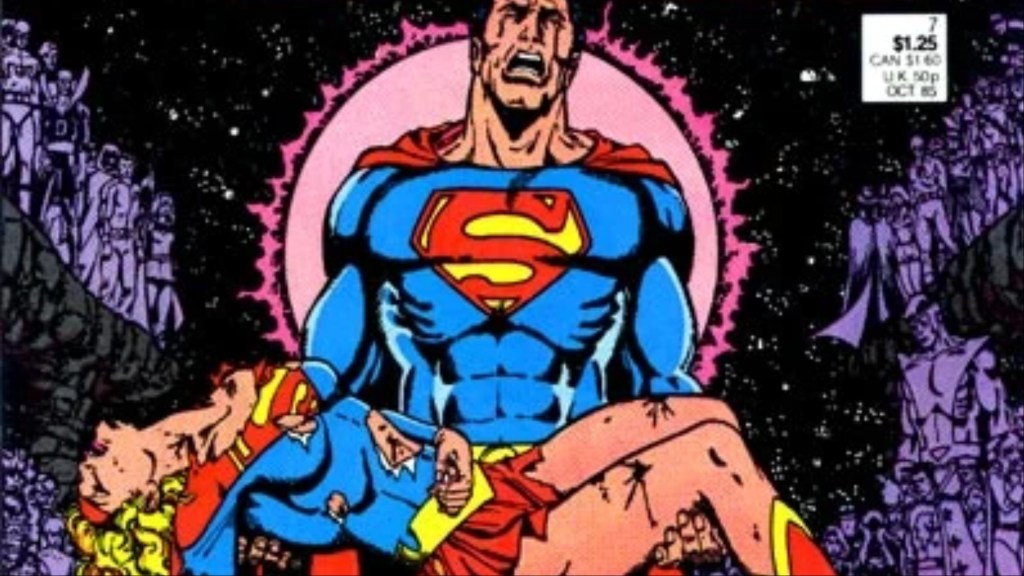
Crisis on Infinite Earths closed out the DC Multiverse of the Silver and Bronze Age in multiple ways, and the deaths of Supergirl and Barry Allen played into that. Supergirl and Barry Allen were basically the standard bearers of the Silver Age, their introduction a demarcation line between what came before and what was coming. Killing these two characters was, in effect, killing the spirit of the Silver Age. Now, one of the most interesting thing about DC is how canon the events of Crisis has been. In the post-Crisis DC Universe, the Great Crisis (as the story is known in universe) happened, but it didn’t involve the heroes of five Earths, and Supergirl never existed in the post-Crisis DC Universe until she first appeared in Superman/Batman #8. So, she didn’t die in the battle because she wasn’t a part of the superhero community at the time. It wouldn’t be until Infinite Crisis that we learned that the Great Crisis did play out exactly like it did in the comics, but in the resulting universe created by Crisis, it happened differently because of the universal change. However, readers found that out; it wasn’t exactly well-known by most of the heroes, with really only Power Girl getting to see how the Great Crisis played out in both versions of reality.
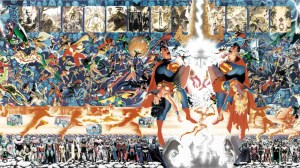
The New History of the DC Universe changes that because it’s a story being told by Barry Allen. Allen’s death was always a part of the Great Crisis, whether it be the version that happened in post-Crisis DC Universe or the one that readers saw in Crisis on Infinite Earths. However, Allen never really gained any special insight into the original events of the Great Crisis because of his death. At this point, there are a few options for how he knows — he could have asked Power Girl or the multiple upheavals of the DC Universe over the years have made it so that everyone actually started remembering the events as they happened in the comics. Writer Mark Waid doesn’t really explain how Allen knows what he knows, but this is a huge change to the way the DC Universe has worked for ages. One of the things that I’ve realized in recent years is that everything is actually canon in the DC Universe. I first got this idea from the FCBD Dark Crisis issue, which showed a picture of the New 52 League next to pictures of other versions from other iterations of DC. The New History of the DC Universe cements this as a fact, but there’s still a question that needs answering — how did Supergirl come back to life? Or did she at all?
Supergirl Had Schrodinger’s Death
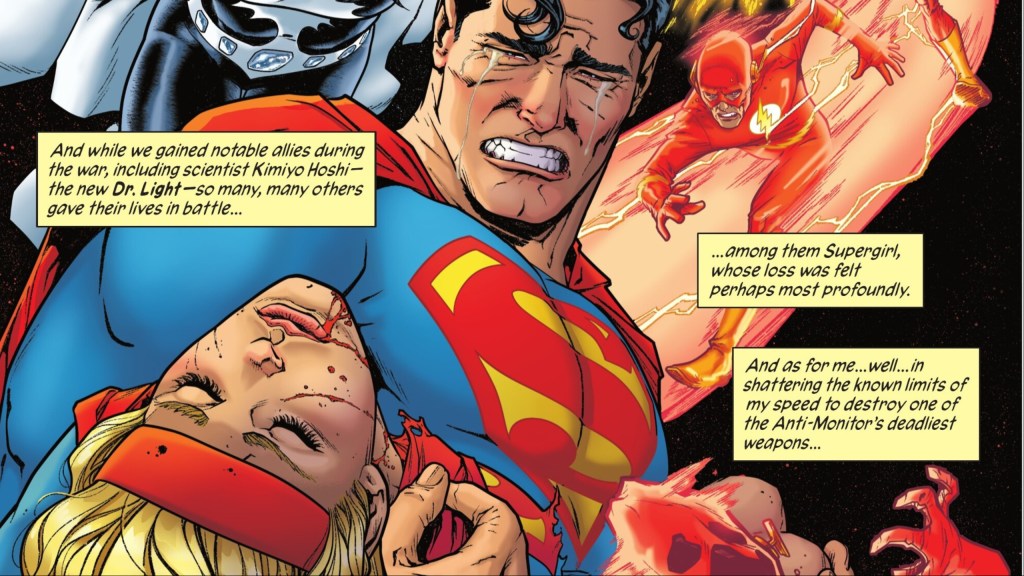
Okay, so this is going to get confusing and convoluted (the most DC thing ever,) but here it is — Supergirl both died in Crisis on Infinite Earths and didn’t. So, we now know that Crisis on Infinite Earths happened exactly the way it happened in comics. However, there’s no proof that the current Supergirl died and was resurrected. The simplest answer to this question is that Supergirl died in one universe, but not another, and now the superhero community has gotten the knowledge of both events.
So, Supergirl has died, but she’s also never died. She died in one version of the DC Multiverse, which is now remembered by the heroes, but didn’t die in the next iteration. At least, that’s my theory. The New History of the DC Universe #3 could open with the explanation and it could be totally different (for example, it could semi-canonize the events of “The Supergirl from Krypton,” Kara Zor-El’s post-Crisis debut, but instead of her crash landing in the then present, she was held in a Kryptonian resurrection matrix or was resurrected because she absorbed yellow sun energy since Superman took her body to space,) but I hope we’re going to get a more Shrodinger’s Cat type situation.
The New History of the DC Universe #2 is on sale now.
Most Viewed
-

Image Courtesy of Prime Video -

Courtesy of Sega