Writer James Tynion IV brings over his trademark blend of unsettling horror with accessibility in Image Comics‘ The Invisible Man #1. The new issue follows Griffin’s life before becoming invisible, revealing that the character was always a monster. Admittedly, Tynion’s take on Griffin removes some of the pathos of the original Universal Studios film. Griffin was initially portrayed as a tragic figure in the classic black-and-white 1933 film adaptation of The Invisible Man. The original movie hints that the character’s madness is a side effect of the potion he used to become invisible. Griffin had a life before becoming invisible, including a fiancée and people who worried about him.
Videos by ComicBook.com
However, Tynion instead establishes Griffin as having always been an egotistical madman. Griffin takes sadistic glee in experimenting on mice and holds contempt for other people. While this issue paints Griffin in a completely negative light, it is undeniably engrossing. Tynion’s narration and artist DaNi’s pencilwork convey a deeply unsettling atmosphere that makes you want to continue reading. The more Griffin paints himself as a despicable human, the more you want to read about him. That’s the magic of Tynion’s writing; no matter how unforgivable a lead character acts, you can’t help but be mesmerized by them.
Image Comics’ The Invisible Man #1 Is Unsettling in the Best Way
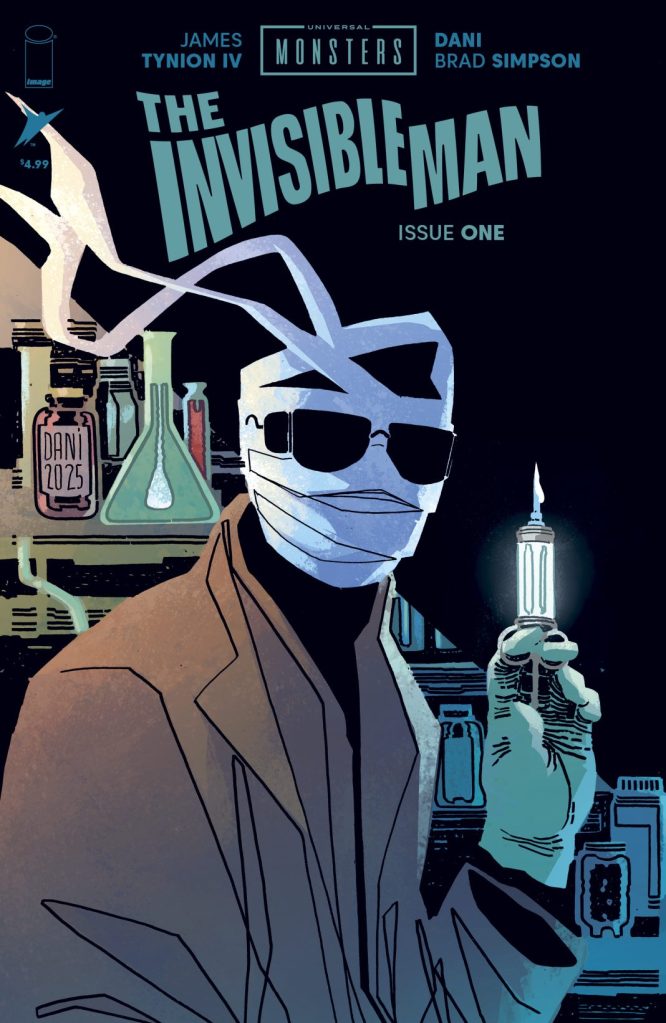
The original Invisible Man movie began in media res, with Griffin already stuck invisible. This gave Tynion ample room to play around with the events leading to Griffin’s fateful experiment, with the first issue of this four-issue miniseries detailing how Griffin first discovered invisibility by experimenting on mice. The artwork is immediately striking, using heavy shadows and flat coloration to express an uneasy atmosphere. How DaNi conveys invisibility in the comic is extremely impressive, adding details on an intangible mouse in a way that makes you believe that it is invisible. The colors are simple but are used effectively, with blues expressing Griffin’s cold attitude while red highlights the character’s easily angered ego. The standout part of the art is a scene where Griffin imagines murdering people while invisible, with Griffin represented as all-white. It is a striking image that creepily conveys Griffin’s sadistic behavior.
It’s honestly impressive how much Tynion doubles down on Griffin’s megalomania from the film. Tynion presents the character as always having a huge ego and disliking other people. Even Griffin’s relationship with Flora, one of his few redeeming attributes in the film, is undermined by how low Griffin thinks of her. Flora is nothing but a distraction for him; his primary goal and ambition remain focused on his work. Although Griffin was always portrayed as somewhat of an egotist, Tynion recontextualizes the character’s tragic fate in the classic motion picture. Rather than empathizing with the character, Tynion represents the character as a narcissist with no redeeming qualities. Despite how deeply uncomfortable he makes the character, Griffin is shockingly an engaging protagonist. His obsession and dark tendencies are interesting to read on the page, and DaNi’s pencilwork carries the story.
The Invisible Man has always been one of the more unorthodox Universal Monsters, primarily because he isn’t a monster at all. He is as human as they come, and Tynion uses that to mirror humanity’s darker impulses in Image Comics’ The Invisible Man #1. The scariest thing about Griffin is that he’s only just a man.
Rating: 4.5 out of 5
What did you think of James Tynion IV’s and DaNi’s The Invisible Man #1? Let us know in the comments!
Most Viewed
-

Image courtesy of Wizards of the Coast -

Courtesy of Bones Film