Few developments better demonstrate how dominant the zombie apocalypse has become in modern entertainment than the sheer abundance of zombie-themed titles, stories, and events from publishers like DC, Marvel, Image Comics, and IDW. Yet despite two decades of compelling content, recent offerings suggest that the once-thriving formula has run its course. The survival-driven narrative — perfected by Robert Kirkman’s The Walking Dead, with its focus on human connections and vulnerabilities — no longer carries the same spark that once had fans eagerly awaiting each new issue. Instead, every new release feels like a variation on the same theme. As a result, zombie-based entertainment appears to have officially jumped the shark.
Videos by ComicBook.com
That lack of “freshness” is what makes Tate Brombal and Facob Phillips’ new series Everything Dead and Dying so intriguing. It not only succeeds in pushing through the zombie genre impasse but also completely flips the script on fundamental zombie apocalypse elements. The series delivers a compelling story while providing a contemporary update to the traditional zombie apocalypse narrative.
Everything Dead and Dying‘s Radical Premise: The Value of Protecting the Undead

Everyday Dead and Dying begins like many other tales of the zombie apocalypse — with the ominous lead-up to a dreadful season. Farmer Jack, his partner Luke, and their daughter Daisy live a simple yet harmonious life on their farm in Caverton, a quiet town tucked away from the chaos of the world. Life is good — until an unexpected and incurable “flu” ravages the town. But instead of killing its victims, the illness transforms them into zombies. Everyone succumbs — except Jack. Whether scratched, bitten, or sneezed on, Jack remains stubbornly human. Yet immunity doesn’t mean safety. He’s still very much at risk of being devoured.
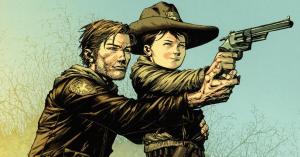
With the story having followed most of the typical zombie apocalypse tropes up to this point, most readers would expect the remainder of the story to involve Jack trying to survive the onslaught of the town’s zombies – including Luke and Daisy – until he finds other survivors, perhaps outside the town. These survivors would then band together to take on the armies of the undead while rebuilding a new society, searching for ways to stop the spread of “zombie-ism,” and potentially find a method to return the transformed individuals to their human selves.
However, this is precisely where the genius of Everyday Dead and Dying shines through. In one of the best deconstructions of the zombie apocalypse genre to date, the story avoids a predictable human-versus-zombie war. Instead, Jack and the zombies find a way to coexist. To be sure, this “Pax Zombica” is almost entirely due to Jack’s ability to suppress the Calverton zombies’ most pressing desire: the consumption of “flesh and bone.” Fortunately, as a farmer, he has the means to satisfy that urge. And since the town’s population is not overwhelmingly large, Jack can sustain production to keep his zombie citizens, and his family, relatively at ease and — more importantly — distracted from any desire to eat him. Indeed, like any farmer with livestock, he knows “how to keep ‘em fed.”
Who Are the Real Monsters in Everything Dead and Dying
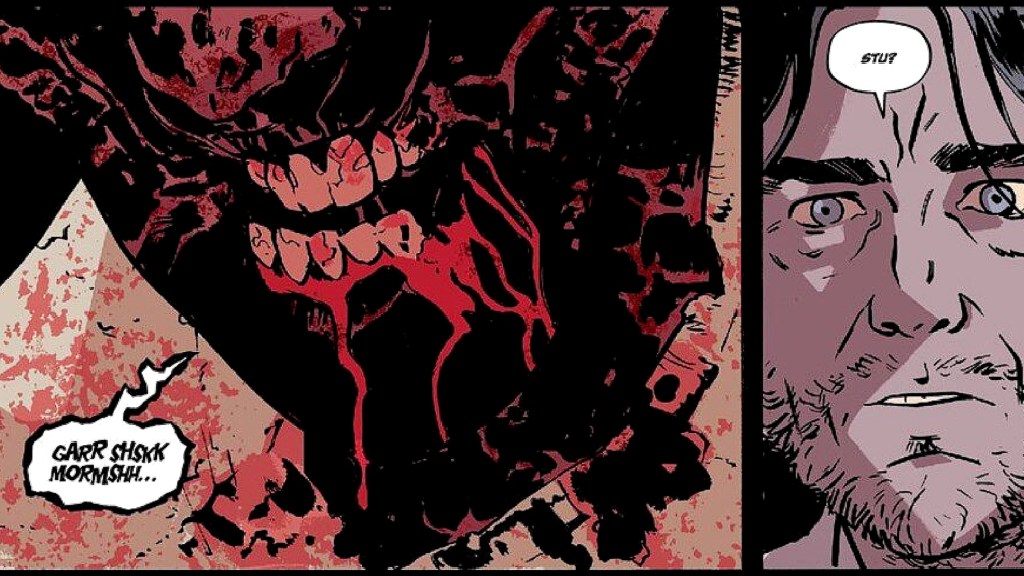
Everything Dead and Dying introduces a new dynamic — one that, under classic zombie tropes, may not seem to make sense but, when thoughtfully considered, is a plausible option for people like Jack, who live in relatively isolated communities where literally everyone knows his name. The upside to Jack’s methods in Everything Dead and Dying is that they give him a degree of control over how to deal with the sudden and complete collapse of his world.
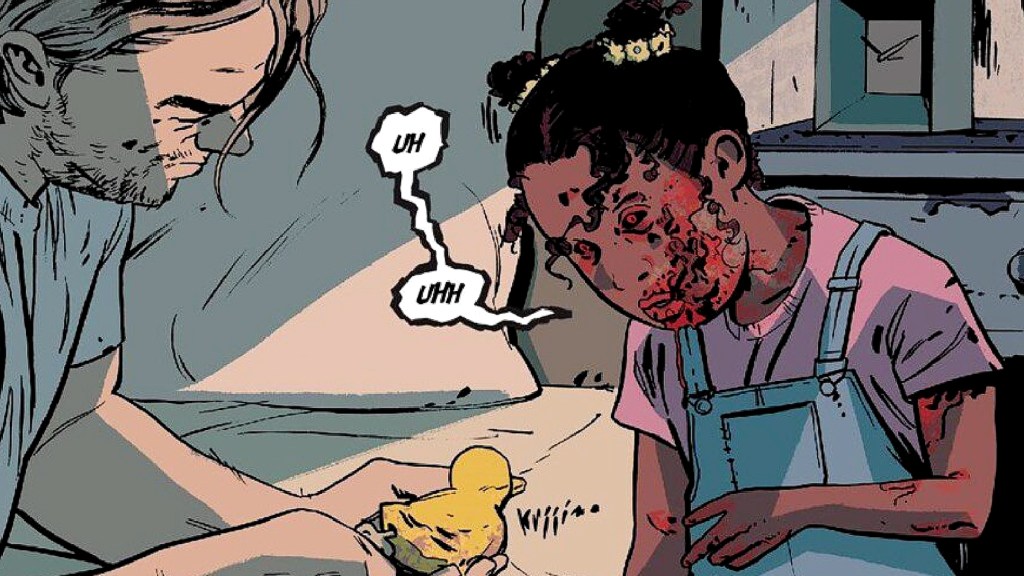
While his family has certainly changed and is dangerous if he is not careful, their continued interaction allows him to understand his purpose and what he must do for the zombies in his care. That is, the story addresses a key aspect of the zombie apocalypse rarely explored with such depth in other comics: just because someone turns into a zombie doesn’t mean you immediately stop loving or caring for them. In Jack’s case, he is still navigating that process — and thanks to the small, isolated nature of his town, he has had plenty of time to muddle through it. This represents an important evolution of the zombie apocalypse genre, one worthy of deeper exploration.
Why Everything Dead and Dying Matters
While zombies are usually portrayed as the ultimate threat in apocalypse stories, Kirkman’s The Walking Dead and Neil Druckmann and Faith Erin Hicks’ The Last of Us: American Dreams reveal that human survivors can be just as dangerous to peace and stability in a dystopian world overrun by zombies. This idea is pushed even further in Everything Dead or Dying.
After struggling to build a fragile sense of harmony amid a zombie-ravaged landscape, the protagonist discovers that his greatest threat isn’t the undead — whom he manages to coexist with in strangely one-sided but peaceful interactions — but rather the arrival of new human survivors, whose deep-rooted hatred for all things undead threatens to shatter his isolated zombie “paradise.” By making humans the real danger, Everything Dead or Dying breathes new life into the zombie genre. It’s a chilling reminder that the apocalypse doesn’t just reveal monsters — it creates them. Indeed, it tells us, sometimes, it’s not the monsters we should fear most, but ourselves.
What do you think? Leave a comment below and join the conversation now in the ComicBook Forum!
Most Viewed
-
Image Courtesy of Marvel Comics -
Image Courtesy of Studio Bones