The Nintendo Switch 2 felt like an easy slam dunk for Nintendo, as, after all, it simply needed to right the wrongs of its predecessor, be significantly more powerful, and come with a suite of impressive first-party offerings to justify the jump from last-gen to the next. Easy, right? Well, it would seem like Nintendo had other ideas in mind, only really achieving a handful of positives with its latest hardware while simultaneously letting down anyone who dared buy it.
Videos by ComicBook.com
The Switch 2 was not worth buying when it launched, and it simply isn’t now, not just because it fails to significantly improve on its predecessor, but because it also feels demonstrative of a studio that has lost its creative spark and opted instead to play it completely safe. This isn’t just a matter of missing Switch 2 first-party titles, although that is, of course, a sticking point. Rather, the Switch 2’s lack of innovation is its greatest weakness and one of the many, many reasons it still hasn’t proven its worth buying in 2026.
The Switch 2 Lacks Meaningful Innovation
One of the most requested features for the original Nintendo Switch was dynamic or customizable backgrounds for the eerily quiet homescreen. This was a feature available on the Nintendo 3DS, the PlayStation 4, somewhat the PS5, and the current and last-generation of Xbox consoles. Suffice it to say, it wasn’t a particularly unreasonable request, especially as studios typically redo their homescreens with each generation so as to visually distinguish them both externally and internally.
To my and, I’m sure, many others’ surprise, Nintendo chose not to implement any form of customization on its homescreen and practically copied and pasted the same screen we’ve all been staring at on our original Switches since 2017. This is just a minor example of Nintendo’s complete and utter lack of innovation when it came to the Switch 2. Sure, it has a bigger screen, a new mechanism for the Joy-Cons to attach themselves to the console, a better kickstand, and an improved dock, but it all looks virtually identical to the original Switch, and, worse still, feels the same.
Booting up the Nintendo Switch 2 is an increasingly disappointing task, not simply because you don’t get even the slightest dopamine rush from experiencing something new, but because it’s a constant reminder of how little Nintendo tried here. This is not to say that the Nintendo Switch 2 is a bad console. It’s more powerful, the screen is a thing of beauty, and it is an ergonomic dream. Rather, there’s nothing of note here, from its outer chassis to the inner machinations. Everything feels nearly a decade old, and that is hugely disappointing.
Nintendo didn’t even reintroduce the eShop music, simply because it feared it would clash with video game trailers (as if there wasn’t an easy workaround for that, such as pausing the music when a trailer begins, like on the PS5). All you have to look forward to then are the games, and this is yet another way the Switch 2 proves to be a huge disappointment to most, although not all, players.
Too Few First-Party Titles Are Hurting The Switch 2
When discussing the Nintendo Switch 2, it is hard to forget just how incredible its predecessor’s launch lineup was. Not only did it get Breath of the Wild, but it also received an enhanced port of Mario Kart 8 (a game a lot of people hadn’t played thanks to the poor commercial success of the Wii U), the epic, near 100-hour-long JRPG Xenoblade Chronicles 2, the divisive but inventive ARMS, and the endlessly fun multiplayer title, Splatoon 2.
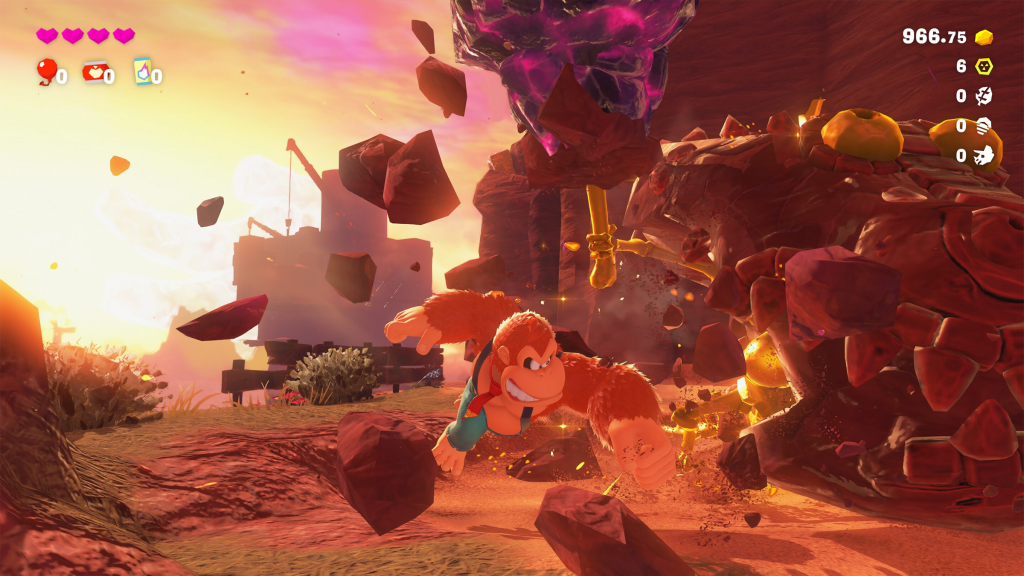
Conversely, the Switch 2 launched with the iterative Mario Kart World, the frankly incredible Donkey Kong Bananza, and, well, that’s it. Of course, that’s forgetting some of the smaller titles like the infamously overpriced Welcome Tour, the pretty stellar Fast Fusion, and the disappointing Drag X Drive, but even including them still makes the Switch 2’s launch lineup pale in comparison to its predecessor’s. Where the Switch 2 really excelled at launch was in its third-party support, with titles like Cyberpunk 2077 and Hogwarts Legacy.
It has also received numerous cross-gen titles, like Metroid Prime 4: Beyond and Pokémon Legends Z-A. However, unless you’re desperate to stay within the Nintendo ecosystem, it would be cheaper to get a PS5 or Series X and keep your original Switch. That way, you’d have access to everything Switch 2 owners do without compromises. The only exceptions would be Donkey Kong Bananza and Mario Kart World, but 8 Deluxe is frankly a better deal, and Bananza, while excellent, isn’t worth $449.99.
It Isn’t Worth Getting The Switch 2, Yet
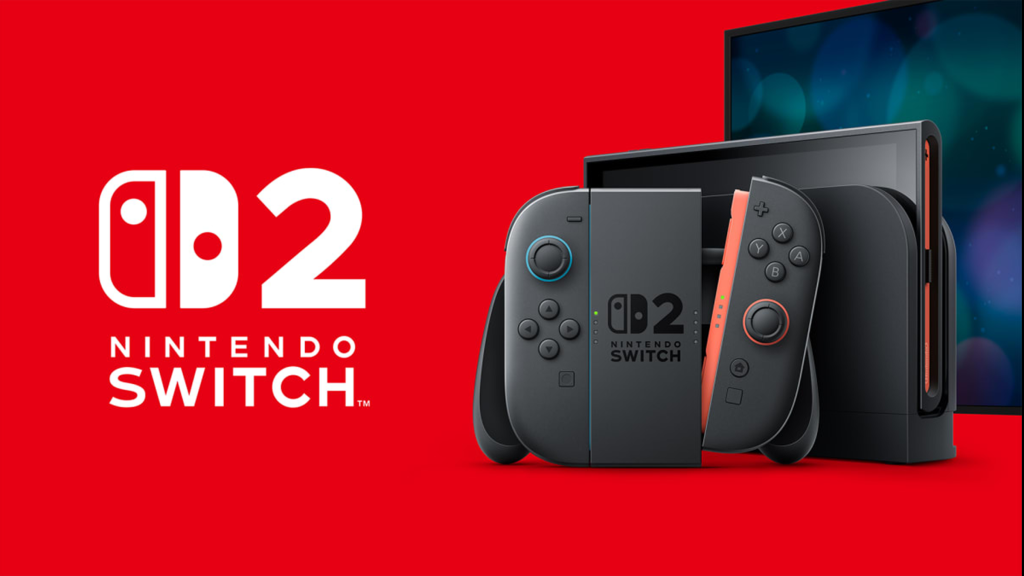
All of this is to say that 10 months after launch, the Switch 2 hasn’t justified its inflated price either in terms of innovative hardware or first-party exclusives. Nintendo’s insistence on playing it safe, keeping the original Switch alive for as long as possible, and keeping its upcoming slate of games mysterious has meant that, unless you’re desperate to waste money on tech, there’s literally no reason to get a Switch 2.
Of course, some of that can and almost certainly will change soon. Nintendo will eventually reveal what its first-party studios have been working on, and we’ll be seeing more exclusives leaving the original Switch behind before too long. However, it’s unlikely Nintendo will budge on innovation, almost certainly considering the introduction of currently useless mouse controls enough, considering, after 8 years, it couldn’t think of a way to make the homescreen feel new and exciting. So, it’s a waiting game, one that’s proving to be awfully long for those, like myself, who own the console.
Naturally, the Nintendo Switch 2 sold well and will continue to sell well. It’s a successor to a genuinely beloved console and still just about maintains its hold on the handheld console market until Xbox and PlayStation release their handhelds. However, I worry that, unless we’re to have the Switch 2 for eight more years, this lack of innovation, the core tenet and foundation that has served as the backbone of Nintendo’s approach to design and development, will ultimately hurt it in the long run.
What do you think? Leave a comment below and join the conversation now in the ComicBook Forum!
Most Viewed
-
Image Courtesy of A-1 Pictures -
Courtesy of Cartoon Network -

Image Courtesy of Ufotable