The Dragon Ball franchise has generated plenty of video games over the years, especially in the fighting genre. Given the way the series emphasizes different combat styles, flashy moves, and distinct characters, it shouldn’t come as a surprise. Especially once the games could fully move into the 3D space to fully allow for flight mechanics and increased maneuverability, Dragon Ball games took on a whole new level of excitement.
Videos by ComicBook.com
One of the best quirks of the later games was the inclusion of alternate reality storylines, which showcased how things could have played out if certain iconic battles had gone differently. One of the earliest examples of this appeared in a Dragon Ball Z game from over two decades ago, which included three other possible endings to the saga. One of them in particular highlights both the heroism of an often underappreciated character and the silly potential of these alternate timelines.
Dragon Ball Z: Budokai Introduced DBZ’s Version Of What If…?
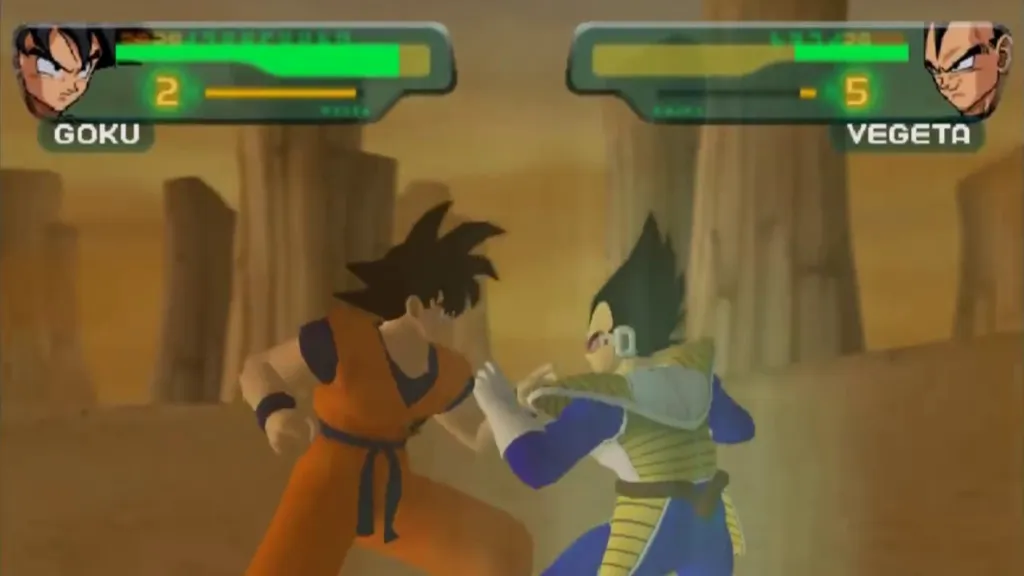
Released in North America on December 4, 2002, Dragon Ball Z: Budokai was the first entry in the Budokai series and the first Dragon Ball video game released for consoles in five years. Arriving amid the rising popularity of the series in the West, the game featured 23 playable characters spanning across the Saiyan, Frieza, and Cell Sagas. Although the game was met with mixed reviews by critics who complimented the accurate recreation of the show but criticized the controls, it performed well with fans and sold over 2.6 million copies worldwide.
It also laid the groundwork for future generations of Dragon Ball fighting games, which too the bedrock of Budokai and expanded on the idea. One element that can be seen reflected in more recent titles like the Xenoverse games is the inclusion of Dragon Ball What If? scenarios. Completing the game’s three Story Mode campaigns would unlock an extra chapter where players could take on the role of a villain and showcase a different path for the story. “Vegeta: Saiyan Prince” and “Rampaging Frieza” were fairly straightforward, allowing the player to beat down the heroes as Vegeta and Frieza to produce a darker future. However, the Cell bonus chapter remains one of the oddest chapters in the overarching Dragon Ball franchise.
How Cell Fused With Krillin

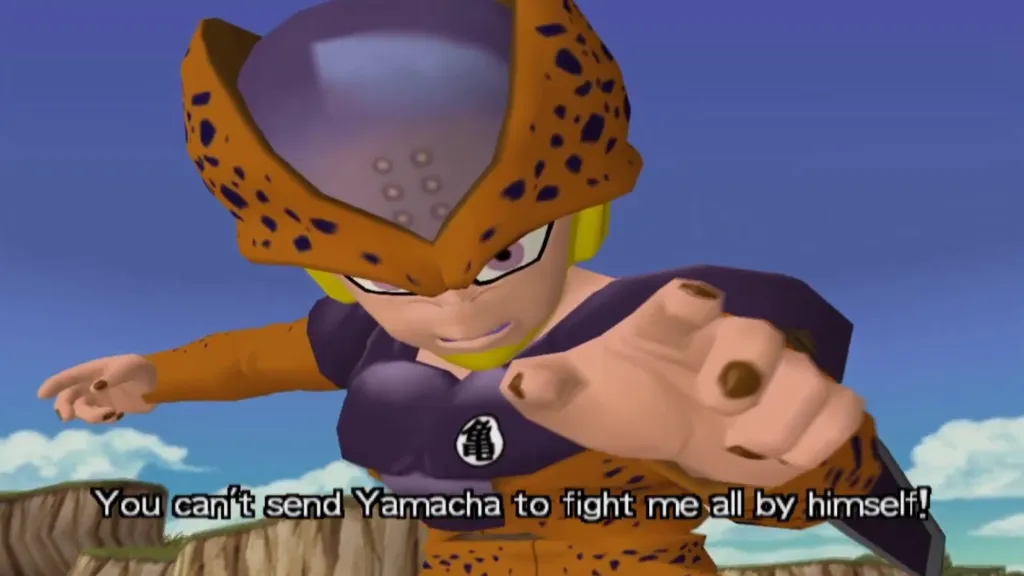
In “A Cold-Blooded Assassin,” the what-if divergence comes during the events of the Cell Saga. While attempting to absorb Android 18 to achieve his perfect form, Krillin is able to get in the way and save her. This results in Cell absorbing Krillin instead, resulting in an unexpected change that shrinks Cell down to Krillin’s size, recolors him orange to match his gi, gives him Krillin’s distinct six dots on his head — and most notably, greatly reduces Cell’s power. This leaves Cell exposed to Yamcha and Tien, who confront the player.
Taking over “Cellin,” players have to take down Yamcha. Notably, Cellin resembles Cell Jr. more than Cell or Krillin, but with the distinctive personality of Cell and the visual markers of Krillin. If the player is successful, they are then caught by surprise by Tien, who destroys Cellin with a well-placed Tri-Beam. This leads to Perfect Cell waking up from a nightmare, revealing that the entire scenario was just in his head. Notably, it’s the only one of the three What If? scenarios that plays out that way, effectively turning it into the closest thing the game has to a gag ending.
Why Cellin Still Lingers In My Head Decades Later
Krillin is one of my favorite anime characters ever, and faraway my favorite fighter in the Dragon Ball franchise. There’s just something inherently appealing to me about an underdog character, with Krillin’s status as a clever technical master who pales in comparison to the raw power of the rest of the main characters making him something special. Krillin has been outclassed since the days of Dragon Ball, but often retains an important role in the plot because of his crafty nature, heroic drive, and self-aware commentary about the situation.
He’s not Goku or Vegeta, capable of destroying planets. In Dragon Ball Super, his entire arc revolved around overcoming his trauma from previous battles and reassuring himself that he belongs among Earth’s greatest warriors. At the core of the Cellin story is an act of genuine heroism on his part, a sacrifice that he attempts (and fails at) in the core series. It’s an interesting possibility to consider, especially as a fan of Krillin, how he may have turned the tide of the entire story arc by succeeding in that one moment.
If Cell is taken down by Tien while fused with Krillin, then the entire arc of the series plays out differently. Gohan doesn’t go Super Saiyan 2, preventing him from achieving his true potential. Goku doesn’t die and resumes his training in the afterlife. Both of these factors mean that by the time of the Buu Saga, which isn’t featured in Dragon Ball Z: Budokai, the heroes are vastly unprepared for the threats awaiting them. Cellin is an interesting showcase of how well the What If? concept works in the Dragon Ball universe, something future games like Dragon Ball Xenoverse would take to greater heights. It’s also just one of the oddest and most memorably blunt possible endings for one of the franchise’s most iconic villains.
Most Viewed
-
Image Courtesy of Ufotable -

Courtesy of Bones Film