Feudal Japan is not much like the Wild West or Hyrule. The lands of Ezo don’t have an abundance of tumbleweeds or dragons that pierce the morning sky. But Ghost of Yotei shows they have quite a bit in common. Underneath the surface-level differences, Yotei shares a salient design philosophy for its world that’s prevalent in both Red Dead Redemption 2 and The Legend of Zelda: Breath of the Wild, one that emphasizes discoverability.
Videos by ComicBook.com
Yotei’s world builds off what was lightly established in Ghost of Tsushima. The guiding wind and chirping birds that diegetically pointed players toward missions or objects of interest were great starts that got players to pay more attention to the world over HUD markers. But the sheer amount of repeated objectives broke down some of this thoughtfully constructed illusion. Going through 20 bamboo strikes, 49 inari shrines, 20 hot springs, 23 haiku spots, and a couple dozen enemy camps was exhausting not only because of the amount of times each activity repeated but also because how little each changed every time. The first bamboo strike was almost the exact same as the 20th one, hacking away at the player’s immersion with each sliced green trunk.
Ghost of Yotei‘s Map Is Much More Rewarding to Explore Than Tsushima‘s
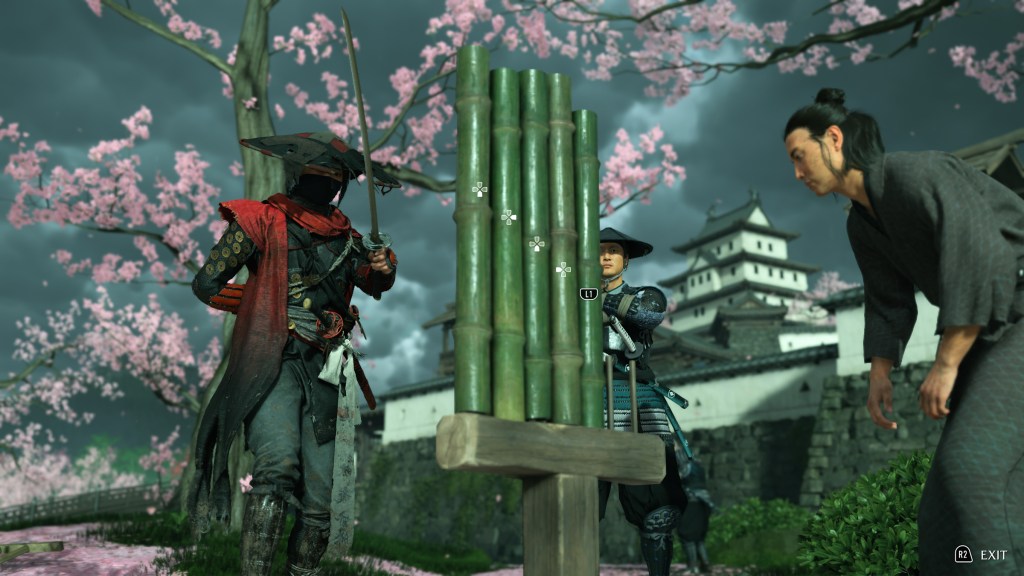
Ghost of Yotei thankfully does not have that same problem. While many of its activities are peppered throughout the world, there are fewer repeats and more types of objectives; the drop from 49 inari shrines to 11 is the most significant example of this downsizing. However, more crucially, Yotei often throws in surprises so that very few of them do the exact same thing. It may be something as small as a bamboo strike requiring players to use their other hand or something more grand like expecting one objective type only for it to morph into another. Not knowing exactly what’s going to happen melts away some of the rigidity and checklist nature that can make some open-world games — like Assassin’s Creed Shadows — feel like a slog.
Committing to surprises and grounding players in the world are elements that make the wider world so engrossing. Yotei’s aforementioned activities all have some sort of visual symbol that draws players toward them. Hot springs have a distinctive fog cloud above them. Duels take place at trees covered in tattered papers and ropes. Foxes always wait by trees with red leaves. Shrines are at the end of a long path of Torii gates.
Ghost of Yotei Is Designed for the Player’s Eye
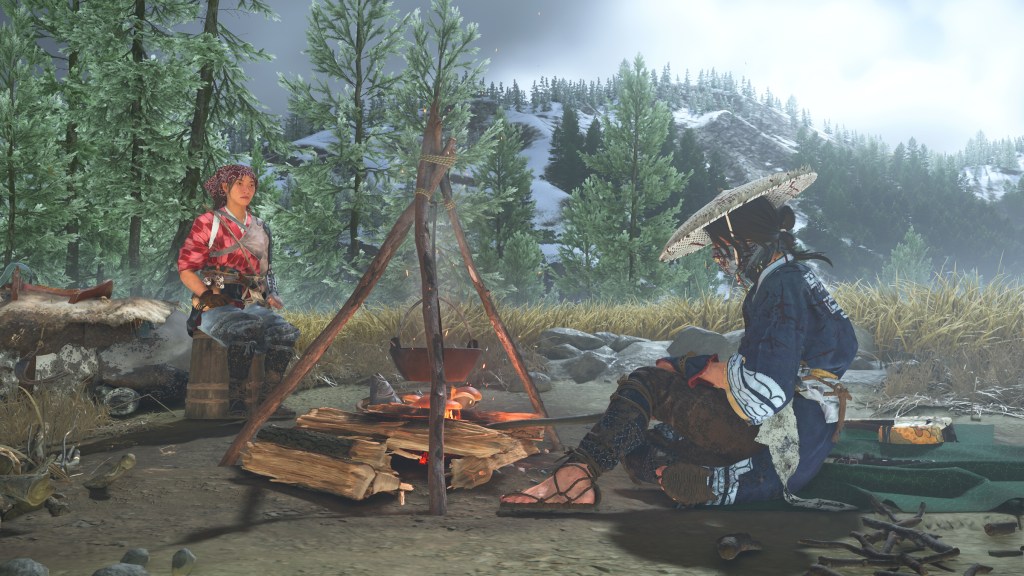
Even though this can give players a tease of what’s to come from a distance, these visual indicators keep players in the game and make sure they aren’t opening up their map a bunch of times just to get around; their eyes guide them. And while the first game had some of these same visual motifs, Yotei does it better by not having these icons pop up on the map after clearing out areas, which is a common practice in many open-world games. Players have to use the spyglass, buy a map, talk to random locals, or happen upon these missions to get them marked on the map. It’s a small change but one that, again, gets players to stay in the world and actively engage with it rather than rely on the game to automatically unfog these areas.
The more standard side quests follow this ethos, as well. In the same way that a steam cloud can lead players to a hot spring, Yotei has plenty of unique structures that fall outside of the ones seen in the typical open-world activity bucket, like a mysteriously burnt house or a bar covered in oni masks. These unique designs draw players to them and reward their curiosity with a side mission, some small story, or, at the very least, a piece of gear. And these important figures don’t have an exclamation mark above their head and aren’t highlighted on the map. Instead, players have to explore around and look for these quest givers or come upon said quest in a different way, be it through a random note or nearby gossiper. Some lines of dialogue even reflect how Atsu found the quest, which is special and highlights how open the game is.

The magic that brings it all together happens within the open world between all the objectives. Atsu can get ambushed, hunted down by roaming ronin, duel those discussing her right in front of her bounty poster, run into the sassy bowyer who’s just out and about, reconnect from a character from a prior mission, gain intel on a member of the Yotei Six, or begin a whole quest chain from a guy with a pet bear. Yotei still has its moments of serene calm where players can absorb the saturated landscape, but the game also frequently dishes out small surprises to make sure Ezo doesn’t feel like a static and utterly predictable video game world. It’s alive with all sorts of people who can affect Atsu’s journey in one way or another.
Surprising players and giving them multiple ways to explore the space was all by design, according to Sucker Punch Productions. Director Nate Fox said he was aware of the first game’s shortcomings, explaining how the sequel was going to keep players guessing.
“Ghost of Yotei improves [the mini-game] segments in a sense that we won’t be making players go through the same thing all over again whenever their curiosity leads them to encountering new secrets during exploration,” Fox said. “We’ve prepared different kinds of outcomes that could go beyond the player’s expectations. We believe that the beauty of open-world games is in the exploration, so we were determined to offer players a diverse experience.”
Ghost of Yotei Echoes Red Dead Redemption 2‘s Focus on Surprising Players
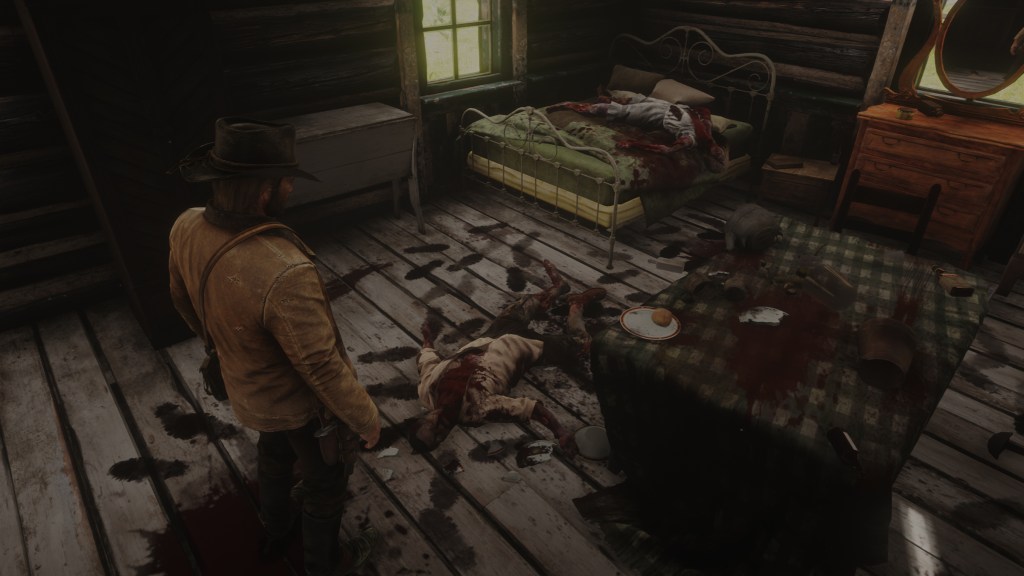
Fox didn’t outright list Red Dead Redemption 2 or Breath of the Wild as inspirations, but it’s very likely those two games played a role in shaping Yotei. Rockstar’s 2018 epic is stuffed with all sorts of random encounters that make the Wild West feel alive. Arthur can come across O’Driscoll rats ambushing a prison wagon, KKK members burning crosses, or a mysterious murder scene, to name a few. Red Dead Redemption 2 is long enough to where some events repeat a few times, but that doesn’t undo how much these small distractions add to the overall experience and make it more immersive.
Red Dead Redemptions 2’s rendition of its five states was also carefully designed to catch the player’s attention. It’s a much bigger map, so it’s not as dense as Yotei and not everything contains a secret, but Red Dead isn’t awash with icons, which was by design. Art director Rob Nelson said that the studio was “obsessed with it feeling natural or organic in every respect” so that “everywhere you look, you see something that is drawing you toward it.” Director of art Aaron Garbut went into more detail in a different interview.
“Where you see a shack on a hill and you know there is something interesting for you there, maybe you will break in and stumble onto a mystery, or meet the owner and end up getting tangled in something,” said Garbut. “I think that’s when you can tell that it’s new territory, when you are not even sure if what you’ve done was a mission or not. When all the systemic parts of the world come together with our scripted content in the right ways, it’s kind of incredible.”
Ghost of Yotei Also Borrows a Bit From Both BOTW and TOTK
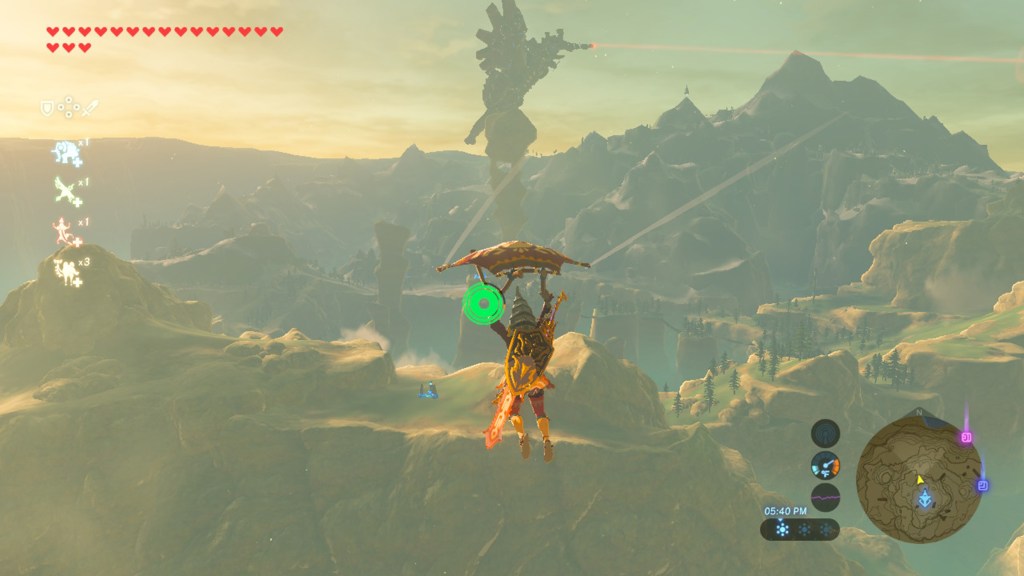
Breath of the Wild and Tears of the Kingdom hyperfixate on this freedom eye-first design and do it better than any other open-world game. BOTW director Hidemaro Fujibayashi went into detail about this at CEDEC 2017 (as translated by Camouflaj’s Matt Walker) and noted the studio used the “Triangle Rule” to get players to poke around. Triangular mountains and rocks obscure sections of the world but gradually reveal what’s behind them when players begin to climb or move laterally around the earthy structure.
This approach means curiosity subtly guides players since they are always on the lookout for the next building to pilfer through or shrine to visit, many of which contain some sort of reward. When combined with mechanics that encourage experimentation and maps and waypoints that have to be manually filled out and marked, it’s clear how crucial discovery is to these games and why they are so beloved.
Ghost of Yotei could push even further in this direction and be closer to these Zelda titles. It could have an option that doesn’t mark the player’s map at all or a setting that turns off the more explanatory text. But it has adapted enough of these principles to ensure players are constantly driven to poke around Ezo and uncover its many surprises. Yotei is gorgeous and one of the PS5’s best-looking games, but its beauty is more than skin deep, as Sucker Punch has ensured it’s as lively to interact with as it is to look at.
What do you think? Leave a comment below and join the conversation now in the ComicBook Forum!
Most Viewed
-

Image Courtesy of Netflix -

Image courtesy of Warner Bros. Pictures -
Image Courtesy of Ufotable -

Warner Bros. Pictures -

image courtesy of Studio Ghibli