Kingdom Hearts is one of Square Enix’s biggest hits in the 21st century, a wild crossover between Final Fantasy and Disney that actually managed to deliver on a bold and colorful adventure that can land with some surprisingly strong emotional beats. The first game in the series, while unorthodox in its crossover focus, proved to be a surprisingly effective melding of the two concepts. The success of the first game meant it was likely inevitable that there would be a sequel.
Videos by ComicBook.com
Luckily for fans, that follow-up turned out to be a historically great game. Debuting in North America on March 28, 2005, Kingdom Hearts II took all the promise of the first game and enhanced it, with larger levels, bigger battles, and more effective emotional exploration. It was ambitious in scale but surprisingly personal with the stakes, delivering on the kind of adventure that video games have long promised but haven’t always been able to deliver on. Over twenty years later, Kingdom Hearts II remains one of the best sequels ever made.
How Square Enix Upped The Stakes For Kingdom Hearts II
Kingdom Hearts may have been a big success for Disney and Square Enix when it debuted in 2002, but it would take over a year — and the completion of Kingdom Hearts Final Mix — before the developer moved on to a sequel. Tetsuya Nomura and the rest of the team focused on expanding the scope of the story. This included the need to bring in more Disney approval, which in turn opened the door to more ambitious level design, with new settings inspired by the likes of The Lion King, Pirates of the Caribbean, and Tron. A one-year time-skip was incorporated into the plot (the events of which would be depicted in the GBA spin-off Kingdom Hearts: Chain of Memories), with Sora’s growing maturity influencing the team’s approach to combat.
The action was amplified, and the levels were expanded, finding a better balance between exploration and combat. The game put the PS2’s processing power to full use, creating vivid settings that were distinct from one another visually, thanks to colorful tweaks and gameplay shifts. The story also became more complex both narratively and emotionally. The expansion of Organization XIII introduced a more overarching threat to the series that wouldn’t fully play out for multiple games, but the immediately engaging bittersweet drama focused on characters like Axel gave Kingdom Hearts II a more creatively ambitious touch. Kingdom Hearts II was all about expanding what had come before, with some returning locations tweaked in exciting ways. Altogether, the result was something truly massive and ambitious, especially for the time.
Kingdom Hearts 2 Took An Epic Concept To An Even Bigger Place
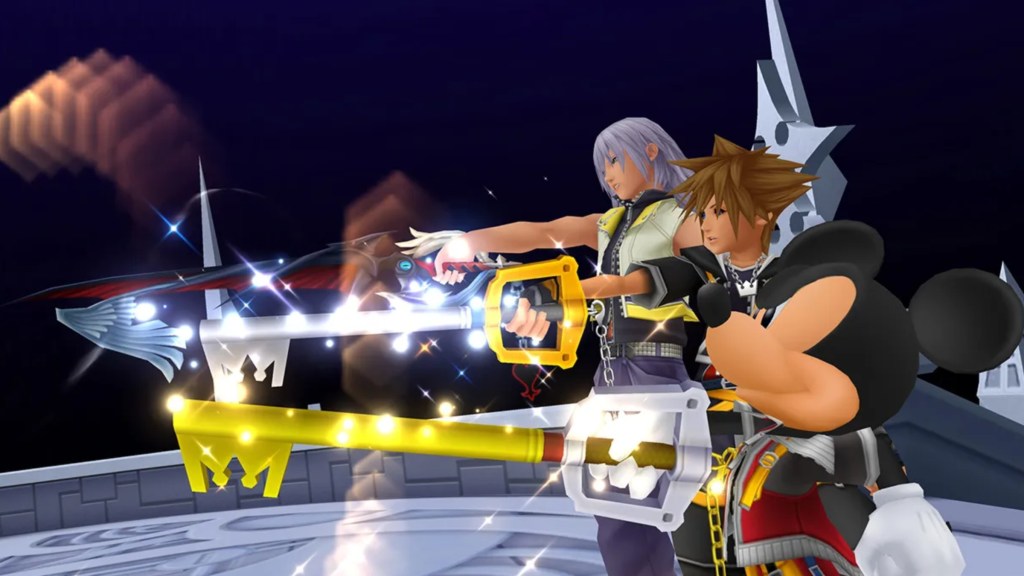
Kingdom Hearts II is one of those rare sequels that really feels like a true expansion of what came before. The selling point of visiting Disney worlds was enhanced thanks to a mix of fan-favorite locations with cult classics and forgotten gems. The art design is spot-on, finding the proper balance between the distinctive source material and the in-house style that defines the Final Fantasy archetypes. The levels were well-designed and inventive, with a great blend of action-heavy set-pieces, challenging boss battles, fun mini-games, and natural exploration.
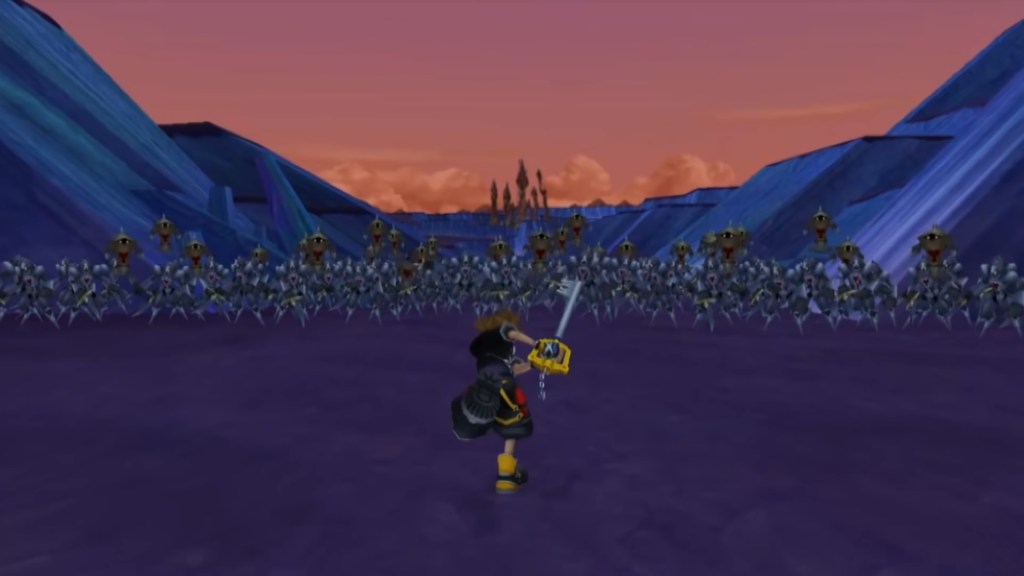
The story became more ambitious emotionally, with Sora’s mission across multiple worlds touching on the pain of loss and the importance of interpersonal bonds even beyond death. The game’s inclusion of massive scenes like Sora’s battle with a 1000 Heartless still stands out as one of the most memorable beats of the era. This was all bolstered by rock-solid controls, impressive art design, and one of the best ever gaming soundtracks. It’s a sequel that
Why Kingdom Hearts II Is An All-Time Great Game
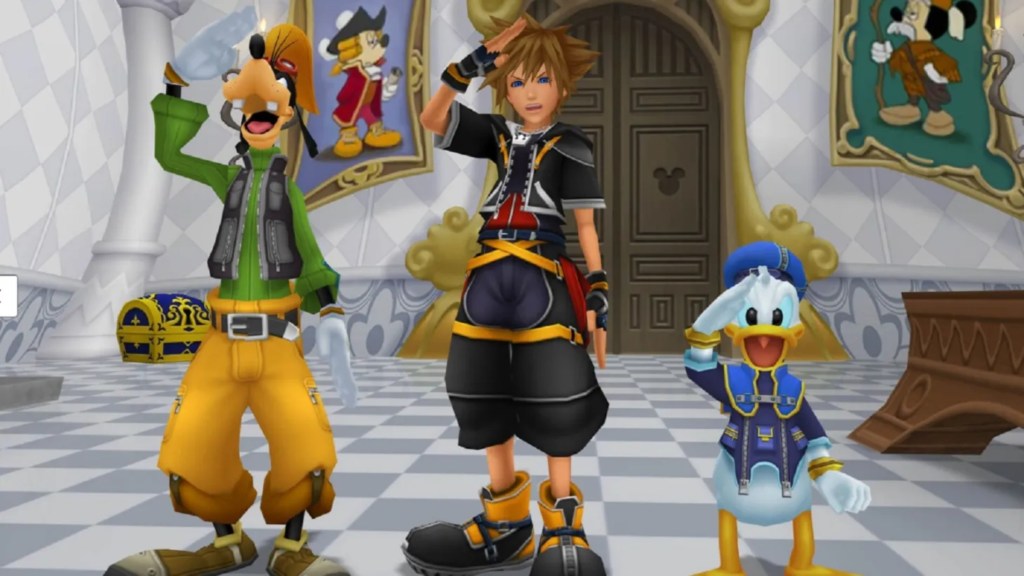
All of that deft game design paid off handsomely for both companies, with Kingdom Hearts II selling over 4 million copies in two years. The game also landed well with critics, earning an overall impressive 87/100 on Metacritic, speaking to both its broad appeal with players and the level of depth that can impress critics. The game kept the numerous fans who were won over by the first game, while the mix of cult classics like Tron, Square Enix fan service like Final Fantasy X‘s Auron, and broadly appealing cultural touchpoints like The Lion King refined the synergy of the first game into pure gold.
The combat was fun and challenging, all without ever dipping too heavily one way or the other. The drama was intense without being overbearing, with just the right amount of soap opera-level emotion to be broadly entertaining even as the quieter moments infused everything with a great layer of humanity. It all comes together both in terms of raw narrative and immersive gameplay. Kingdom Hearts II is one of those very rare sequels that know exactly what made the first one so good — and how to improve on it. Over twenty years since it came out, Kingdom Hearts II remains one of the best examples of what a gaming sequel should be.
Most Viewed
-
Image Courtesy of Ufotable -
Image Courtesy of Toei Animation