PlayStation, in one impressive swoop, managed to piss off two different groups in one day. Announcing the imminent sunsetting of the PlayStation Stores on both the PS3 and Vita dealt a blow to anyone who got in early on PlayStation’s burgeoning digital storefronts. And then revealing that all games shipping on PlayStation systems starting in 2028 would only be available digitally managed to upset those who prefer physical formats. It was a stunning display of tactless decision-making that almost contradicts itself, but one thing is clear among all the sterile corporate blog posts: This only narrows the medium’s future and is yet one more way publishers are enshittifying the medium.
Videos by ComicBook.com
Some of this initially seems somewhat understandable. According to PlayStation’s official data, 85% of sales were digital during the company’s Q4 fiscal year in 2025 (up from 19% in FY 2015). That’s a rather staggering statistic and an increase over the previous fiscal quarters and fiscal years. Physical game sales in the United Kingdom also reportedly fell 26% in 2024. The data can fluctuate depending on the game and whether or not it is more aimed at children — in the U.K., 81% of Warhammer 40,000: Space Marine 2 sales were digital, while 55% of Astro Bot sales were physical — but many players are undeniably choosing digital games and the convenience they often offer. This isn’t even exclusive to games, either, as a 2026 survey from Statista noted how 42% of Americans have abandoned physical media for films, TV shows, and music.
PlayStation Taking Away Discs Eliminates a Sizeable Portion of Players
With dwindling numbers, it, through the eyes of a cold corporation, broadly seems like nixing discs is the way to go. But broadly speaking leaves out a lot of players in the margins. Even though a vast majority of players are downloading games on PlayStation systems, 15% or 20% of millions of people is still millions of people. These are the kinds of people with spotty internet and those on military bases, as well as younger players or ones with lower income.
It’s the disregard for the latter two categories that is the most upsetting. Children seem to be crowding around titles like Roblox, Minecraft, and Fortnite and, thus, need to be encouraged to play other games so the industry can grow in the future. Physical games are also a boon for those on a budget since they can be lent out, rented from GameFly or the library, or given as gifts.
Flippantly closing off these audiences gives the game away, because while it’s all about control, it’s also about milking more money out of fewer people. PlayStation seems to think it is just fine to grab its current audience by the throat and squeeze them harder at the expense of others. Those who are willing to spend almost $1,000 on a console will probably have more money to spend on your store, so why not force them to only shop there (and only there) where you can take a bigger portion of the profits? Gaming has always been a luxury hobby, but there have been ways to make it work. By exclusively focusing on digital, those cheaper and less traditional avenues are going to become less and less viable.
It’s a risky bet built around the calculation that enough players will just accept it, but that’s not a given, especially with a litany of other types of media to consume and such a terrible economic climate. Wages have stagnated. Tariffs and ridiculous wars have made just about everything more expensive. Seemingly every bit of capital is being sacrificed to the altar of AI at the expense of everything else. We are not living in a world where narrowing reach is a smart long-term strategy.
This Is Bigger Than PlayStation

And the lack of foresight isn’t just limited to PlayStation, either, since it applies to the medium at large. Preservation is much easier when discs are involved because they, for the most part, aren’t linked directly to a finicky server. PlayStation CEO Hideaki Nishino isn’t going to send a hit squad to your house to steal your copy of Sackboy: A Big Adventure when its online support is pulled. Discs naturally are protected in a way digital games are not. So while updates have obviously changed how the 1.0 version on the disc works from a preservation standpoint, discs are at least a start and something that gives consumers more power.
It’s a culture worth maintaining, too, which has been a struggle. The Entertainment Software Association, which should be advocating for better preservation, has stated that there is “no such thing as an obsolete game” since they can be reissued, but that doesn’t capture the full picture. A study by the Video Game History Foundation found 87% of games are out of print, demonstrating how a game’s ability to be ported doesn’t mean it will be. It seems as though only the biggest games are sometimes ported over, leaving many to rot on old storefronts. It’s a shallow, profit-driven motive that illustrates why piracy, despite its illegality, is often seen as the only way to preserve the medium. “Vanishing Culture: A Report on Our Fragile Cultural Record” speaks to this issue quite well by pointing out how art should be maintained, regardless of how well it scored on OpenCritic.
“A preservation practice that preserves only the ‘greatest hits’ cedes cultural memory and history to only the most popular works of a narrow time period and the interests of their financial backers. History teaches us that the values that determine what is worthy of preservation and what is not are always subject to change.”
PlayStation’s Digital-Only Future Has Some Glaring Shortcomings
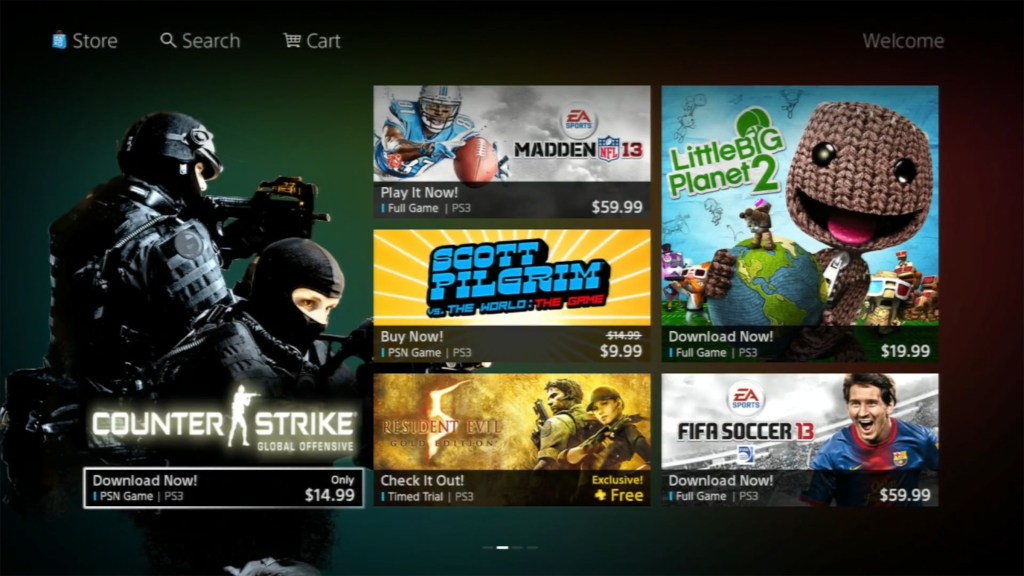
The second part of this one-two punch lies with the news of the impending demise of the Vita and PS3 storefronts, which is directly at odds with the nixing of physical discs. PlayStation wants players to invest in digital games, but it is also showing how those games can go away with a metaphorical flip of a switch (something PlayStation has already done multiple times by revoking various movies and TV show purchases). The disclaimer that purchased content will be downloadable for the “foreseeable future” isn’t that comforting, either. The decision to put these announcements on the same day is baffling and reeks of the arrogant cluelessness PlayStation most prominently displayed in the PS3 era.
Funneling players into one closed storefront while also demonstrating how said storefronts are at the whim of volatile markets is short-sighted. Deciding precisely how players can buy games and where cuts out many users and slashes the goodwill and trust a console maker like this needs to thrive, something that ripples out to the wider industry. Part of what makes this feel even more egregious, though, is how these announcements weren’t met with any kind of olive branch. Perhaps a promise to share more plans on backwards compatibility or slash digital prices would have lessened the blow. But that would have required a look into the future and some grace, both of which are short supply in this industry and aren’t factored into spiteful decisions like this.
What do you think? Leave a comment below and join the conversation now in the ComicBook Forum!
More Gaming
-

Courtesy of Unknown Worlds -

Final Fantasy VII Console Heroes Diorama -

Image courtesy of Square Enix