Resident Evil has been one of the biggest gaming horror franchises for decades, with the first game’s debut thirty years ago laying the groundwork for an explosive series (and plenty of imitators). As the series has gone through various peaks and valleys, it has embraced a long-running narrative that can become very complicated, very quickly. One of the key ways that audiences have stayed invested in the series all this time has been the cast of memorable fixtures, ranging from the heroic playable characters to the horrifying monsters they have to overcome.
Videos by ComicBook.com
One of the best of these characters was introduced all the way back in the second entry of the series, which debuted 28 years ago today. Initially presented as an average cop having the worst first day imaginable, Leon S. Kennedy’s arc in that game turned him from a basic rookie into a capable hero. Since then, Leon has become one of the most iconic figures in the series, with an impact that has changed action and horror games on a fundamental level. Here’s how Resident Evil 2‘s introduction to Leon — and his foundational arc — set changed the series for the better.
Resident Evil 2 Gave Us Leon S. Kennedy

Debuting on the PlayStation on January 21, 1998, Resident Evil 2 built on the success of the prior game to become a massive hit for the console. Notably, the game moved away from the survivors of the first game and shifted focus to new characters: while Claire was at least the sister of the prior game’s protagonist, Chris Redfield, Leon S. Kennedy was introduced as a fresh face in the series. A regular police officer on his first day of the job, Leon arrived late to the police station due to a bad hangover following a breakup. This spared his life from the initial outbreak and gave Leon a chance to prove himself by facing off with hordes of the undead.
The game split its focus between two campaigns, with one focusing on Claire and the other shifting to Leon. While Claire’s campaign laid more of the groundwork about the horrors of the Umbrella Corporation and introduced Sherry Birkin, Leon’s story was a more action-driven affair that established his love interest in the mercenary Ada Wong. Over the course of the adventure, Leon grows as a person — not just as a rookie willing to risk his life to save others, but also as someone who is aware enough not to be swayed by the manipulations of others. It’s a simple but genuinely compelling arc for Leon, who tests his mettle and finds himself capable of being a hero.
How Leon Became The Face Of Resident Evil

Following the success of Resident Evil 2 — which sold almost 5 million copies worldwide on the PlayStation alone — it’s no surprise that Leon became a fixture of the series. However, the subsequent games shifted focus away from Leon, outside of a minor appearance in the non-canon Resident Evil Gaiden for the Game Boy Color (which initially appeared to focus on Leon, but ended with the reveal that the player character had been replaced by one of Umbrella’s creations). Instead, the series returned to Jill Valentine in Resident Evil 3: Nemesis and gave Claire her own adventure in Resident Evil: Code Veronica. However, Leon’s return in 2005’s Resident Evil 4 transformed him into the ultimate protagonist for the series.
In the years since the fall of Raccoon City, Leon has become a special agent tasked with protecting the family of the United States President. The more innocent young cop of the first game had grown into something different, with the experience of Raccoon City and his subsequent training turning the franchise’s everyman hero into an action movie character. That ended up being one of the key elements of Resident Evil 4, which overall embraced a more campy tone that benefited the emphasis on action and over-the-top enemies.
Leon’s dry comments and glib jokes gave him a cool edge that fit the tonal shift, even if the heroic side he displayed in Resident Evil 2 remained his chief characteristic. Similar to Resident Evil 2, RE4 became a massive success — but had an even larger influence on gaming as a whole, inspiring an entire new approach to third-person action titles. This new version of Leon has been key to the franchise ever since, appearing as one of the heroes in Resident Evil 6 and serving as a playable character in the modern remakes of Resident Evil 2 and Resident Evil 4. This same approach to the character is key to his appearance in Resident Evil: Requiem.
Why Leon Is The Most Important Resident Evil Hero
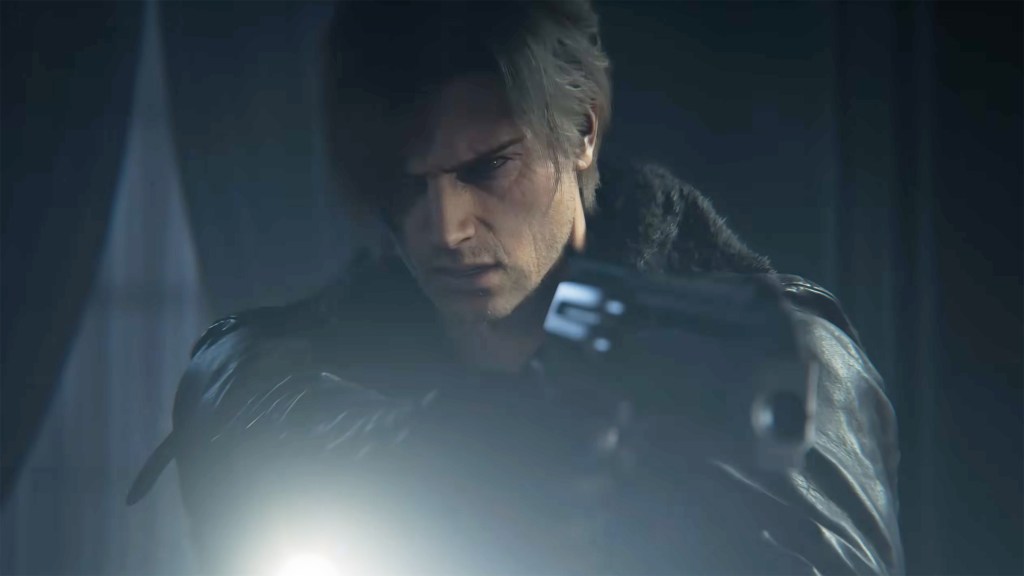
Resident Evil was successful when it launched for the PlayStation, especially for how it codified the way gaming could approach horror. However, Resident Evil 2 took that success and proved how it could be expanded far beyond a single mansion and squad of special agents. Resident Evil 2 codified the idea that mercenaries could run into any situation, that entire cities could be overrun, that large populations could be transformed into monsters.
More than anything, though, Resident Evil 2 established the importance of having an average perspective on the story. Leon, like Claire, felt like a real person in their first adventure. While they had specific skills that lent themselves well to the mission at hand, they also still felt like regular people caught in an intense situation. It brings an authentic humanity into the story that helps the player feel immediately connected with the story. While Leon graduated into a more overtly trope-y character by Resident Evil 4, his action star chops now contrasted well against the mundane Ashley, a regular teen in way over her head.
Resident Evil: Requiem is following that lesson, balancing gameplay between the action-heavy combat of Leon’s arc with the stealth-oriented approach of Grace Ashcroft. That underlying human quality has even been replicated in other titles without Leon, with characters like Ethan from Resident Evil: Biohazard and Resident Evil: Village taking cues from Leon’s more mundane original appearance. Even after evolving into a super-soldier with lots of impossible feats to his name, Leon is still grounded by his very human drive to protect others. Resident Evil 2 was important for a lot of reasons, but the most important impact it had on the series as a whole was bringing Leon into the spotlight.
Most Viewed
-

Image Courtesy of Netflix -

Image courtesy of Marvel Studios -

Courtesy of SuperGiant Games -

Courtesy of Crunchyroll -

Courtesy of Eight-Bit