The Assassin’s Creed franchise kicked off in 2007, spawning a multimedia empire consisting of more than a dozen games, comics, novels, and a not-so-great live-action feature film. The titles span a wide range of history, with the first exploring the Third Crusade’s actions in the Holy Land in 1191. As the franchise expanded, more lands and time periods evolved Assassin’s Creed titles into more than video games — they’re explorations into history itself. If you’ve ever wondered how the games managed to capture so much detail from ancient cities and cultures, the answer is simple: research.
Videos by ComicBook.com
Of course, that’s putting it incredibly lightly, as the franchise does an incredible amount of research to ensure the games are as close to real-world history as possible. To this end, Ubisoft Montreal employs scholars and historians with expertise in the period and location of a planned title. These people travel to these places, take more pictures and measurements than seem possible, and provide a stunning amount of information to the game’s developers so they can recreate ancient cities into digital art. Not only does this result in some of the most entertaining games ever made, but it also makes them excellent tools for studying history.
Countless Hours of Research Go Into Making Any Assassin’s Creed Game
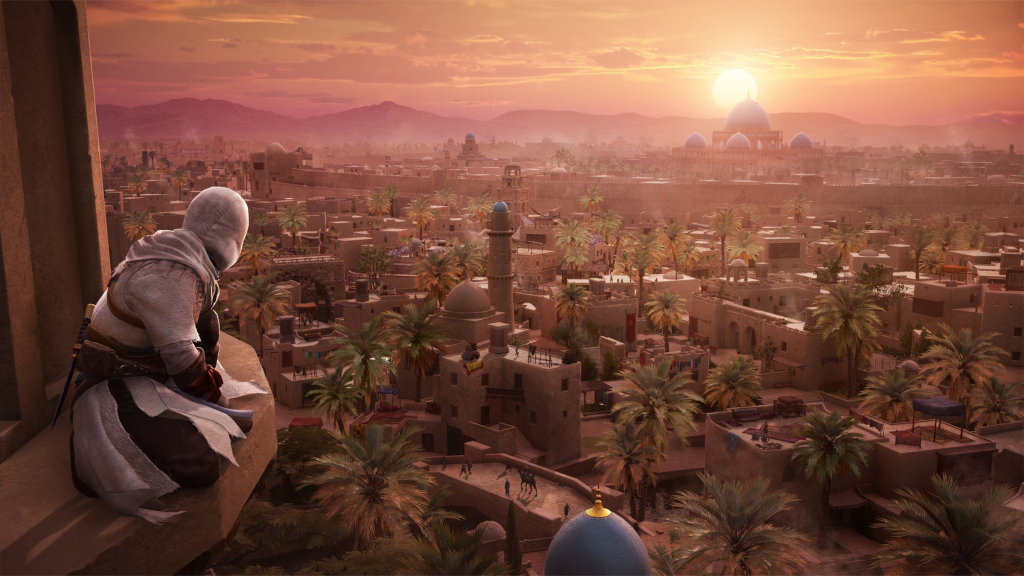
Ubisoft Montreal knows very well the educational benefits of its Assassin’s Creed games, which is why it created the Discovery Tour. Discovery Tour is a violence-free version of the game that lets players take guided, interactive tours through the game’s areas, curated by historians. While not available in all games, there is a standalone app for Assassin’s Creed: Mirage, while the Discovery Tour mode is a part of Odyssey, Origins, and Valhalla. This allows for extensive educational exploration of ancient Greece, Egypt, the city of Baghdad, and the Viking Age of Northern Europe.
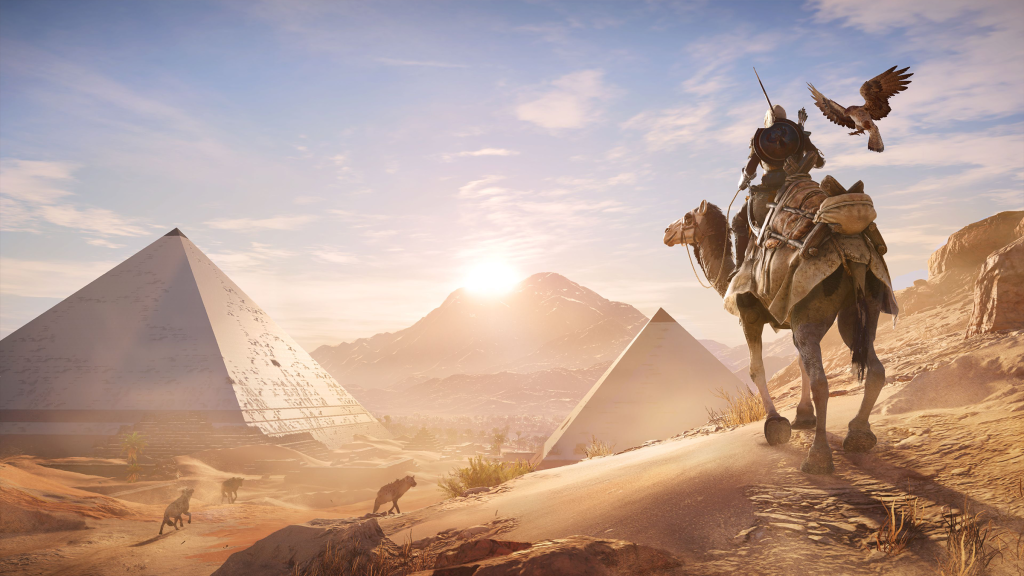
The only way Ubisoft Montreal could create something like Discovery Tour is through extensive research and analysis. For Origins, the task was particularly challenging, as the devs had to recreate an ancient civilization using information gained from museums, historians, and other experts in the field. Countless hours of research go into getting everything just right, and it takes a lot of work and dedication to complete. The result is a game that is incredibly entertaining and highly replayable, while also serving as a digital tour of the past.

Origins posed a more complicated problem for its recreation of Ancient Egypt since much of the history is housed in museums or still buried under sand. To recreate a civilization that no longer exists, the devs hired Evelyne Ferron, a professor of ancient history, to consult on the project. She spent four years working with a team to recreate how Ancient Egypt might have truly looked more than 2,000 years ago. The game includes buildings lost to history, but they are recreated using as much information as possible. The dedication to historical accuracy is one of the reasons the Assassin’s Creed games are so enthralling.
Every Assassin’s Creed Game Is the Result of Complex Research
When you’re playing an Assassin’s Creed game, you’re benefiting from countless hours of research. Everything from the buildings’ accuracy to the random things people say as you pass by is the result of a detailed analysis of culture, architecture, religion, language, and more. While each game features an immersive and well-written storyline, brilliant voice acting, and everything you’d expect from a top-tier AAA title, it’s impossible not to notice the detail involved. The games have sparked renewed interest in history, entertained millions, and subtly educated them about the past, and the result is fantastic.
Are you impressed with the surroundings and level of detail in Assassin’s Creed games? Leave a comment below and join the conversation now in the ComicBook Forum!
Most Viewed
-

Official art by Bastien Lecouffe-Deharme -
A photo of the Retrovolt Arcade taken in 2017, showing several classic arcade cabinets and stools. -

Image Courtesy of MAPPA