The Legend of Zelda has been one of the foundational franchises of modern video games, with players around the world spending countless hours embodying the adventures of Link as he races to save Zelda from the clutches of the villain Ganon. The first game in the series, which just celebrated its fortieth anniversary, laid a lot of the groundwork for what the series remains to this day. While the plots have gotten more complex, the lore has gotten more vivid, and the game design more engaging, the core mechanics of the franchise have been consistent for decades.
Videos by ComicBook.com
One thing it nailed from the very beginning, however, was the main hero. The Legend of Zelda has made Link into a key figure in gaming culture, and that core DNA of what makes him so enduring has been there since the very beginning. While it would take several games and multiple decades for other icons of the franchise, like Zelda and Ganon to be fully refined into their most compelling selves, Link had just enough personality but enough broad qualities to be perfectly adaptable for gamers to truly embrace as their avatar. From his very first appearance to his most recent, Link remains a perfect gaming lead.
The Legend Of Zelda Had A Perfect Video Game Lead Since 1986

The Legend of Zelda has always been a great space for Nintendo to experiment with game design and worldbuilding, and part of that stems from the franchise’s enduring and straightforward central protagonist that any player can connect with. The original Legend of Zelda‘s portrayal of Link isn’t all that far off from most modern takes on the character, who remains a somewhat perfect blank slate even decades after his debut. There are typically some unique markers of characterization that separate the later versions of the characters (such as The Wind Waker Link being a bit more of a doofus or the Breath of the Wild Link having a closer relationship with Zelda), but the character remains fundamentally similar to his earliest incarnation. Link is heroic, determined, and often underestimated by his more massive and fearsome opponents. However, beyond that, the player is free to add their own sense of personality and perspective on the adventure. His silence is a strength, allowing players to put their own perspective on his adventures.
While the Zelda and Ganon of the first games didn’t quite have the distinct personalities and traits they would develop in later titles, Link’s very core concepts have been a part of the character since the very beginning. The Ganondorf of games like Ocarina of Time, The Wind Waker, and Tears of the Kingdom gradually made Ganondorf a more human (and no less vile) villain. Zelda received plenty of personality as time went on but only appeared in the initial game as a marker of the player’s victory. It wouldn’t be until titles like The Wind Waker, Twilight Princess, and Skyward Sword would really begin to flesh out the character. The modern entries in the series have refined Zelda into her own hero, while Hyrule Warriors did a great job of showcasing Ganon’s personality without reducing any of his threat. Throughout it all, though, Link remains fairly consistent so that any player can feel as if they’re embodying him. This was perfected in the first game, which presented Link as a baseline hero with enough traits to stand out in the genre but broad enough to be appealing to any player.
Why Link Is The Ultimate Game Protagonist
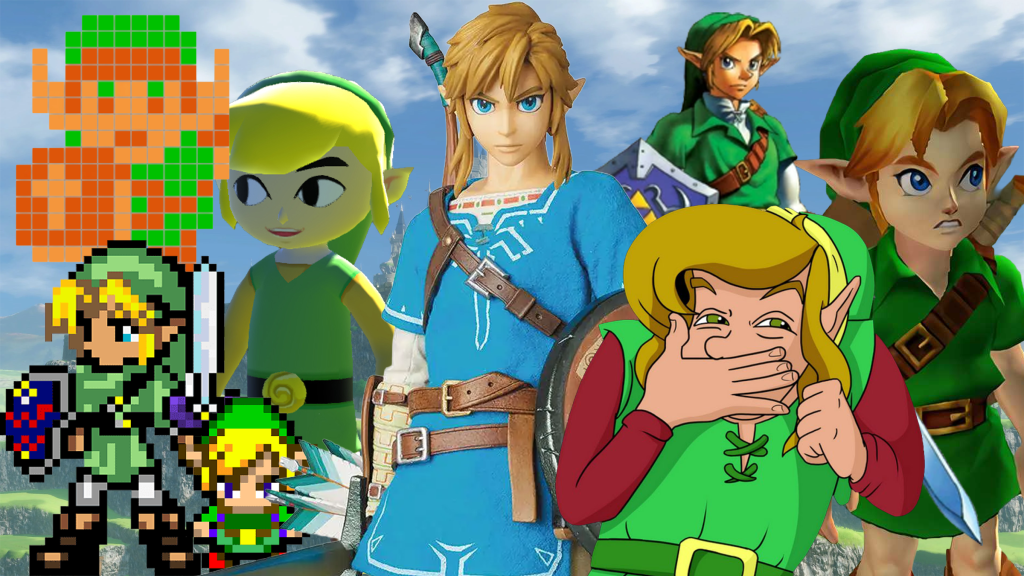
As Link, the first Legend of Zelda introduced players to a dangerous world, where their own skills with a blade are paramount to their survival and eventual victory. That was the trick, though; Link is the player, through and through, stepping into unknown territory and venturing into an exciting and dangerous adventure. He’s defined enough to make sense in the world, but broad enough for any player to place themselves in his adventure. Link is the ultimate stand-in for players, with enough personality to drive the player down a noble path to drive the plot forward without turning Link himself into the main focus. He’s rarely the one who actually gets an arc in the game, outside of a basic story where players get to experience their full potential as the hero of their own fantasy world. The first Legend of Zelda was the perfect showcase of this approach, with little in the way of plot and plenty of adventure and action.
Countless games released in the years since have taken the formula and refined it or enhanced it with their own unique personality, but Link himself has remained a perfectly adaptable figure, someone any player can embody and imagine themselves as. That was the Link of the first game, and that was the Link of the most recent. As an avatar of the gamer, there’s never been a more effective hero for players to become, and all that was laid out in the first game. Shigeru Miyamoto and the rest of his team’s intention was to craft an adventure game that reflected being a boy venturing into the wilds to save the day, and he accomplished it. In doing so, The Legend of Zelda got the perfect blank avatar for players to embrace, and he remains just as effective now as he did forty years ago when he debuted.
Most Viewed
-
Image Courtesy of A-1 Pictures -
Image via HarperCollins -

Image Courtesy of Big Finish