Roguelikes once started as a niche genre despite having existed since Rogue’s release in 1980, but over the years, the genre has become one of the most popular and prevalent. Titles like Hades 2 and Slay the Spire dominate discussions. Open any storefront, and you will find hundreds of games promising procedural generation, endless replayability, and great difficulty. Many of them are excellent. Some are visually stunning. Others add clever twists to the formula. And much of this success comes from a title that was released over a decade ago.
Videos by ComicBook.com
FTL: Faster Than Light remains one of the best roguelike games ever made. Its premise is simple but finely-tuned, creating a core gameplay loop that is challenging, addictive, and rewarding. Yet time has passed it by, with many players having forgotten it in favor of newer games in the genre. FTL is a game any fan of the genre should have played, and the good news is that it still holds up today for those who somehow missed it.
Why FTL: Faster Than Light Works So Well
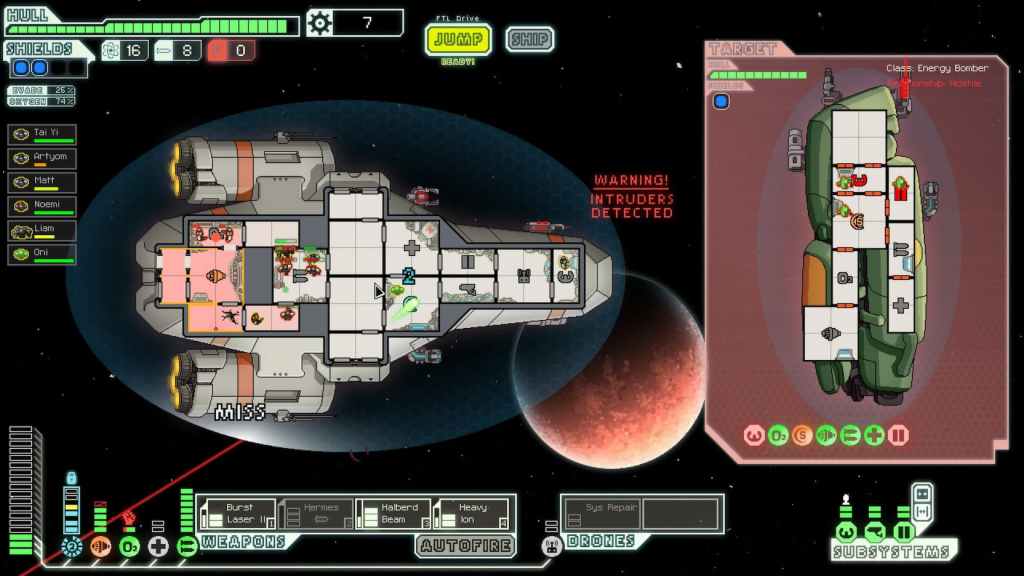
FTL: Faster Than Light is a brilliant game because of how it creates tension through simple mechanics. The core premise is that players must navigate a spaceship while jumping from system to system across a hostile galaxy. This sets the groundwork for many roguelike games’ structures of going from one encounter to the next. Every decision on your journey could spell life or death, determine whether you have a deadly encounter, or even recruit new crew members.

Decisions matter outside of this as well: where to route power, which crew member to send into a burning room, and whether to risk a fight or flee. What makes these choices compelling is how clearly the game communicates consequences. Systems fail visibly. Crew members panic. Oxygen drains. Everything is so visually realized despite the simple graphics that when a run ends, it almost always feels earned, either through a risky gamble or a slow accumulation of small mistakes.
I still remember my first successful run. It took dozens of failed attempts before everything aligned. When it finally happened, it invoked genuine emotions in me. That emotional response comes from how invested they became in my ship and crew. Losing a member hurts, and saving them feels meaningful. It felt similar to my Nuzlocke runs in Pokemon where I felt connected to every member of my team.
In this way, FTL: Faster Than Light leans into challenge while respecting players’ intelligence. Tutorials are minimal. Discovery happens organically. New ships, events, and strategies reveal themselves over time, encouraging experimentation. It delivers a sense of mastery that is one of the reasons the game remains compelling long after the first few hours.
FTL Boosted The Roguelike Genre To Light Speed
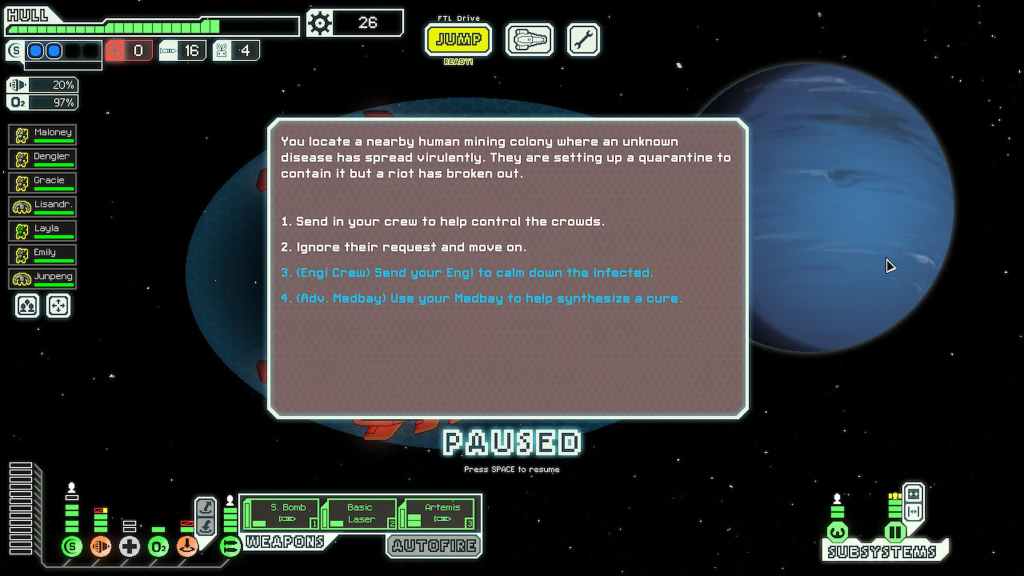
The influence of FTL: Faster Than Light on roguelikes is difficult to overstate. Many modern games borrow directly from their structure. Procedural runs are broken into random nodes. Meaningful resource management. Events that force narrative-flavored decisions with mechanical consequences. These ideas have become foundational across the genre.
More importantly, FTL demonstrated that roguelikes do not need constant action to be intense. The game pauses frequently. Players have time to think. Yet the tension never fades. It perfectly balances planning and the pressure when a plan is put into action. This has inspired countless strategy-focused roguelikes that prioritize decision-making over reflexes. Even outside traditional roguelikes, its influence appears in games that blend narrative choice with systemic gameplay through the idea that a run can tell a story through mechanics rather than scripted dialogue.
Newer roguelikes often add progression systems, meta currencies, and elaborate visuals. Many of them are excellent. But at their core, they still chase the same feeling FTL delivered early on. The sense that every run is a self-contained journey defined by player choices. For this reason, there can be little doubt of how impactful FTL was on the genre and still is today.
It Was Ahead Of Its Time

Part of why FTL: Faster Than Light has faded into the background is its age. It was never flashy, and this is more true today. It has a simple interface, and its visuals are functional but nothing special. With so many roguelikes offering striking styles and unique aesthetics, it’s easy to overlook FTL’s simple pixel art. It instead offers an understated appeal that opens itself up to those who give it a chance.
That understatement is also why it holds up so well. The design does not rely on trends, the mechanics are clean, the feedback is clear, and the challenge remains fair but unforgiving. Playing it today feels no different than it did years ago, which is rare in a genre that evolves so quickly. In a way, its simple graphics have allowed it to remain timeless as opposed to something that uses the latest style.
There is also value in its restraint. FTL does not overwhelm players with endless unlocks or permanent upgrades. Progress comes primarily from knowledge and skill. Each new strategy learned feels earned and more rewarding because of it. This design philosophy gives the game longevity that many modern roguelikes struggle to achieve.
In a crowded genre, it is easy to forget older games that laid the groundwork. But revisiting FTL: Faster Than Light makes its importance immediately obvious. It remains deeply engaging, mechanically sound, and easy to understand. Flashier roguelikes may come and go, but few match its balance of tension, clarity, and replayability. Even now, after hundreds of runs, I still get the urge to start just one more jump through the galaxy.
What do you think? Leave a comment below and join the conversation now in the ComicBook Forum!
Most Viewed
-

Image courtesy of Warner Bros. Pictures -

image courtesy of Studio Ghibli -

Image courtesy of Marvel Studios