Survival games have a rhythm that players know well by now. You wake up with nothing, scrape together basic tools, build a shelter, and slowly carve stability out of nothing. It is a tried and true system that continues to be used because it works. RPGs, by contrast, focus on growth and that steady climb from obscurity to power. When those two genres merge, the result can either feel bloated or brilliantly layered.
Videos by ComicBook.com
Windrose is firmly aiming for the latter. This open-world pirate RPG makes it clear from the outset that it is just as much a survival experience as it is a character-driven progression one. Crafting, gathering, and base building are ever-present, but so are talent trees, gear rarity, and meaningful combat mechanics. After spending time with a preview build provided by Windrose Crew, it is evident that Windrose commits fully to both sides of its identity, wrapping them in a pirate fantasy defined as much by ocean travel as by the island you wake up stranded on.
A Survival RPG That Refuses to Compromise
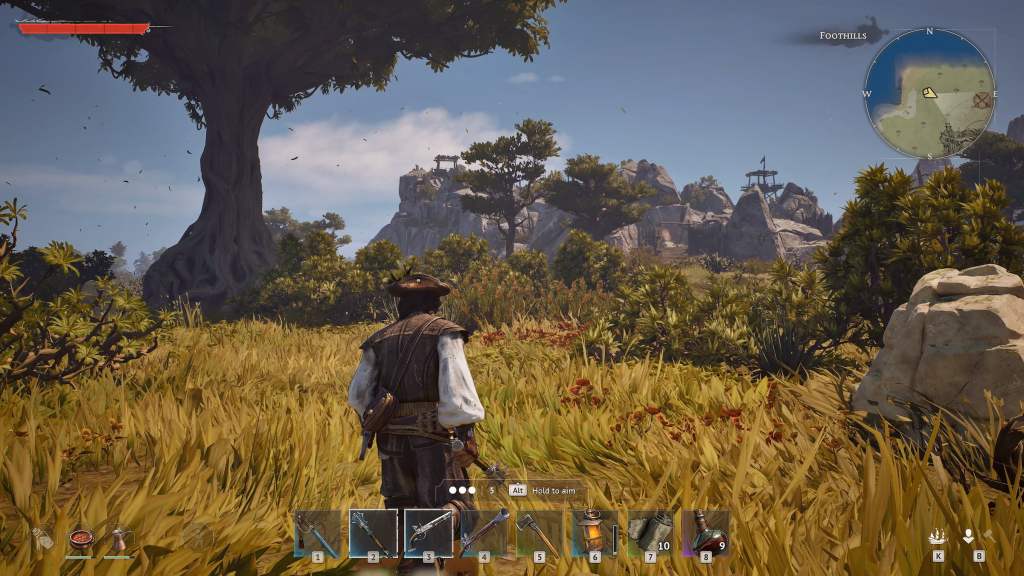
Windrose does not treat survival and RPG mechanics as separate lanes that occasionally intersect. Instead, it fully commits to both, ensuring that players constantly engage with crafting systems and character progression in tandem for the biggest bang. From the earliest moments, you’ll be gathering materials, constructing workbenches, and upgrading your homestead’s overall tech level in traditional survival game fashion. Better tools unlock better resources, which in turn open more advanced crafting options and gear tiers. The structure is familiar to anyone who has played a survival game in the last decade, but it is implemented cleanly and with clear progression pacing.
At the same time, Windrose layers in a substantial RPG framework that meaningfully shapes your pirate captain over time. In Windrose, you gain experience by exploring and completing quests to level up, and invest points into a talent system that offers noticeable power increases rather than minor statistical bumps. There are also several base stats to take note of, all of which provide significant power to your character in various ways.
For example, investing in the Mastery stat boosts your base hit chance. There are enough talents present to encourage actual builds, which is something many survival games never truly embrace. Gear rarity further reinforces that identity, signaling that loot has hierarchy and value beyond basic crafting materials. This ensures that character growth feels deliberate rather than incidental.
Because these systems are deeply intertwined, neither feels secondary. Your survival efforts directly fuel your RPG progression, while your talents and gear make exploring and combat more efficient. The result is a cohesive gameplay loop where building your base and building your character feel equally important. Windrose is not trying to soften either side of its design to appeal to a broader audience. It is confidently targeting players who want both, which is actually pretty cool and not at all common in the genre.
PVE Combat With Depth and Risk

Unlike many modern survival titles that lean heavily into PvP as a focal point, Windrose places its emphasis firmly on PVE combat. From the earliest hours, you are fighting hostile wildlife and rival pirates in encounters that are more mechanically involved than expected. At its core, combat revolves around health and a guard system represented by shield icons that function as a secondary stamina bar. When a target’s guard stamina is depleted, they become vulnerable and cannot defend themselves or fight back. This mechanic applies equally to you and your enemies, creating a balanced but dangerous combat loop.
Guarding is one of your primary defensive tools, and it requires careful management. Blocking attacks drains your guard stamina, and if that shield meter breaks completely, you are stunned and exposed. However, timing your guard right before an enemy strike connects triggers a parry, which rapidly depletes their guard stamina instead. This creates rewarding moments where patience and precision allow you to flip the momentum of a fight. It become specically powerful and important when you begin facing enemies with combo attacks, significantly rewarding you with openings when you can parry them all. Early on, this system may feel forgiving, but as enemies grow tougher, mastering it becomes increasingly important.
Dodging serves as your second defensive option and is governed by a traditional stamina bar that controls most physical actions. Attacking, sprinting, and dodging all consume stamina, and running out at the wrong moment can be disastrous. It is surprisingly easy to die in the early game because mismanaging stamina or overextending in combat can quickly snowball into failure, akin to something you’d find in a FromSoftware game. This layered stamina system is unusual for a survival RPG, where combat often feels secondary to crafting and exploration. Windrose’s decision to give combat this level of mechanical weight adds tension and makes every encounter feel meaningful rather than disposable.
Crafting, Progression, and the Survival Loop

The survival backbone of Windrose is rooted in a recognizable but satisfying progression cycle. You begin with limited tools and gradually expand your capabilities by gathering materials and unlocking new crafting recipes. Workstations allow you to refine raw resources into more advanced components, which then open the door to stronger equipment and structures. Each new tier of gear directly impacts what you can harvest and where you can explore. This steady climb up the tech ladder reinforces a tangible sense of growth.
Tools such as pickaxes and hatchets are standard and not cosmetic upgrades, but essential gates to progression. Without improved tools, certain resources remain out of reach or difficult to obtain, encouraging investment in crafting. Enemy loot supplements this system, occasionally rewarding you with rare or higher-value items that may accelerate progression. The rarity system attached to gear further enhances the feeling that said progression is layered rather than linear.
What strengthens this loop is how it intersects with your RPG talents. Investing in the right skills can improve efficiency and combat effectiveness, which in turn makes survival tasks less punishing as you can simply deal with more, bigger threats. As your character grows stronger, previously dangerous areas become more manageable in traditional RPG fashion, encouraging further exploration. This interconnected design ensures that no system feels isolated. Every improvement feeds into your ability to survive longer and push farther.
Sailing the Open Seas and Exploring the Unknown

If there is one area where Windrose clearly distinguishes itself, it is naval exploration. You do not begin with a ship, which reinforces the vulnerability of your starting position, but by following the main quest, you gain access to a basic vessel within the first couple of hours, which you can openly summon at any time. That milestone dramatically expands the game’s scope and shifts the experience from island survival to maritime adventure. Sailing becomes central to exploration rather than a novelty mechanic. The ocean is not background scenery but the connective tissue of the world.
The open world is largely composed of islands separated by vast stretches of sea, and traveling between them takes time, especially with your early ship. Planning voyages becomes important, as you must consider supplies, threats, and destinations before setting sail. Islands feature points of interest marked by question marks on the map, offering light guidance without completely removing discovery. In many survival games, such markers might feel intrusive, but here they serve a practical function due to the scale of the environment. The world is largely procedurally generated, ensuring that no two runs feel identical.

Because layouts and resource placements can vary, exploration maintains a sense of unpredictability. One island may be rich in materials but heavily defended by hostile pirates, on sea and on land, while another may offer safer conditions but fewer rewards. Sailing between these landmasses reinforces the pirate fantasy in a way few survival games attempt. You are not simply expanding outward from a central base but charting routes across a shifting ocean. That scale and structure give Windrose a distinct identity within the genre.
Lastly, and this part is really important to mention in a survival game, Windrose does not make controlling or using your ship a chore. It is actively encouraged to use your ship whenever possible, and the game offers little to no friction to doing so in any meaningful way. This is a massive plus, because it is commonplace for survival games to put major, theme-defining aspects behind major roadblocks. Windrose chiefly does away with this in favor of the game’s defining fantasy: being a sea-sailing pirate
From Shipwrecked Captain to Pirate Commander

Windrose frames its journey with a simple but effective narrative hook. You begin as a notable pirate captain who is ambushed and defeated by the infamous Blackbeard pirates. Outmatched and overwhelmed, you are left shipwrecked on an uncharted island with nothing but the will to survive. This opening functions as both a story catalyst and a mechanical reset, stripping you of power and forcing you to rebuild from scratch. It provides clear motivation without overwhelming the sandbox structure.
As you progress, systems such as the worker mechanic reinforce the fantasy of rising back to prominence. Workers can be assigned to handle tasks at your base, such as manning workstations, which helps reduce repetitive micromanagement. As your ship grows in size and capability, you can also assign crew members to assist aboard it, emphasizing leadership over lone survival. This gradual shift from doing everything yourself to commanding others mirrors your climb back to status. It is a subtle but effective way to express progression beyond raw stats. Notably, Windrose offers cooperative play. Up to four players can participate in this rise to glory story, sailing the high seas with a crew aiming for the top.
The simplicity of the narrative allows gameplay to remain the primary focus. Every structure built and every island conquered feels like a step toward reclaiming your reputation. Windrose does not attempt to drown players in exposition, instead letting the systems tell the story of your resurgence. Based on this preview build, the game understands the pirate fantasy it is chasing and builds its mechanics around that vision, all without making it hard to experience.
If its upcoming early access and/or full release continues this trend, Windrose could stand out as a survival RPG that truly earns its place on the high seas. There really aren’t many games like Windrose out there, so let’s all hope it does stay squarely on course.
What do you think? Leave a comment below and join the conversation now in the ComicBook Forum!
Most Viewed
-

Image Courtesy of Crunchyroll -

Image courtesy of Sony -

Image Courtesy of A-1 Pictures