Open-world games have made an undisputable dent in the medium. At their best, they can put players in a world and give them freedom in ways other genres can’t quite compete with. To some, they are the truest expression of video games since so much control is given to the player.
Videos by ComicBook.com
So many of them have shaped the genre and pushed it forward, so here’s an unranked list of the 10 most influential ones.
10) Red Dead Redemption 2

It’s easy to see why some consider Red Dead Redemption 2‘s world to be the best in the entire medium. This prequel’s landscape is deep in such a way where a vast majority of players won’t see a vast majority of its intricacies. Obscure findings like the cave giant and robot are littered all over its map and make it feel more alive when compared to other video games. Some events repeat over the course of the playthrough — many will likely have the chance to ride a snake bite victim into town more than once — but these don’t overwrite the scores of small incidents or details that make each run special. Players can also talk to every character in the game, which, again, offers a level of immersiveness other games can’t quite match.
Rockstar Games is just about the only team with the budget and team size to make these kinds of hyper-detailed open-world games, a quality that makes its titles even more unique and means any sort of direct competition would likely be impossible. A lot of these details were made through overworking developers, though, as Rockstar has been accused of enforcing crunch, particularly during Red Dead Redemption 2‘s development. Even though it was coded partially in blood, no team makes open-world games quite like Rockstar.
9) Far Cry 3
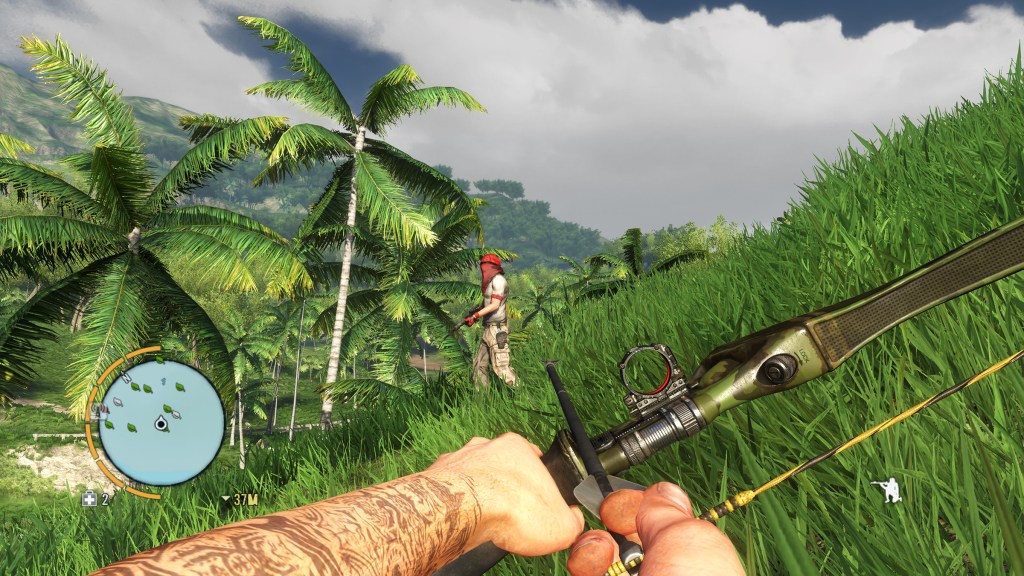
Far Cry 3, in some ways, damned Ubisoft since its success cemented a blueprint almost all of its games followed after. Such predictability led to stagnation, which seems to be at the core of the company’s vast problems in the modern day. However, that doesn’t undo how well Far Cry 3‘s formula worked at the time.
Far Cry 3 was not only more accessible than its hardcore predecessor, but its accessibility allowed it to be more digestible in ways that made its open world more of a playground with a checklist. Players can hunt wildlife to get better gear, which opens up new upgrades and animals to hunt. Climbing radio towers to unfog the map was a novel way to conquer and reveal the space. The numerous enemy encampments empower players to use their gear in all sorts of ways and mean combat wasn’t strictly limited to main missions. Other studios borrowed many of these elements and Ubisoft itself drove them into the ground, which means these once-fresh ides became rote and predictable. Still, Far Cry 3‘s ability to make open worlds into more checklist-driven experiences did at least evolve the genre.
8) The Legend of Zelda: Breath of the Wild

But if there ever was a game that was a direct repudiation of Far Cry 3‘s legacy, it would be The Legend of Zelda: Breath of the Wild. Breath of the Wild does away with checklists and overbearing objective markers. It does not pull players by the nose to find its most intricate items. It lets the players stumble upon them, which is one of its many great achievements.
Breath of the Wild is designed in such a way to get players to find puzzles and gear just through careful environmental design. Director Hidemaro Fujibayashi spoke about this at CEDEC 2017 (as translated by developer Matt Walker) and explained how Nintendo used the “Triangle Rule” to get players to explore. Triangular mountains and rocks obscure sections of the map but slowly unveil what is behind them as players climb. This gets users to move laterally around the earthy structure and the process repeats. Guiding players by the eye and letting them actually poke around is something that’s difficult to do, yet it can pay dividends when done correctly. It’s an added bonus that Breath of the Wild‘s world is highly reactive and gets players to think about how its various elements might work if mixed together, something that greatly benefits its multi-solution puzzles and is further built on in its sequel.
Other games like Immortals Fenyx Rising, Lil Gator Game, A Short Hike, Ghost of Yotei, Genshin Impact, Sable, and more have taken in various features from Nintendo’s 2017 hit to varying degrees of success. But none have quite pulled off what Nintendo achieved, which speaks to how expertly Breath of the Wild was designed.
7) Elden Ring

Elden Ring is also one of the games to take inspiration from Breath of the Wild (something director Hidetaka Miyazaki openly admitted) and is one of the most successful ones to do so. At its core, it is clear FromSoftware understood the appeal of not holding the player’s hand and instead designing intriguing spaces that naturally grab their attention. Elden Ring is absolutely filled with odd structures or weird creatures that naturally invite wanderers over to check them out. This can often lead to a full dungeon, boss fight, piece of loot, or devious trap.
Not knowing what will lie at the end of the path is part of what makes Elden Ring so special. It’s likely future From games will pull from this template, as it not only gets at the mystery that’s central to Soulslikes, but it also is an evolution of the liberatory nature that’s at the core of the open-world genre.
6) Metal Gear Solid 5: The Phantom Pain

Metal Gear Solid 5: The Phantom Pain remains one of the best stealth games all time, and it’s partly because of how well the series pivoted into the open-world genre. The game gives players the ability to tackle most objectives in all sorts of ways, an approach that helps capitalize on the freedom that is often crucial to the best stealth games. This means players can use cardboard boxes and decoys to sneak around guards, snipe them from afar used a silenced tranquilizer rifle, or summon airstrikes to violently clear the field, but these three approaches don’t even get close to encompassing the sheer volume of choices players have a their disposal. Some missions even adapt to the player’s actions or failures, making the game even more unpredictable.
The sandbox nature has inspired games like the most recent Sniper Elite games, but they demonstrate a linearity that goes against the title they are so clearly emulating (it also doesn’t help that the Sniper Elite series has clumsy controls). Metal Gear Solid 5‘s ability to give players more tools and a wider playground to use them in shows how well Kojima Productions understood the design shifts that need to happen when changing the series’ structure; wide levels with a tiny amount of gear and less reactivity would feel wrong. It’s a shame the team couldn’t directly iterate on this formula, but at least it more or less nailed it the first time around.
5) Spider-Man 2

Spider-Man 2 finally fulfilled the fantasy of being able to swing around like Spider-Man. Other Spider-Man games before that obviously had web swinging, but it was always limited to various degrees. This 2004 movie tie-in lets players freely swing around New York City in a way that didn’t feel as restricted, and that liberation is key to the Spidey fantasy.
While many of the other parts of the game were merely fine and haven’t aged well, nailing the traversal gave it its staying power. Even Insomniac Games community director James Stevenson said Spider-Man 2 “was the fantasy fulfillment at the time, where you were able to swing around and feel like a superhero” and “got that really right.” He even spoke to the importance of webs in Spider-Man 2 actually attaching to buildings. Spider-Man 2, because of its open-world swinging, helped lay the foundation for better comic book-based games from Batman: Arkham Asylum and Marvel’s Spider-Man, which Insomniac was able to take advantage of for its three modern Spider-Man titles and their more complex swinging tech.
4) Burnout Paradise
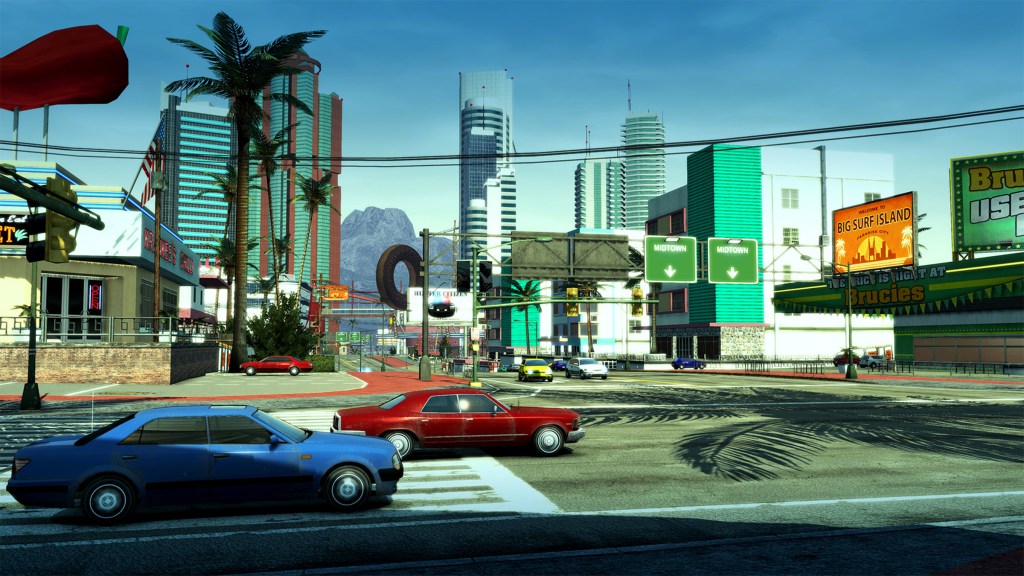
Even with some imitators, there hasn’t been a racing game quite like Burnout Paradise. This seventh Burnout installment dropped the series into an open map and the shift felt so natural. Being able to find new cars and collectibles in the open world is a solid way to seamlessly change up the pace from the more structured events that can be started at most intersections. It marries its aggressive, adrenaline-fueled racing with the more freeform elements of the open-world genre and doesn’t feel like a gimmick; it’s a natural fusion.
Wreckreation and Dangerous Driving were spiritual successors that came from some of the people behind Paradise, and Criterion Games went on to develop a few Need for Speed titles that also tried to follow up on the 2008 racer. But none of them were able to pull it all together like Paradise, as they were often missing Paradise‘s polish, style, feel, or cohesion.
3) The Elder Scrolls 5: Skyrim

The Elder Scrolls games have influenced the genre quite a bit, and while The Elder Scrolls 3: Morrowind‘s open nature shouldn’t be downplayed, The Elder Scrolls 5: Skyrim likely had the broadest impact. This 2011 fantasy RPG managed to give players more control over their loadout in a massive world that begged to be picked through. And, as a few games on this list show, a big world and big toolbox go hand in hand together in letting players feel truly free.
The openness has led to Skyrim having a staggering amount of mods and multiple re-releases that have continually remixed the base game and further given players new ways to experience Bethesda Game Studios’ most iconic RPG. Skyrim can be played on the go on Switch 2, in VR, with modded companions you can speak to, and in more ways that would be too exhaustive to list. It’s a flexible game with a flexible world.
2) Assassin’s Creed

Assassin’s Creed has aged poorly in many aspects. The missions follow a boring routine. The controls can be infuriating and are almost always too imprecise. Protagonist Altaïr Ibn-La’Ahad can’t swim. But this debut installment set the groundwork for one of AAA gaming’s most lucrative modern franchises.
Being able to climb on just about anything was rather revelatory since it opened up how players could traverse spaces. Getting around was less strict and meant the more liberating tenets of the genre extended to platforming. It was also a technical showpiece for the PS3 and Xbox 360 with its lavish recreations of notable cities like Damascus and Jerusalem, thus showing evidence how that generation’s power could help expand the genre.
The first Assassin’s Creed is clunky in so many aspects, but its impact can’t be denied. Assassin’s Creed became somewhat of a standard for describing a certain type of open-world third-person action game, like Middle-earth: Shadow of Mordor, Batman: Arkham City, and Ghost of Tsushima, which illustrates what kind of impact it had.
1) Grand Theft Auto 3

There’s a decent case to be made that Grand Theft Auto 3 is one of the most influential games of all time regardless of genre. It set the standard for open-world games by giving players a level of freedom that had been previously unattainable. Being able to gun down police in order to keep a high Wanted Level for as long as possible or hijack a fire engine and put out fires may seem quaint now, but it put the player in control of their actions in a city that felt more alive. Some of magic was the result of some impressive technical wizardry that shows how far Rockstar Games was ahead of the curve.
Grand Theft Auto: Vice City and Grand Theft Auto: San Andreas took this formula and made some welcome tweaks around the edges. Grand Theft Auto 4 and Grand Theft Auto 5 also leveraged the following generation to make further enhancements by building out the world even more and telling more involved stories. All four of these sequels are bigger and, often, better, but the impact of this 2001 classic is not something to scoff at.
What do you think? Leave a comment below and join the conversation now in the ComicBook Forum!