Pro controllers are a dime a dozen these days across so many platforms, but few brands stand out from the crowd. SCUF Gaming is certainly one of them. Earlier this year, SCUF released their new controller, the Valor Pro, to acclaim, but the downside was that it was wired. That’s fine for pro play, but for more casual gamers, even competitive ones, a wireless version was one of the biggest requests. Now it’s finally here — but there’s more to it than just a wireless function.
Videos by ComicBook.com
Rating: 4.5/5
| PROS | CONS |
| TMR sticks are major improvement over the wired’s Hall Effect | It’s pricey at near $200 and not for the average consumer |
| Tri-mode connectivity is great for gamers with multiple devices | Extremely weighty and can be tiresome after long periods of gaming |
| Companion app allows for unparalleled customization and mapping | Back paddles can be awkward |
| Battery life is surprisingly strong |
What’s New With the Valor Pro Wireless?
Considering this is a new version of the Valor Pro, there’s some new and some returning features. Of course, the adjustable instant triggers, customizable back paddles, and audio tuning controls all return from the wired version, but the most important new aspects of this controller that SCUF is pushing are the TMR Thumbsticks and Tri-Mode Connectivity. Gone are the Hall effect thumbsticks from the Valor Pro; they’ve been replaced with “endurance” TMR sticks. I very much welcome this change.
It feels like Hall effect sticks only started to break through the market recently and are already being replaced by the next evolution in magnetics, but TMR sticks, though more expensive and less ubiquitous in the industry right now, are preferred for fast-paced shooters and fighting games, which require quick reactions and intense precision. SCUF’s Valor Pro Wireless meets expectations on this front and can improve any casual player’s accuracy, not to mention that if you enjoy lower deadzones, you’d want something more like TMR over OEM and even Hall effect, to an extent. You just might find it difficult returning to a standard potentiometer stick.
This isn’t to say this is a massive upgrade over the Hall effect thumbsticks that the wired version has; if you’re well aware of the difference in technology and if you’re not looking for that difference, you may not notice anything new at all. However, one thing you certainly will notice is the change in battery life. I charged my controller once and was able to use it for an entire week — playing a few hours each night — without needing another charge. For someone who’s on the go a lot, this is a huge benefit and make a difference in certain situations.
This Is a Perfect Controller to “Play Your Way”
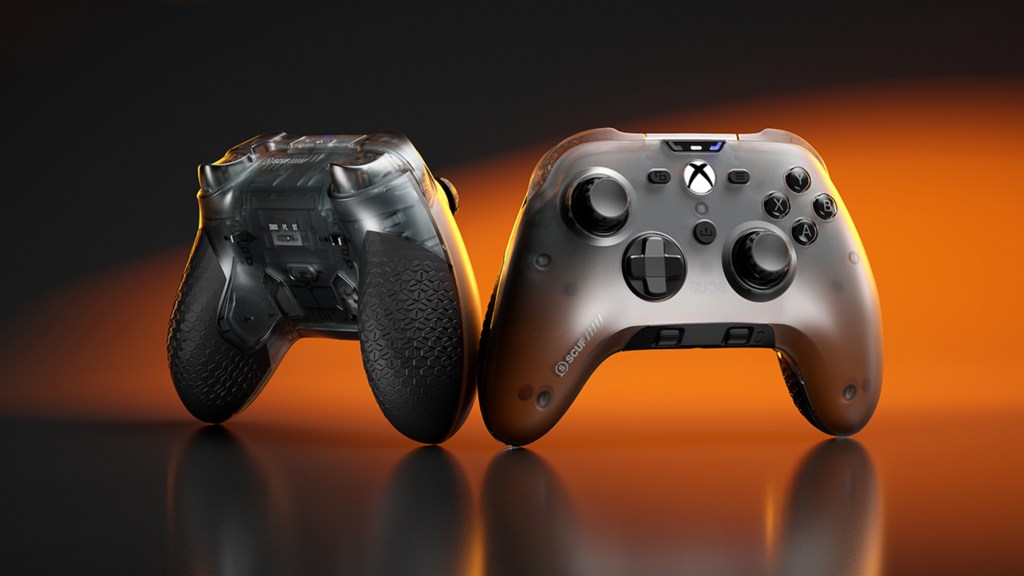
Conceptually, a controller with rear paddles and buttons should have those be easily accessible and not require too much movement to press. Otherwise there would be little separating the controller from the ones that come with the systems themselves. The Valor Pro Wireless is hit and miss in this regard, which will largely depend on the size of your hands. Mine are average, but I’ve been fine with virtually every Xbox controller except for The Duke when I was a kid. I’m mostly OK with SCUF’s controller, but I find myself occasionally switching my finger positions in order to accommodate rear paddles if I’m playing a shooter like Battlefield or Fortnite, mostly due to placement and sturdiness of the paddles, which could be more flushed.
Although I grew up on Halo for competitive play (on console, that is), using left trigger to ADS just feels more natural, so as always, the adjustable instant triggers are my favorite feature in addition to the back paddles. I have the left trigger set to normal to allow for the full range of the trigger, while the right trigger is set to instant for quicker shooting. Being able to mix and match like that is terrific, whether that is with the wired or wireless versions of the Valor Pro.
This level of customization factors into SCUF’s ‘play your way’ mentality with this controller, particularly with the companion app that is accessible even directly on Xbox. It allows you to tweak response curves, remap buttons, and so much more. It is perhaps the most impressive factor going into this wireless version of the Valor Pro. Without it, it would feel more like a basic upgrade.
Now this all extends to the Tri-Mode Connectivity as well, in which users can have the controller paired with an Xbox and PC simultaneously, being able to switch between them near instantaneously. It’s especially useful for people who have their consoles connected to a monitor alongside their PC. The one thing to keep in mind is that the dongle would need to be moved from one device to the other, or just pair via bluetooth. On top of that, there’s the option to have multiple profiles on the controller to allow for multiple users without having to re-map the buttons.
You Have to Consider Its Weight and Price Before Buying

There’s a lot to like about SCUF’s Valor Pro Wireless, but some things to keep in mind: it’s hefty and it’s pricey. You can’t get around that. Having an extended battery life, wireless connectivity, and other features and elements make it one of the heaviest controllers I’ve ever used. It’s not necessarily a bad thing, as lighter controllers often come with a sacrifice in quality. You can feel the constitution of all of those elements when you’re holding the controller, but you’ll always notice its weightiness whenever you switch between this controller and whatever else you have.
And of course, there’s the price. At a whopping $189.99 — nearly $200 — consumers need to consider if the wireless feature, TMR thumbsticks, and tri-mode connectivity are worth the additional cost compared to the Valor Pro wired version, which itself is marked upgrade on most of the competition, particularly the first-party Elite series. Overall, in my opinion, it’d depend on the types of games that you play; if you’re a competitive gamer who doesn’t play up-close to a monitor, this is a terrific option, but otherwise it’s best to consider the wired controller if you’re OK with its features.
Most Viewed
-

Image courtesy of Wizards of the Coast -

Courtesy of Bones Film -

Image Courtesy of Marvel Comics