While Christopher Nolan’s movies can be infamously complicated, it has been 16 years since he left viewers with his most debatable denouement to date. The cult sci-fi flop Southland Tales proves that it isn’t easy to balance cerebral philosophy with straightforward action. For every successful sci-fi movie or show that asks big existential questions of its audience, there are underrated failures like HBO’s two-season series Raised By Wolves, which never won over a big enough audience to justify its budget.
Videos by ComicBook.com
This makes the career of Christopher Nolan all the more impressive. Since his 1998 debut, the paranoid psychological thriller Following, Nolan has balanced crowd-pleasing blockbuster fare with thoughtful existential musings. 2006’s The Prestige wraps questions of authenticity, performance, and the self in a stellar thriller about duelling magicians, while the Dark Knight trilogy wraps up its commentary on state surveillance in fast-paced action movies centred around Christian Bale’s seminal take on Batman. Of course, Nolan took his blockbuster existentialism to new heights with 2010’s Inception.
Inception’s Ending Is Intentionally Left Ambiguous

Nolan’s first release after the staggering critical and commercial success of 2008’s The Dark Knight, Inception had a lot riding on it. With a starry cast that included Leonardo DiCaprio, Joseph Gordon-Levitt, Elliot Page, Michael Caine, Cillian Murphy, and Tom Hardy, the sci-fi action movie centred on a team of unconventional thieves. Using complex technology, this group steals ideas by invading the subconscious of their victims and taking the ideas there.
DiCaprio’s Dom Cobb is a professional “Extractor” who makes his living lifting ideas from the unsuspecting minds of the rich and powerful and selling them off, but he is tasked with a different job in Inception. In exchange for the clearing of his criminal record, Cobb must instead “Incept” an idea into the mind of his victim, a task that requires him to assemble a crack team of fellow extractors to assist him.
Inception’s Ending Is Secretly More Straightforward Than Many Christopher Nolan Movies
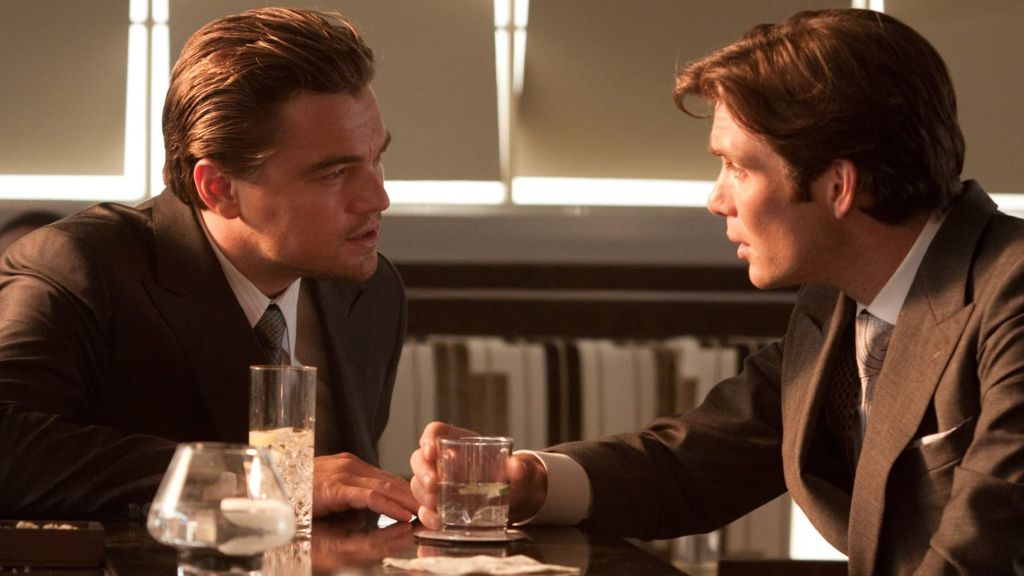
As the main characters of the movies descend from one level of dream consciousness to another, Inception’s story becomes increasingly byzantine and complex. As such, since the movie makes Michael Crichton’s infamously complicated The Terminal Man seem like a children’s story, it is hardly surprising that viewers have debated Inception’s ending for years.
After Cobb’s heist succeeds, he is reunited with his children and seemingly lives happily ever after. However, he then spins his “totem,” an item used by extractors to verify whether they are in a dream or reality. A spinning top that only stops spinning in reality, the totem is the last thing viewers see before Cobb walks away and the screen cuts to black. In terms of his character arc, it is clear that Cobb has learned to value his life with his family more than his work, allowing him to stop caring about whether he is still in a dream reality or not.
However, viewers who are in any way frustrated by this intentionally ambiguous ending might be pleased to discover that Inception’s conclusion isn’t as confusing as it initially seems. Nolan’s movie patiently tracks each in-universe layer of reality, and viewers see the main characters emerge from each one before the ending. Thus, in strict storytelling terms, viewers can be certain that Inception ends with Cobb in reality, not a dream world.
More Movies
-

Courtesy of 20th Century Studios -

Courtesy of Ketchup Entertainment