Everything Disney produces (or at least used to produce, for the most part) tends to be a success because it taps directly into nostalgia. In 2010, the studio decided to release a film under the direction of the iconic Tim Burton, and on paper, it seemed to have every ingredient needed to work: it had a filmmaker with a strong, unmistakable signature, a star-studded cast, 3D technology at its peak, and source material based on a book known all over the world (especially from childhood). It felt like a project that was born ready to become a massive hit. And commercially, that’s exactly what happened, as it crossed the billion-dollar mark at the global box office. The issue is that while audiences showed up, critics (both professional and general viewers) reacted with far more caution, and in some cases, outright frustration.
Videos by ComicBook.com
Sixteen years later, it’s clear that this movie’s legacy is more interesting than the story itself. It’s not remembered as the creative peak of Burton’s career, nor as a perfect adaptation of the original material. What actually keeps it relevant is the domino effect it triggered inside Disney, because it was from this point on that the studio realized live-action adaptations shouldn’t be isolated experiments, but rather a big production trend worth investing in endlessly.
Alice in Wonderland Was the Movie That Established the Live-Action Trend

A major turning point, Alice in Wonderland chose not to directly adapt Lewis Carroll’s book but instead functioned as a kind of continuation. Alice (Mia Wasikowska) is now 19 years old and returns to Wonderland to fulfill a prophecy: defeat the Red Queen (Helena Bonham Carter) and restore balance to the kingdom. Along the way, she reunites with classic figures like the Mad Hatter (Johnny Depp) and the White Queen (Anne Hathaway). But the biggest shift lies in its structure: the nonsensical, absurdist spirit of the original story is reshaped into a traditional hero’s journey, complete with a climactic battle, a giant creature, and a clear heroic destiny. And that’s exactly where the core problem begins.
For many viewers, turning a story famous for its absurdity and illogicality into yet another conventional fantasy adventure was a major misstep. It stripped away much of the book’s essence, which has always been chaotic, episodic, and almost anti-narrative. Even though the film delivers whimsical moments and a visually creative style, the screenplay ultimately organizes everything into a structure that feels safe, familiar, and easy to sell worldwide. Does it work? In terms of box office numbers, obviously yes. Artistically? That depends on who you ask.
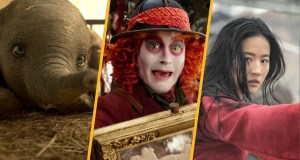
The visuals became one of the most debated aspects. Burton is known for building highly stylized worlds with strong personality and identity. But in Alice in Wonderland, the heavy reliance on CGI somewhat diluted that signature. The production design is ambitious, full of saturated colors and digital creatures, yet many scenes feel overly artificial. After James Cameron’s Avatar, 3D technology was at an all-time high and helped boost the theatrical experience. But it also reinforced the idea that prioritizing visual spectacle over dramatic depth isn’t always the best move. Maybe that wasn’t as obvious back then, but revisit the movie today, and the imbalance sticks out.

At the same time, it’s important to remember that Alice in Wonderland was (and still is) the biggest commercial success of Burton’s career. The film earned over $330 million domestically and reached $1.025 billion worldwide, which was a rare achievement at the time. Just for context, it placed the movie alongside giants like Titanic and The Lord of the Rings: The Return of the King in terms of revenue. Naturally, numbers like that change the conversation inside a studio, especially at Disney. They didn’t just see a hit — they saw a repeatable formula. If a visually grand live-action reimagining of a classic story could generate that level of return, why not do it again? Well, what followed practically answers that question.
In the years after, Disney rolled out an almost endless lineup of live-action remakes: Maleficent, Cinderella, The Jungle Book, Beauty and the Beast, The Lion King, among others. Some were better received than others, but many faced criticisms similar to those aimed at Alice in Wonderland. The strategy was about leaning on nostalgia and brand recognition instead of taking risks on big-budget original properties. However, this is a trend that’s deeply divisive and, at this point, arguably exhausting for a large part of the audience.
How Exactly Alice in Wonderland Showed the Limits of Forcing Live-Action

On one hand, live-action remakes are about introducing timeless stories to new generations using modern technology, often with updated representation and thematic tweaks (after all, times change). On the other hand, there’s a growing sense that the strategy is being pushed too far, with very little room left for new ideas. The most common criticism today isn’t necessarily that these remakes are bad, but that they rarely justify their own existence beyond commercial appeal. So watching a new Disney release can feel like revisiting something you already know, just in a slightly altered version, without the same emotional impact that once made the story special.
And Alice in Wonderland already hinted at this issue. By turning its protagonist into a “chosen one” destined to defeat a monster on a battlefield, the script simplifies what was originally a strange, unpredictable journey of discovery (which is exactly what made the story unique in the first place). It’s a choice clearly designed to create a big climax, an impactful trailer moment, and a clean resolution. This works within blockbuster logic, sure. But it also symbolizes the trade-off between creative risk and safety that has become standard today. The distinctiveness people once associated with Disney films started to shift.

None of this means Alice in Wonderland is a complete disaster, since it has some visually striking moments, strong performances (especially from Depp and Bonham Carter), and enough pacing to keep audiences engaged. Still, it never feels as bold as it could have been. For a director so closely associated with eccentric characters and offbeat universes, this movie feels surprisingly restrained. It’s as if the eccentricity was carefully measured to avoid compromising global accessibility. The sequel, Alice Through the Looking Glass (though Burton was only involved as a producer), only reinforced the more negative perceptions surrounding this aspect.
In the end, it’s kind of ironic, right? Today, plenty of people express fatigue over the constant wave of live-action remakes, but few remember that it all started here. A beloved classic that could have received a standout adaptation instead became the blueprint for a corporate strategy that Disney saw as guaranteed success and leaned into it. And it’s a shame that Burton’s name is attached to what many consider a disappointment. Alice in Wonderland could have had a very different legacy as the bold beginning of a new creative era, but now it’s just mostly associated with a strategy that continues to generate complaints — and one that, at least for now, shows no signs of slowing down.
What do you think? Leave a comment below and join the conversation now in the ComicBook Forum!
Most Viewed
-

Official art by Bastien Lecouffe-Deharme -

A photo of the Retrovolt Arcade taken in 2017, showing several classic arcade cabinets and stools. -
Image Courtesy of Paramount