In 2007, Zack Snyder made a splash in the world with the release of 300, his feature film adaptation of Frank Miller’s comic book series about the Battle of Thermopylae. The movie not only became a box office success but shifted culture as well, as men wanted to reach that same level of Spartan physique while also delivering lines that became memes, which are still quoted today. With the success of 300, Snyder not only cemented his place as a great stylistic filmmaker but also as one who saw the value in bringing comic books to life without any pretension about the material. It was a welcome shift for comic book readers, as one of their own finally had the power to tell these stories. The success of his work led him to take on an even tougher challenge.
Videos by ComicBook.com
Seventeen years ago today, March 6, 2009, Zack Snyder’s Watchmen was released in theaters, taking the iconic comic series from Alan Moore and Dave Gibbons and bringing it to the big screen. For decades, Watchmen had not only rightfully developed a reputation for being one of the greatest (if not THE greatest) comics of all-time, but one that could only exist in your hands and in print. Snyder’s movie, despite a mixed critical reception, proved that this wasn’t the case, while also delivering a movie that controversially changed a major element of the comic. Almost two decades later, though, it’s not even the most distinct change for the film.

Zack Snyder’s Watchmen Proved the Comic Wasn’t Unfilmable
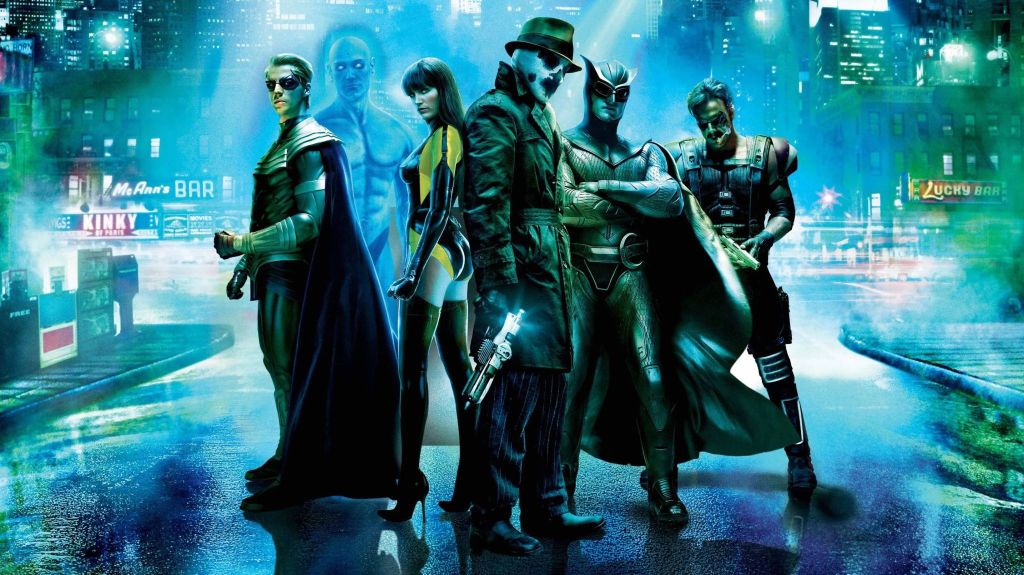
Watchmen has maintained its place as one of the preeminent comic books across the history of the medium ever since it debuted. The popularity of the text meant that there were countless attempts to try and bring it to the big screen, with every endeavor met like Wil E. Coyote hitting a painted tunnel on a rock. Attempts were made in the 1980s with Batman screenwriter Sam Hamm attached to bring it to life, in the ’90s, Terry Gilliam was attached to direct a version of the film, in the 2000s, David Hayter was brought in to adapt it, and later, Darren Aronofsky was hired to direct. In the end, most of these adaptations didn’t happen because of the book’s repuation for being “unfilmable.”
So what gave Watchmen this status? For fans who have read it, and even those who haven’t, it should be seen just by looking at the series on the shelf. Though only twelve total issues, Watchmen is a dense work, with a wide variety of characters, but also texts within texts. The comic not only has its iconic nine-panel pages that are packed with details and lore, but also excerpts from the comic-within-the-comic Tales of the Black Freighter, plus excerpts from in-universe novels with extended prose sections that fill in the backstory of the world and how superheroes actually existing further changed the history of the world.
All of those elements contribute to the big picture of making Watchmen into the iconic work that it is, which doens’t even take into account Watchmen‘s place in conversation with all of the comics of the past that influenced it. As a result, all of this made Watchmen an impossible puzzle to consider for adaptation. What elements do you remove? What do you condense? Which side of the story do you rework into another side so that this 500-page comic can be watched as a film in two-and-a-half hours? How do you make it clear that this series is paying homage to decades of comic history? It was too much for a majority of the filmmakers who tried to make it, but with his film, Snyder confirmed that nothing from the pages of comics was off the table for the big screen. One way he made sure of that was by changing the ending of Watchmen, an element that remains hotly debated seventeen years later.
Watchmen’s Ending Is Still Debated, But Far From Its Most Controversial Change
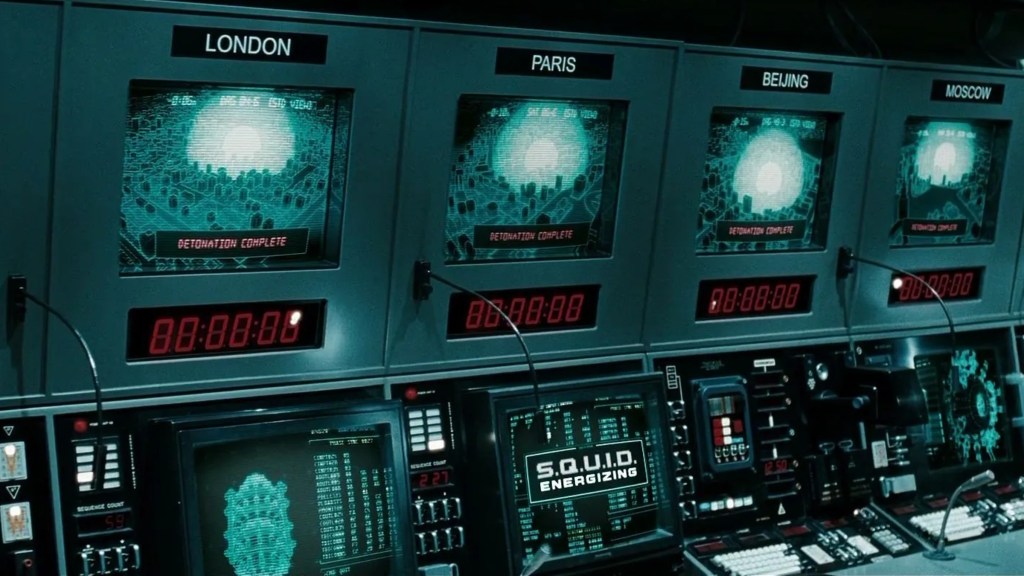
In the pages of Watchmen, a major subplot that occurs from the opening pages is that various scientists and artists have been hired for a mysterious project on an island in the Pacific, later revealed to be the secret plan of Ozymandias to create an alien invader, commonly known as “the squid” to readers. Using this squid that he created, and after killing everyone who knew about its existence, he drops the squid on New York, killing millions and forcing the world to put all of its differences aside in the name of unity in order to prepare for the battle against this alien enemy that has attacked. As Ozymandias notes after this occurs, his plan saves the world. By giving the world an enemy they can rally around to battle, they stop fighting each other (in theory).
On the screen in Zack Snyder’s Watchmen, there’s not a squid to be seen (though a cheeky reference is made). Instead, the film changes it so that Ozymandias tricks the world into believing that Doctor Manhattan himself has attacked not only New York, but major cities around the globe. It gets the same point across in the film, but was considered controversial at the time of release (and remains that way in some circles) because it was one of the few moments where Snyder’s commitment to the fidelity of the comic was thrown out the window.
In truth, the change to the ending of the Watchmen movie is far from its most egregious difference from the initial comics themselves. Yes, the shift in the conclusion marks a pretty drastic change, but Snyder’s distinct technique in focusing on the few action sequences from the comic and putting them in his traditional stylistic lens is the biggest shift in tone, and the change that should generate the most discussion to this day with regard to unnecessary adjustments.
Watchmen, the comic, has only so many action moments, many of which are over just as quickly as they begin. This is due to the comic itself treating superheroes with realism, meaning violent confrontations are awkward, bloody, and fast, not skillful displays of prowess that put the heroes on a pedestal. With the film, Snyder’s action flair is on full display, with brazen coolness taking the front seat for all of these moments, all in service of making the characters take on a larger-than-life stature, eschewing the realism that the comic itself wanted to maintain.
One of the greatest examples of this is the sequence where Nite Owl and Silk Spectre break Rorschach out of prison. In the comic, this sequence is four pages long, with one panel where the two heroes fight escaped inmates while searching for Rorschach. Snyder’s film, on the otherhand, begins with Silk Spectre rolling out of the still-moving Owl airship, landing in slow motion in a classic “superhero landing” as Deadpool would roast years later. From there, the sequence gets brutal, with the two heroes distributing concussions like candy, kicking faces, and flipping around a hall to beat down the prisoners. It’s a classic example of hitting a Hollywood action beat, satisfying the audience so you can slow down a little bit in its wake, but its place in the film goes against the entire ethos of the comic it’s based on.
In the end, Zack Snyder’s Watchmen maintains a distinct place in the history of comic book movies. The film, even being made, marked a line in the sand that anything was possible, even the most densely plotted comics could be made into satisfying movies. Visual effects had finally advanced to make any drawing a storyboard. It also proved that Snyder himself was a reliable author for bringing these things to life, as Warner Bros. handed him the keys to the DCEU not long after. As we approach the twentieth anniversary of the film’s release, though, maybe it’s time the change to the ending stops being the primary discussion point. Instead, the fact that we’re still talking about it is a pretty good sign, warts and all.
Most Viewed
-

Official art by Bastien Lecouffe-Deharme -
Image courtesy of Tor Books/Macmillan -

A photo of the Retrovolt Arcade taken in 2017, showing several classic arcade cabinets and stools. -

Courtesy of Saber Interactive -

Courtesy of TOHO Animation