It’s been some time since the movie-going public had an actual movie that stirred outrage. Real outrage, that is, not fans being upset about Luke Skywalker’s decisions. Over the past six years, there have been only a few examples of movies that made headlines for controversial reasons, like the Blumhouse-produced The Hunt and its plot of politics literally driving people to kill, or the worry that sprang up over Todd Phillips’ Joker and the fervor it created over the potential for copycat violence. In the end, these controversies didn’t really go anywhere; both movies came out, they made money, and no one got hurt. That didn’t always happen, though.
Videos by ComicBook.com
Case in point, 54 years ago today, Stanley Kubrick‘s A Clockwork Orange was released in US theaters. Kubrick’s movies always made a splash in some way upon release, with many of them being written off as overwrought by initial reviews, only to achieve supreme status with the filmgoing public and even critical voices. A Clockwork Orange was no exception, but unlike many of Kubrick’s other movies, there was more controversy than just middling reviews from major newspapers. The influence of the film bled out into the public, resulting in changes not only to the movie itself, but it being completely unavailable in multiple countries for decades.
A Clockwork Orange’s Depiction of Violence Was Shocking at the Time
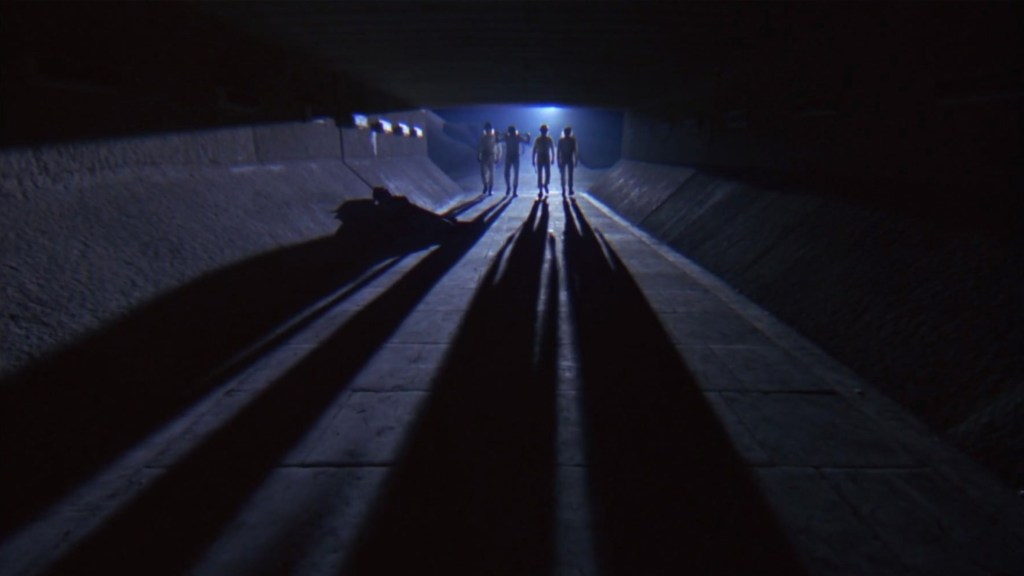
Based on Anthony Burgess’s 1962 novel, Kubrick’s film does not waste time revealing the grungy, dysfunctional world of the story, where roaming gangs have fun by beating unhoused people, breaking into the houses of others to commit sexual violence, and, of course, fighting other gangs. A Clockwork Orange was not only quite transgressive for depicting all of this on screen without cutting away from it, but also pushed the boundaries of what was considered acceptable to show in a movie. Though it was released on the heels of films like Bonnie and Clyde and The Wild Bunch, it still made a splash for how horrifying it was considered. The film was initially rated X in the US, though Kubrick cut about thirty seconds from the movie to get it down to an R.
The controversy didn’t end with outrage at what the film was showing, but in how it allegedly spilled out into real life. Real criminal cases at the time in the UK, Kubrick’s home, and where the movie was shot, with teenage defendants, referenced the movie. A 16-year-old who pleaded guilty to killing an elderly man in the UK revealed that his friends told him about A Clockwork Orange and a similar incident that happened in the film (though he had not actually seen it). The press was ruthless at the time in linking the influence of the film’s violence with real-life antics by young people, so much so that the movie was eventually pulled from cinemas in the UK at Kubrick’s request.
Kubrick condemned any link between his movie and actual violence that happened after the fact, writing in a statement to the press that, “to attribute powerful suggestive qualities to a film is at odds with the scientifically accepted view that, even after deep hypnosis in a posthypnotic state, people cannot be made to do things which are at odds with their natures.” A Clockwork Orange remained nearly impossible to see in the UK for decades, and was only re-released in theaters and on home media years after Kubrick’s death. Other countries outright banned the movie at the same time, including Ireland, Spain, South Korea, Singapore, and South Africa, though each country eventually allowed it to be released after cuts or censorship methods were employed. Given its extensive history, A Clockwork Orange was at one point named the #2 most controversial movie of all-time by Entertainment Weekly (Mel Gibson’s The Passion of the Christ took the top spot).
A Clockwork Orange Was Still Nominated for Best Picture
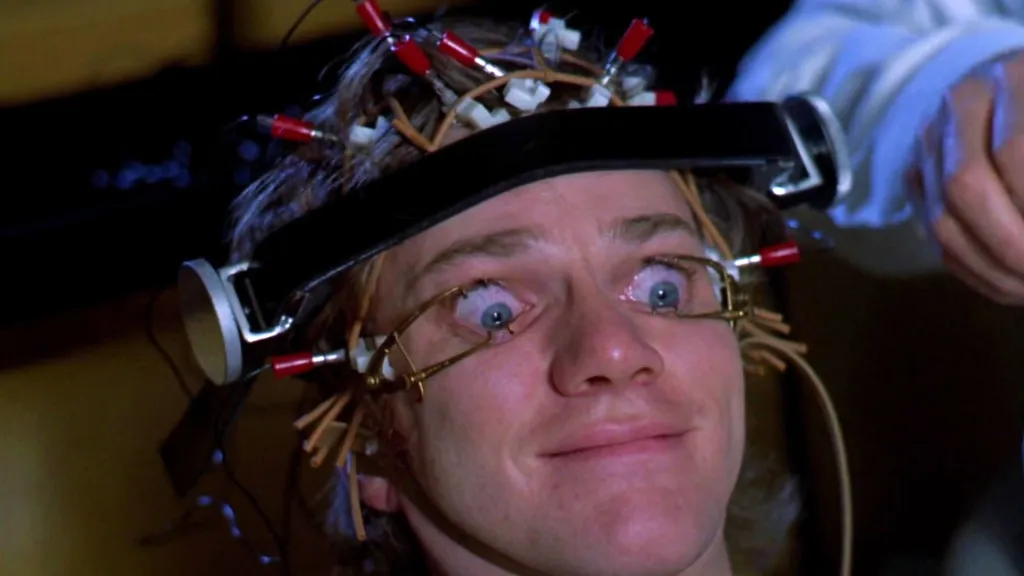
Roger Ebert may have given A Clockwork Orange two out of four stars and called it “a paranoid right-wing fantasy,” but that didn’t stop audiences from flocking to see it, grossing millions at the time. Despite the extreme controversy surrounding the film as a whole and mixed reviews at the time of its release, A Clockwork Orange was still, like almost every other Stanley Kubrick movie, a project that Hollywood held in high regard.
By the time the Oscars rolled around, A Clockwork Orange was nominated for Best Picture, Best Director, Best Adapted Screenplay, and Best Film Editing, losing to William Friedkin’s The French Connection in all of its categories. The film marked Kubrick’s third movie in a row to be nominated for Picture, Director, and Adapted Screenplay after Dr. Strangelove and 2001: A Space Odyssey, a trend that would continue with his next movie as well, 1975’s Barry Lyndon. The critical praise of A Clockwork Orange didn’t end there, though, as the New York Film Critics awarded it their Best Picture prize, while the National Society of Film Critics nominated it for Motion Picture, Best Actor, and Best Director.
Now decades removed from the hubbub of connecting the movie to real-life violence that happened after its release, A Clockwork Orange has cemented its place in the larger ouvre of Stanley Kubrick and become widely recognized for being the masterpiece that it is. Beyond the plaudits that it has earned, A Clockwork Orange is also just a purely influential movie on the science fiction genre and filmmaking as a whole. Kubrick kicked down the door on a dystopian nightmare world on the big screen and influenced filmmakers like Ridley Scott, Quentin Tarantino, Danny Boyle, and Christopher Nolan.
Most Viewed
-
Image courtesy of Universal Pictures.