Avatar: Fire and Ash brings another breathtaking spectacle to the big screen, but its greatest disappointment does a huge disservice to the Na’vi. On the moon of Pandora, James Cameron’s third Avatar movie follows Jake Sully (Sam Worthington), Neytiri (Zoe Saldaña), and their family as they grieve the loss of Neteyam (Jamie Flatters) and continue the fight against Colonel Miles Quaritch’s (Stephen Lang) Resources Development Administration (RDA). Other returning characters, such as the Sullys’ young human ally Miles “Spider” Socorro (Jack Champion) and various members of the oceanic Metkayina clan, also feature in prominent roles. There are plenty of heart-pounding action sequences and gorgeous visuals to marvel at, but Fire and Ash contains a glaring misstep involving the Na’vi.
Videos by ComicBook.com
The Mangkwan clan, also known as the Ash People, emerges as a new antagonistic force in the film. Led by the ferocious Varang (Oona Chaplin), the group carries out an aerial assault on the Sully family as they travel with the Windtraders. After pursuing the children on the ground, Varang and the Ash People ally with Quaritch, obtaining guns in exchange for their support of the RDA’s effort to capture Jake. Ahead of Fire and Ash‘s release, many Avatar fans were excited to see this new Na’vi clan. Yet, Varang and the Ash People are so one-dimensional that they undermine the Avatar franchise’s characterization of the Na’vi.
Avatar: Fire and Ash Completely Fumbles Varang and the Ash People

The Ash People are bloodthirsty warmongers for no reason other than their rejection of Eywa, the goddess of life worshipped by most Na’vi on Pandora. “The fire came from the mountain, burnt our forests. My people cried for help, but Eywa did not come,” Varang tells Quaritch in one scene. This line is the only bit of backstory Fire and Ash provides for the Mangkwan clan throughout its 195-minute run time. By refusing to elaborate on the Ash People’s history, motivations, and goals, the film reduces Varang and her cohorts to cringeworthy caricatures of “savage” Indigenous people envisioned by white colonizers.
Fire and Ash also misses a promising opportunity to explore faith and faithlessness on Pandora. Juxtaposing the Mangkwan’s hatred of Eywa against the rest of the Na’vi’s belief in her would have made for a fascinating thematic addition to the franchise, but the movie does nothing of substance with the Ash People. Few scenes take place in Varang’s scorched territory, leaving audiences to wonder how its inhabitants have adapted to their surroundings in comparison to the Na’vi who live in the forest and ocean regions. Moreover, Varang’s decision to help Quaritch is questionable, given that Fire and Ash never explains why she wants to wage war on the world.
The Ash People’s extreme lack of development is rendered even more jarring when considering how extensively Avatar: The Way of Water fleshes out the Metkayina clan. Unlike the Mangkwan, the Metkayina count more than one character with a known name and backstory, and they are meaningfully incorporated into the story. Bafflingly, Fire and Ash sidelines Varang and the Ash People in favor of Quaritch, a move that relegates them to mere plot devices. Despite Varang’s face appearing on almost every Fire and Ash promotional poster, she falls way short of fulfilling her presumed role as the movie’s main villain.
The Ash People Represent a New Low for the Avatar Franchise
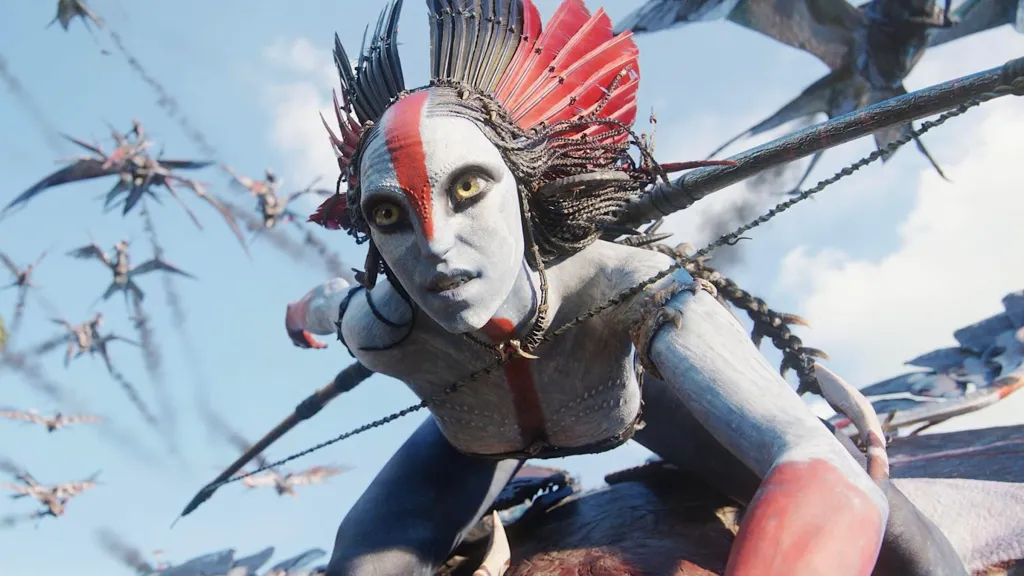
The Avatar films haven’t garnered much praise for their character depth, but the Ash People stand out as the franchise’s most egregious instance of one-dimensionality. There’s nothing inherently wrong with making villains out of an entire Na’vi tribe. However, this dynamic requires strong development to avoid falling into the harmful stereotypes Avatar attempts to subvert with the Na’vi, who essentially serve as stand-ins for real-world Indigenous peoples. The Ash People make sacrificial killings, scalp their enemies, and assault other tribes without justification, all of which replicates dangerous misconceptions about Indigenous people.
As a result, Fire and Ash undermines its effort to humanize the Na’vi’s struggle under human colonization. Even as it embodies the white savior trope through Jake’s arc, Avatar condemns imperialism and emphasizes the importance of environmentalism. The Way of Water delves deeper into Na’vi’s battle for their land amid the RDA’s violent occupation, incorporating familial themes in its story about a native population’s resilience. Fire and Ash contradicts the complex reality of life on Pandora, leaving out crucial information that would explain why the Ash People are the way they are. The Avatar movies have rightfully faced criticism for appropriating and mythologizing Indigenous cultures, and it appears the issues are only getting worse.
The Mangkwan’s woeful characterization remains Fire and Ash‘s most significant failure, but that doesn’t mean the future of Avatar can’t change things for the better. Varang and the majority of her followers survive the events of Fire and Ash, meaning they could return in Avatar 4. The next installment poses the perfect opportunity to give Varang and the Ash People a bigger spotlight and delve deeper into their history. Regardless of what comes next in the world of Pandora, Fire and Ash has brought the franchise’s Na’vi to a new low.
Avatar: Fire and Ash is now playing in theaters.
What do you think? Leave a comment below and join the conversation now in the ComicBook Forum!
Most Viewed
-

Official art by Bastien Lecouffe-Deharme -

A photo of the Retrovolt Arcade taken in 2017, showing several classic arcade cabinets and stools. -
Image courtesy of Tor Books/Macmillan -

Courtesy of Saber Interactive