Science fiction functions as a vast literary ecosystem that constantly evolves to reflect the hopes and anxieties of the human condition. From the early planetary romances of the pulp era to the modern dystopian warnings about artificial intelligence, the genre relies on a continuous influx of voices to expand its boundaries. While countless authors have contributed to the sci-fi genre, the Golden Age of Science Fiction revolves around a triumvirate of writers known as the “Big Three.” This elite group consisted of Isaac Asimov, Robert Heinlein, and the man whose birthday we celebrate today. These authors legitimized the genre, moving science fiction away from the fringes of cheap entertainment and establishing it as a serious medium for exploring sociology, technology, and the future of our species.
Videos by ComicBook.com
The third pillar of this legendary trio was Sir Arthur C. Clarke, who was born exactly 109 years ago on December 16, 1916. While Asimov focused on the ethics of robotics and Heinlein explored militaristic societies, Clarke carved out a unique niche by blending rigorous scientific accuracy with a profound sense of metaphysical wonder. His career spanned decades and produced numerous classics, yet his cultural footprint is most heavily defined by his 1968 collaboration with director Stanley Kubrick on 2001: A Space Odyssey. This work began as a short story titled The Sentinel and evolved into a novel and film developed concurrently. His writing in 1968 predicted tablets, video calls, and artificial intelligence with frightening precision, cementing his status as the prophet of the Space Age.
How Arthur C. Clarke Helped Redefine Sci-Fi
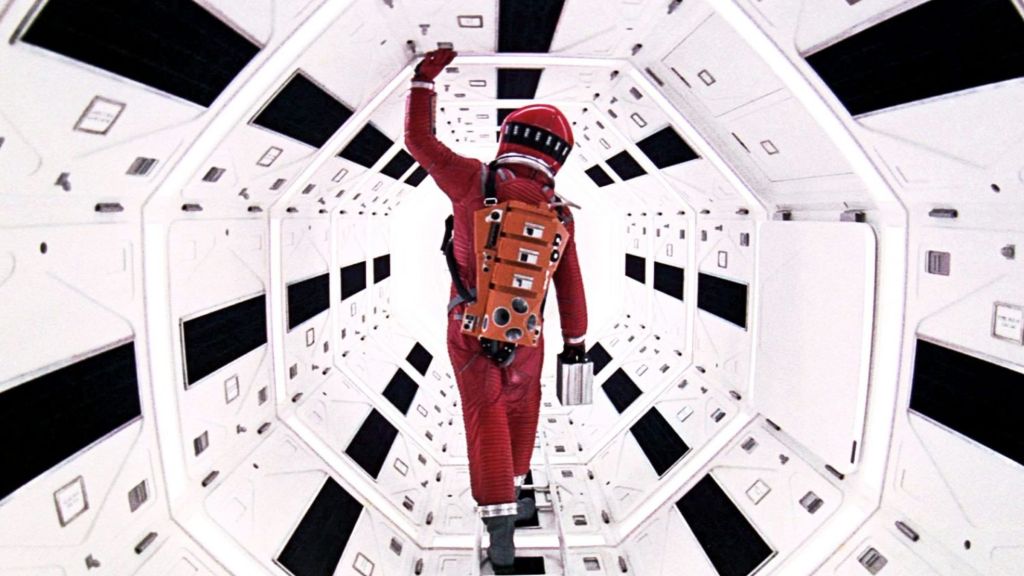
Arthur C. Clarke distinguished himself from his peers through his background as a radar technician and a scientist, which allowed him to inject a level of technical realism into his work that was previously unheard of. He is famously credited with proposing the concept of the geostationary communications satellite decades before it became a reality, a specific orbit that is now officially designated as the Clarke Orbit. This adherence to the laws of physics meant that when he wrote about space travel, he did not resort to magical shortcuts. His spaceships required rotational gravity, his computers were subject to logic faults, and his astronauts were professionals rather than swashbuckling heroes. This approach created the sub-genre of “hard science fiction,” proving that a story could be gripping without violating the known laws of the universe.

Beyond his technical prowess, Clarke possessed a unique ability to fuse the technological with the spiritual. In novels such as Childhood’s End and the Space Odyssey series, he frequently explored the idea that humanity is merely a stepping stone to a higher form of existence. Clarke rejected the cynicism that often permeates the genre, opting instead for a cosmic optimism where alien intelligence serves as a guide rather than a conqueror. The monolith in 2001: A Space Odyssey remains the ultimate symbol of this philosophy, a tool of evolution that spurs humanity from apes to star children. This thematic ambition elevated science fiction from simple adventure stories to a platform for discussing philosophy, theology, and the ultimate destiny of intelligence in the universe.
Furthermore, Clarke gave the genre its most enduring adage with his Third Law, which states that any sufficiently advanced technology is indistinguishable from magic. This single sentence fundamentally changed how writers approached advanced civilizations. It allowed authors to depict feats of engineering that appeared supernatural to human observers while maintaining a grounding in scientific possibility. By framing the unknown as science we do not yet understand rather than fantasy, Clarke expanded the imaginative potential of sci-fi. His work ensures that science fiction remains a literature of ideas, capable of inspiring real-world innovation while questioning our place in the cosmos.
2001: A Space Odyssey is currently available to stream on HBO Max.
Which Arthur C. Clarke invention or prediction do you think has had the biggest impact on the real world? Leave a comment below and join the conversation now in the ComicBook Forum!
Most Viewed
-
Image courtesy of Virgin Films -
Image Courtesy of Netflix -

Image courtesy of HBO -

Pierrot Films / Viz Media