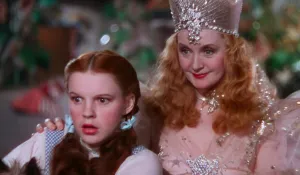
The musical Wicked is one of the biggest theatrical successes of the 21st century. It tells the “untold story of the Witches of Oz,” creating a revisionist history that turns the traditional villain, the Wicked Witch of the West (Elphaba), into a misunderstood heroine. The two-part film adaptation concluded with Wicked: For Good in November, covering the second act of the play while adding in new numbers and scenes to extend the runtime for theaters. However, while the movie succeeds in making the emotional connection and tragic ending between Elphaba and Glinda palpable, it continues the stage show’s rather illogical distortion of the backstories of two other foundational characters from L. Frank Baum’s original The Wonderful Wizard of Oz: the Tin Man and the Cowardly Lion. In its all-consuming focus on Elphaba’s unjust persecution by the Wizard and Madame Morrible, Wicked: For Good twists these two iconic figures into vengeful characters, making their future heroic journeys with Dorothy in The Wizard of Oz nearly nonsensical.
Videos by ComicBook.com
Both the play and the films focus on showing that Elphaba is not only innocent, but a victim of political propaganda and a widespread, well-calculated smear campaign, which ultimately forces the Tin Man and the Cowardly Lion to act wicked.
The Lion’s Origin Story Makes Him Look Ungrateful Rather Than Cowardly
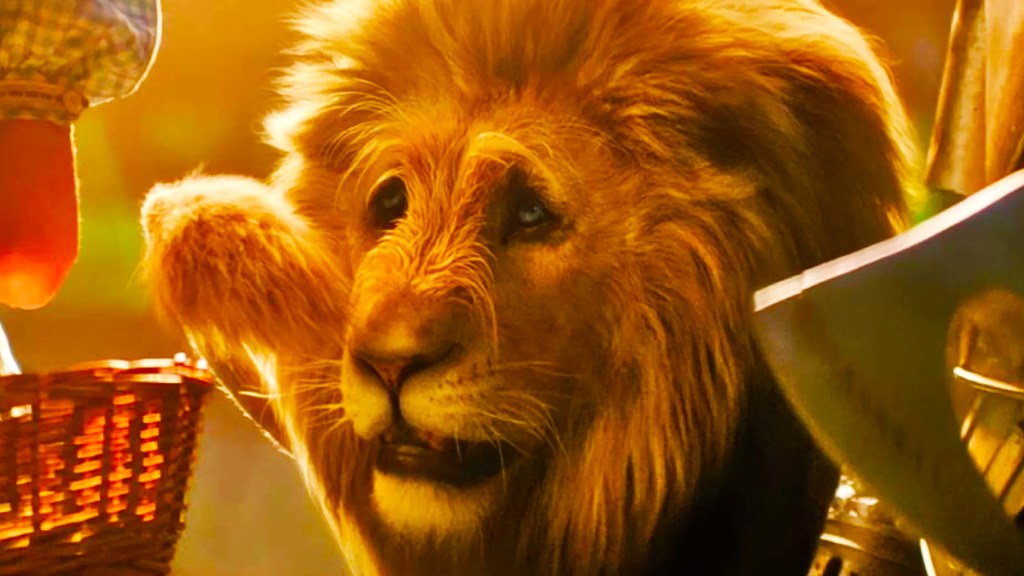
The Cowardly Lion’s true motives due to his backstory are not only the most illogical, but also change his entire pursuit for courage. In the original novel and 1939 film, he is simply a lion who lacks courage and joins Dorothy on her journey to have the Wizard grant his heart’s desire. His backstory, in this context, is simple and fitting.
Wicked: For Goos, however, has the lofty task of tying his origin directly to Elphaba and making her the reason the lion eventually joins Dorothy’s party. In the first Wicked film, Elphaba and Fiyero rescue a small and terrified lion cub from where he was on display in the middle of their classroom for teaching purposes. Other animals—or “Animals,” as they are properly called—in Oz are being subjected to cruel and unethical experiments under the Wizard’s orders aimed at stripping them of their ability to speak and think. After Elphaba accidentally puts the entire room to sleep with a poppy seed spell, Elphaba and Fiyero rescue the cub from his cage and release him into the wild—an act of pure, selfless heroism on their part, showing that both of their moral compasses always point in the right direction.
In Wicked: For Good, when the now-adult Cowardly Lion appears in the latter half of the story during the “March of the Witch Hunters” number, his view of the life-changing event from his young life is completely and utterly distorted. He claims that “the Wicked Wicked took me from my cage as a cub,” a line meant to show his—and everyone else’s—fear and loathing when it comes to Elphaba. This logic is, frankly, nonsensical.
Elphaba (and Fiyero) did not kidnap him from a cage; they rescued him from a life of captivity, torture, and eventual brainwashing at the hands of the Wizard’s regime. The idea that the now adult Lion holds a grudge and views his freedom as an intentional cruelty on Elphaba’s part turns his salvation into an act of true wickedness in his mind. This version of events sacrifices the Lion’s characterization entirely. It makes the Cowardly Lion completely ungrateful, suffering from an almost pathological case of Stockholm Syndrome for his former captors, or simply too unintelligent to distinguish between a rescue—something that other Animals were not so lucky to have—and a kidnapping.
Boq’s Transformation Into the Tin Man Makes Him a Terrifying Villain
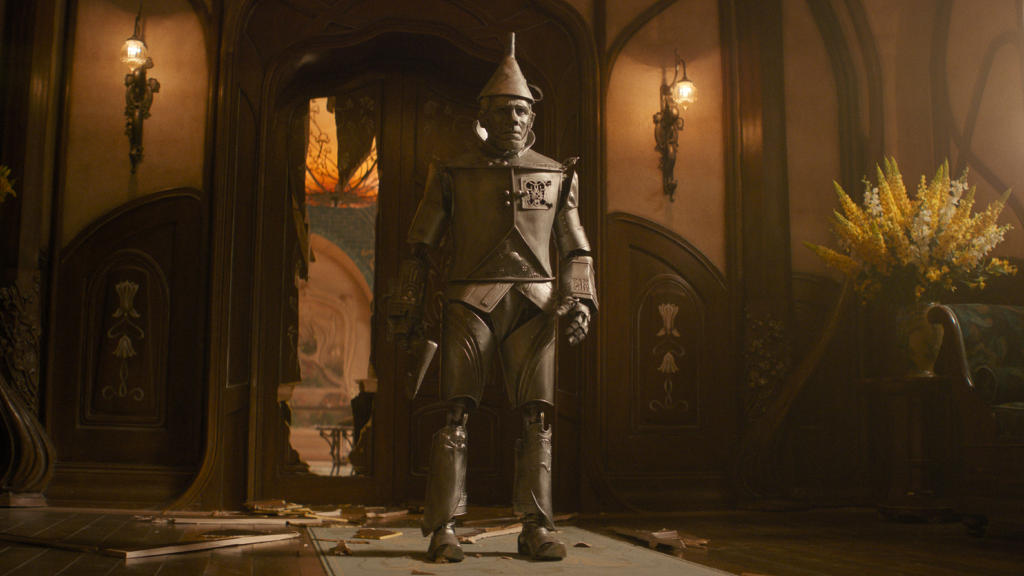
The other character who undergoes character assassination is the Tin Man. In Wicked, the Tin Man is revealed to be Boq, a Munchkin who has been in love with Glinda since their school days. As Glinda was never interested in his advances, she not-so-subtly pushes him into a relationship with Nessarose, Elphaba’s sister, who becomes the Wicked Witch of the East. Years after their days at Shiz, Nessarose, in her obsession with keeping Boq at her side and demanding his love, attempts to cast a spell from Elphaba’s Grimmerie—a mystical spellbook that no one in Oz besides Elphaba can read/understand—that goes horribly wrong, causing Boq’s heart to start shrinking. Elphaba, in a desperate attempt to save his life, casts a counter-spell. However, the only way to save his heart is by taking it away completely by encasing him entirely in tin to stop the shrinking process, essentially saving his life but turning him into the Tin Man.
This sequence of events that leads to Boq’s transformation is supposed to be tragic, as he places the ultimate blame on Elphaba. However, the true damage to Boq’s character comes after his transformation. When we see him again in “March of the Witch Hunters,” he is bloodthirsty, entirely consumed by a vengeful rage directed solely at Elphaba. He not only joins the mob hunting her down, but stirs them up into a frenzy in the first place, shouting about how the “Wicked Witch” ruined his life. One particular line encapsulates Boq’s blinding and irrational reaction: “So for once, I’m glad I’m heartless. I’ll be heartless killing her!”
This sudden and singular rage is disproportionate to what actually happened behind closed doors. Boq willingly stayed with Nessarose for years before she ever issued the edict that Munchkins needed express permission to leave Munchkinland, and even before she attempted to magically entrap him. He willingly let her devotion to him continue, perhaps out of politeness or cowardice, enabling her increasingly controlling behavior and warping her mind to convince her that he wanted to be where he was.
Furthermore, he should know that Elphaba saved his life after Nessarose was essentially murdering him in an act of selfishness and anger at his desire to leave her by taking away his heart, and not have bought into Nessa’s blatant lies. His blind rage against Elphaba completely excuses his own part in the events leading to his being turned to tin, Nessarose’s decades worth of cruelty, and the fact that Elphaba’s intervention saved his life. Wicked: For Good turns Boq from a meek, lovestruck boy into a bloodthirsty monster driven by an incomprehensible, single-minded desire to kill someone he knew saved his life, simply to further the theme of injustice regarding Elphaba’s ultimate fate. In doing so, it paints the Tin Man as a man utterly devoid of logic and compassion, making his future quest for a heart entirely earned but for all the wrong (and very dark) reasons.
Wicked’s reinterpretation of Elphaba as a deeply complex heroine is masterful. Yet, the price of this revisionist take on the years leading up to and occurring alongside The Wizard of Oz is the whimsy and kindness of two classic figures. The need to make the Cowardly Lion ungrateful, if not blatantly wrong, or the Tin Man a singularly-focused, murderous leader of a mob to make Elphaba’s point. By sacrificing the integrity and reasonable motivations of the Lion and Boq, Wicked: For Good takes away the broader, beautiful narrative of Oz, proving that even in a story about justice and perspective, some characters get unfairly left behind.
What do you think? Leave a comment below and join the conversation now in the ComicBook Forum!
Most Viewed
-
Image courtesy of Lucasfilm -
Image Courtesy of Studio Pierrot