Ten years ago, the Star Wars franchise made its triumphant return when Star Wars: The Force Awakens hit theaters. Inarguably the biggest movie event of that year, The Force Awakens lived up to the hype. Not only did it shatter box office records (grossing $936.6 million just in the United States), it was also the best-reviewed Star Wars movie since The Empire Strikes Back. The American Film Institute even named it one of the 10 best movies of 2015. At the time of The Force Awakens‘ premiere, the prevailing feeling was one of excitement; Star Wars was back, and director J.J. Abrams managed to recapture the magic that made fans fall in love with the galaxy far, far away.
Videos by ComicBook.com
The Force Awakens was incredibly successful, but there was one common critique. Even those who were enthusiastic about the film couldn’t help but notice some similarities to Star Wars: A New Hope, as The Force Awakens features some recognizable story beats and character arcs. In the years since, these parallels have fueled the belief that The Force Awakens is a safe film — perhaps one that played things a little too safe as it launched a new era for Star Wars. And while there’s no denying The Force Awakens shares some DNA with A New Hope, Abrams still managed to take some major creative risks that paid off. The Force Awakens isn’t as safe as fans might remember.
The First Act Is Entirely New Characters
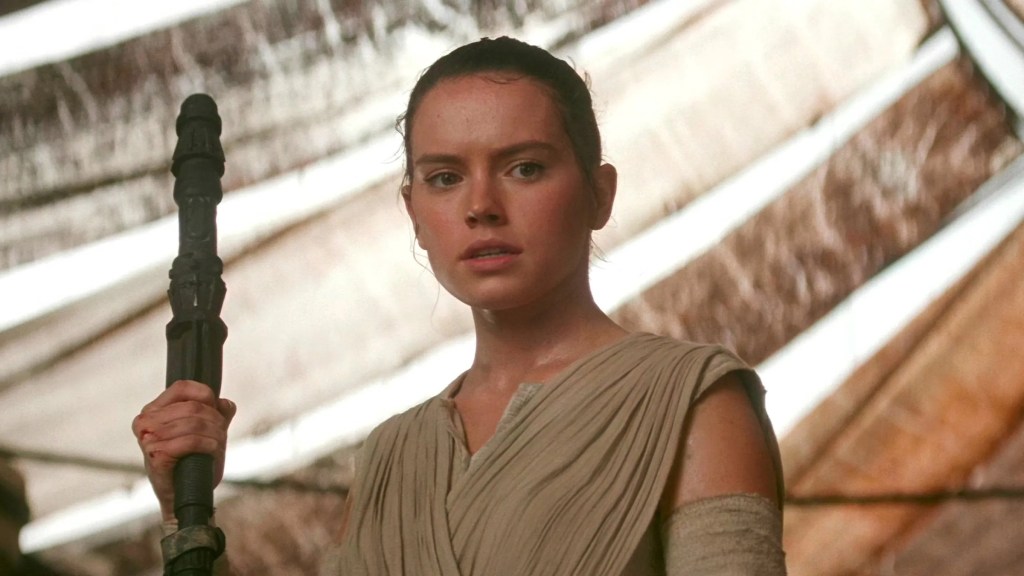
One of the biggest selling points of The Force Awakens was the return of original trilogy stars Mark Hamill, Harrison Ford, and Carrie Fisher. The big money shot of the entire marketing campaign was the now-famous “Chewie, we’re home” moment in the trailer that debuted during Star Wars Celebration Anaheim 2015, leaning heavily into the nostalgia fans have for the classic films. Promotional materials didn’t reveal much in the way of plot details (Luke Skywalker’s face famously did not appear on any poster or trailer), but Lucasfilm wasn’t hiding the fact that the fan-favorite veterans were back. Decades after last seeing Luke, Han Solo, and Princess Leia in Return of the Jedi, fans couldn’t wait to be reunited with the old Rebellion heroes.
After waiting years to see the original trilogy stalwarts again, fans had to wait a little longer to see them once The Force Awakens began. There are no legacy characters to be found in the film’s first act. There are, of course, mentions of Luke and Leia in dialogue, but no familiar faces appear. Instead, Abrams made the bold choice to place the burden of starting the movie on the new characters he and co-writer Lawrence Kasdan created. This was a massive risk from the jump, putting an incredible amount of pressure on those newcomers. If the new characters didn’t connect with audiences, then The Force Awakens (and the sequel trilogy itself) could have been derailed before it even began. The likes of Rey, Finn, Poe Dameron, and Kylo Ren were being thrown in the deep end with no Han Solo, Chewbacca, or R2-D2 around as a security blanket.
The gamble paid off in spades, and it only took a few moments to see why Abrams was so confident in Star Wars’ next generation. In the opening sequence, Oscar Isaac proved he was the perfect fit to play a charming hotshot pilot, staring villain Kylo Ren in the face (mask?) without fear. The fast chemistry he developed with John Boyega’s Finn is a highlight of the early going, evoking the old-school tone of a classic Star Wars adventure. And it didn’t take long for Adam Driver to establish Kylo Ren as an intimidating and complex antagonist, demonstrating the character’s power and intense emotional volatility. Kylo is clearly portrayed as some sort of commentary on Vader, but he’s also different enough that he leaves his own mark on the franchise.
Finally, Daisy Ridley — starring in her first major feature film — instantly got viewers onboard with Rey. Rey’s introduction on Jakku is a masterpiece of visual storytelling, telling fans everything they need to know about the world and the character with minimal dialogue. In just a handful of minutes, we understand Rey’s plights and her dreams, setting the stage for a traditional hero’s journey arc. Much like Isaac, Ridley also had tremendous chemistry with Boyega, with the two actors playing nicely off each other during Rey and Finn’s frantic escape from Jakku. BB-8 was always going to be a scene stealer, but there were question marks lingering over his companions going into the film. Any concerns fans might have had were assuaged in The Force Awakens‘ opening moments. The film does such a great job of getting viewers invested in the new characters that it doesn’t matter Han and Chewie don’t show up until much later.
Saving Luke for the Very End Was the Best Choice for The Force Awakens
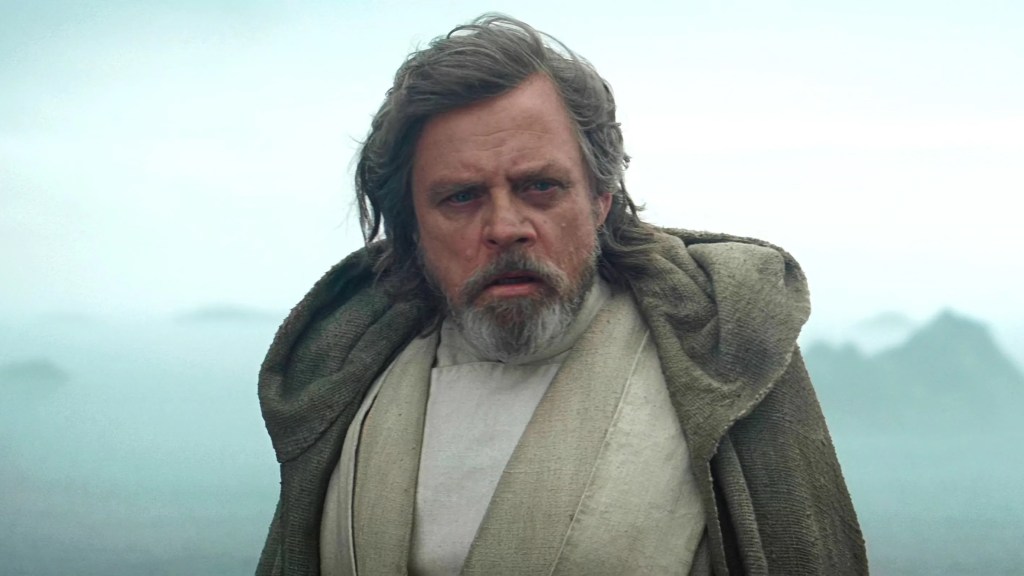
One of the things Star Wars fans had longed to see in the years after Return of the Jedi was Luke Skywalker as a Jedi Master. While there were plenty of Expanded Universe materials showcasing Luke’s adventures after the original trilogy, what people really wanted was to see it on screen. The Force Awakens was the first opportunity for that to happen, but instead, Luke hardly has a role in the film. Famously, he’s relegated to a wordless cameo in the movie’s closing scene, leaving audiences hanging on a monumental cliffhanger. They were going to have to wait another couple of years to see Luke back in action.
This was an incredible display of restraint on Abrams’ part. At the time, The Force Awakens was set to be his lone installment in the sequel trilogy, so when he was developing the film, he figured this would be is only chance to tell a story with Luke Skywalker. It would have been very easy for the lifelong Star Wars fan to give into his own personal feelings of nostalgia and give Luke a sizable role in the movie. Instead, he did what was best for the story — even though this meant taking another risk that potentially could upset fans.
Abrams and Co. did experiment with making Luke a main character, but they found that whenever Luke entered the story, he immediately overshadowed all of the other characters. Once he came in, all people would want to know is what’s going on with Luke. So, the decision was made to turn Luke into a living MacGuffin. The Force Awakens is about finding Luke, who had gone missing after experiencing a tragedy. Han became the key supporting player, establishing a template for the sequel trilogy where each legacy hero took on a larger role in the next installment (prior to Carrie Fisher’s death, Leia was going to be a bigger part of Episode IX).
Holding Luke back not only allowed Han’s story to come into greater focus, giving Ford the emotional sendoff he always wanted for the character, but it also became easier to give the new characters the spotlight they needed to make a strong first impression with viewers. That wouldn’t have been possible if Luke came along for the full ride as well since it would have been something else for Abrams to juggle over the course of the movie’s run time. It was difficult enough balancing Han’s arc with introducing all of the new characters. Adding Luke to the mix could have been a recipe for disaster, as it would have been harder to give all the players the proper attention they deserved. It was certainly risky to essentially remove the franchise’s most famous hero from the first legacy sequel, but based on how The Force Awakens turned out, everything worked out in the end.
What do you think? Leave a comment below and join the conversation now in the ComicBook Forum!
Most Viewed
-
Courtesy of Sony Pictures Animation / McDonalds -

Courtesy of Viz Media