
At this point, the whole world already understands that Dune is one of the greatest sagas ever brought to the big screen in the hands of Denis Villeneuve. But there’s a very simple reason why: the director knows you can’t keep an audience locked in for hours just with stunning landscapes and desert warfare. That definitely helps, sure, but what truly holds your attention is when a movie makes you feel like every single character is hiding something — whether it’s a plan, a trauma, or an agenda. There has to be substance and complexity in everyone involved if you want the audience to stay curious and keep digging deeper into what’s being presented. Because most of the time, if a story is genuinely great, it’s because the characters themselves know how to carry it.
Videos by ComicBook.com
And in that sense, Dune is downright masterful. You watch it because you want to know who’s really in control, and you realize that almost no one is. Paul Atreides (Timothée Chalamet) may be the messianic leader at the center of it all, but the entire story also depends on other figures working behind the scenes. And that’s where things get interesting: even though Paul is technically the main focus of the saga, the character who actually dominates the experience of these films isn’t exactly him. It’s someone who spends most of the time in silence, watching everything like she already knows what’s coming. And when she finally speaks, it feels like the entire scene shifts in temperature.
Lady Jessica’s Dune: Part Three Role Is Basically a Cameo

For many Dune fans, the best thing Villeneuve pulled from Frank Herbert’s universe is Lady Jessica (Rebecca Ferguson). And that’s just basic narrative logic: she’s the most complete character, the most unpredictable, and the most “alive” on screen. The downside is that her arc is going to be much smaller in Dune: Part Three. Does that make sense? Yes, considering the new movie is based on the book Dune Messiah, where Jessica doesn’t even show up. The story shifts in tone, shifts in focus, and shifts in the kind of conflict it’s dealing with. The whole “chosen one” buildup is over, and now the story moves into the post-victory phase with politics, paranoia, and consequences. Paul is no longer a young man coming into his power; he’s the Emperor now, surrounded by people who want to bring him down or control him. So yes, Jessica fades into the background because the board is completely different now.
If Paul is the face of the prophecy, Jessica is the silent engine behind the chaos that forms around it. And that’s why this news hits so hard: the best dramatic element of Dune and Dune: Part Two is going to be reduced to a single scene in the third film. It feels like a major loss, especially because Villeneuve went beyond what the first book (which both films are based on) did, turning her into something far bigger than just the protagonist’s mother. And of course, Ferguson’s performance is a huge part of that. She makes Jessica feel like someone who’s always calculating three things at once: what she wants, what she needs to pretend she wants, and what she fears her own son might become.
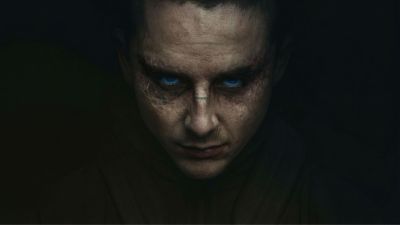
In an interview on the Happy Sad Confused podcast, Ferguson spoke to Josh Horowitz and explained her experience filming the third movie, as well as how she sees the size of her role this time around. “The script is great, I’ve read it. I think it’s going to be fantastic, but my journey was number one and two. I don’t even think [Lady Jessica] was supposed to be in three. And then Denis [Villeneuve] was like, ‘I need to have one scene.’ And I get one scene,” she said. “But that was a weird feeling, walking onto a set that you know so well and knowing that you don’t have a part of it. There’s a lot of FOMO, and the acceptance of this is just what it is.”
In an interview with Empire back in 2021, Villeneuve even explained why he wanted to give the character more prominence in the franchise. “The entire story unfolds because of Lady Jessica, because of a decision she made to give birth to Paul instead of a girl [via a breeding programme]. She’s a fascinating character, one of the most influential and most interesting in the novel,” he shared. He has also said that he always aimed to focus on the female characters overall because he wanted their perspective to sit at the center of the narrative. The idea was never to treat them as supporting players, but as forces that really shape the main arc, because he’s fascinated by the relationship between femininity and what power means, and by the role women occupy in society.
Why Lady Jessica Will Be Missed in the New Movie

At this point, it’s clear that Villeneuve wanted at least one scene with Jessica in Dune: Part Three because he sees her as an important figure. And even if she doesn’t have a major role in this phase of the story, maybe it was still necessary for her to appear, even if only to advise Paul. That’s why, in the film’s trailer, we already see him talking to his mother and asking her for guidance while wondering what his father, Duke Leto (Oscar Isaac), would do in his place. But why does she matter so much that her absence will actually be felt from here on out?
In Dune, she steals the movie without even trying. And it’s not because the script hands her monologues or scenes designed to make her shine — it’s the opposite. Ferguson works in the details: the physical tension, the look of someone trained her entire life to never show weakness, yet always on the verge of breaking. The Gom Jabbar sequence, for example, is basically the perfect summary of what she brings to the character. Paul is suffering, but it’s Jessica who carries the emotional weight of the entire scene. You believe she’s living through a nightmare, but you also believe she’s going to swallow that nightmare whole without letting anyone notice.
And that becomes a pattern. When House Atreides collapses and the story shifts into survival mode, Jessica could have easily become dead weight in the narrative. It would have been easy to write her as a desperate mother or a woman destroyed by grief. But Villeneuve doesn’t do that. Instead, he makes it clear that Jessica is dangerous — not in an action-hero way, but in a real way: she knows how to manipulate, she knows how to read people, and she knows how to lie better than anyone around her. A true Bene Gesserit, who, not by coincidence, evolves into the Fremen’s Reverend Mother in Dune: Part Two.

From that moment on, she becomes the most fascinating character because she starts crossing a line: she stops being someone trying to survive the system and becomes someone using the system for her own ends. And the most interesting part is that the movie never leans into the typical excuse that she “did what she had to do.” The movie wants you to feel uncomfortable on purpose.
So, it’s worth considering that this single scene in Dune: Part Three could also end up being one of the best moments in the entire film, since Jessica isn’t the kind of character who shows up and blends into the background. She shows up and shifts the context. And on top of that, Dune Messiah is a far more intimate story than most people expect. It’s basically a study of guilt, power, and paranoia. It shows Paul surrounded by false allies, strategic enemies, and consequences he can no longer control. And even if Lady Jessica stays out of most of the plot, she still hangs over the story, because whether people like it or not, she represents the origin of everything.
Dune: Part Three hits theaters on December 18.
What do you think? Leave a comment below and join the conversation now in the ComicBook Forum!
